Top 10 Most Active Volcanoes in the Philippines
TravelTop 10 Most Active Volcanoes in the Philippines
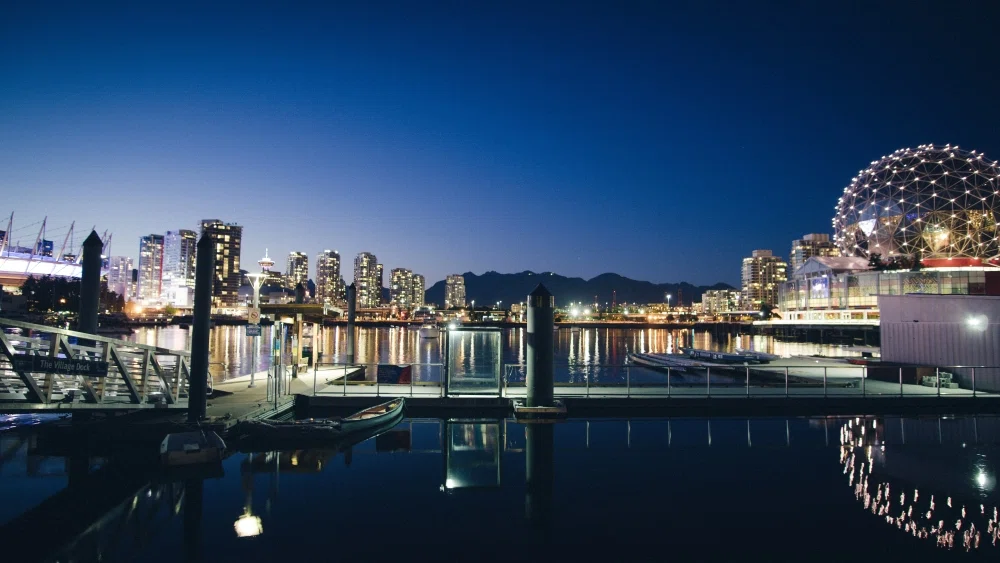
The Philippines is known for the most beautiful beaches, the most spectacular islands, the most vibrant economy in the East Asia Pacific, and the most amazing marine life. What you may not know is that the Philippines is located in the Pacific Ring of Fire — a vast Pacific Ocean region where many of Earth’s earthquakes and volcanic eruptions occur. So let’s take you on a tour of the top 10 Most Active Volcanoes in the Philippines.
1. Mt. Mayon - Albay
Location: Albay, Luzon
Height: 8,801 feet
Last eruption: 2019
Located in the southern part of the main island of Luzon, Albay Province, Mayon Volcano towers up to 8,077 feet above sea level. Of all the volcanoes in the Philippines, Mt. Mayon is considered to be the most iconic volcano in the Philippines because of its perfect conical shape. Unsurprisingly, it’s become so popular with hikers and campers that Mount Mayon Tours have become one of the most popular activities for tourists visiting Albay.
Despite being named after a sweet and beautiful maiden Magayon from the Philippine folklore and mythology, Mt. Mayon holds everyone in fear for the amount of destruction it gives when it erupts. It has erupted more than 50 times over the course of history, ranging from sputters to calamities; the most destructive of which was recorded in 1814, where half of Albay had been damaged and 1,200 people perished.

2. Taal Volcano – Batangas
Location: The Batangas, Luzon
Height: 1,020 feet
Last eruption: 2020
Taal is a Tagalog word in the Batagueño dialect, translating to true, genuine, and pure.
The Philippines’ second most active volcano, Taal Volcano, is located in the province of Batangas. The volcano island, where many of the eruptions occurred, lies in the middle of Taal Lake. It is a large caldera filled by the lake, which was formed by prehistoric eruptions. It stands at 1,020 feet and has 47 craters and 4 maars. The main crater lake, located on Volcanic Island, is 1.9 kilometers (or roughly 6,000 feet) in diameter. The Philippine Institute of Volcanology and Seismology (PHIVOLCS) classifies it as a complex volcano system. This means that it doesn’t have just one main vent or cone, but rather several eruption points that have changed over time.
While this volcano is one of the smallest in the world, it’s also among the most dangerous ones with a total of 34 eruptions recorded within the last 400 years.
Even as its most devastated state, Taal Volcano remains to be one of the most eye-catching attractions in the world.
3. Mt. Kanlaon – Negros Oriental
Location: Negros Oriental
Height: 7,989 feet
Last eruption: 2006
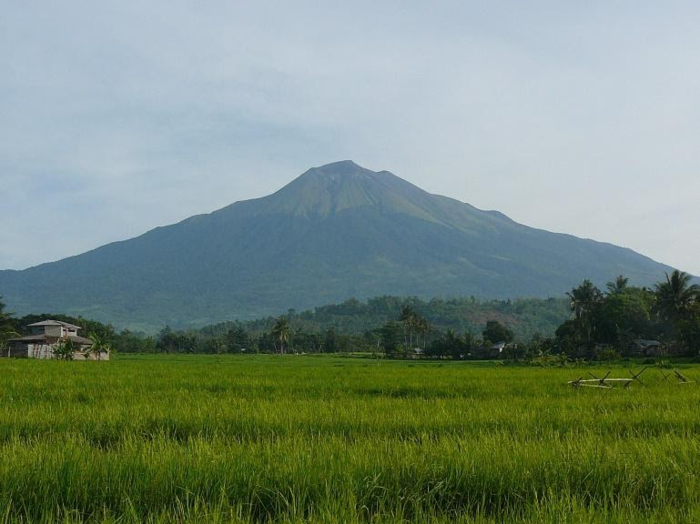
Kanlaon (also spelled as Canlaon) is dubbed as the “Giant Footstep of a Warrior,” because its formation looks like an actual giant has stepped foot on it.
This is the highest mountain or peak in Central Visayas. It is also surrounded by a variety of myths, one of which claims that this mountain was the home of a nation ruled by a datu (king or leader) named Laon. The volcano was said to be the former home of a dragon-like monster that was slain by the youthful epic hero, Kan, who was an intimate friend and lover of Laon. Together, Kan and Laon defeated the monster with their strength and wit and with the aid of Laon’s magic birang, which can produce anything the wielder wants.
Mt. Kanlaon is also called “the beauty that breathes fire.” Although this beautiful mountain is a favorite tourist spot, it is still a highly active volcano that has erupted 30 times since 1819.
4. Mt. Bulusan – Sorsogon
Location: Sorsogon, Luzon
Height: 5,135
Last eruption: 2017
Mt. Bulusan falls under the classification stratovolcano, which is a composite cone and covers the northeast rim of the Irosin caldera that was formed about 40,000 years ago. This is a cone-shaped volcano that towers 1,565 meters (roughly 5,000 feet) above sea level.
Located in Luzon island, Mt. Bulusan is generally known for its sudden steam-driven or phreatic explosions. It has erupted 15 times since 1885 and has four adjacent lakes and four craters in the area.
Apparently, sudden eruptions are common in Mt. Bulusan. Based on PHIVOLCS – an agency in the Philippines that provides information on volcanic movements, the majority of the mountain’s past activities have been phreatic eruptions. Phreatic or steam-generated explosions occur when water makes contact with hot rocks inside the volcano, producing steam. This type of eruption often comes without warning, skipping the usual alert levels issued by PHIVOLCS before an eruption.
5. Mt. Makaturing – Lanao del Sur
Location: Lanao del Sur, Muslim Mindanao
Height: 6,365 feet
Last eruption: 1882
Situated at the shore of Illana Bay, Mt. Makaturing is a stratovolcano that has an elevation of 1,940 meters (about 6,000 feet) and a base diameter of 29 kilometers (or 18 miles). It’s part of a string of volcanoes called the Central Mindanao Arc that includes complex arcs of craters.
There have been 10 historical eruptions at the volcano, the last dating to 1882.
A dense cover of vegetation suggests long quiescence, but solfataric activity continues.
6. Musuan Volcano
Location: Maramag, Bukidnon
Height: 2,119
Last eruption: 1886
Also known as Mount Calayo, which translates to Fire Mountain, Musuan is an active volcano located in Maramag, Bukidnon, on the island of Mindanao. It’s an isolated, low-grass lava dome with a tuff cone.
Although Musuan is one of the many active volcanoes in the Philippines, a lack of any visible crater has spurred some skepticism about Musuan being an active volcano. But still, its nickname and the stories that are told by the local villagers keep people cautious of this comparatively small volcano that doesn’t really even look like a volcano at all.
Due to its proximity to Central Mindanao University, this is where college students go for research of the flora and fauna in it and/or for pure relaxation.
7. Didicas Volcano – Cagayan / Hibok-hibok – Camiguin
Location: Cagayan
Height: 748 feet
Last eruption: 1978
Located in the Babuyan Islands, Cagayan Province, Didicas was once a submarine volcano until 1952 when its eruption formed an island 1.5 miles in diameter and a little over 700 feet above sea level. This equals a 400-meter-wide crater and has now become a permanent island. 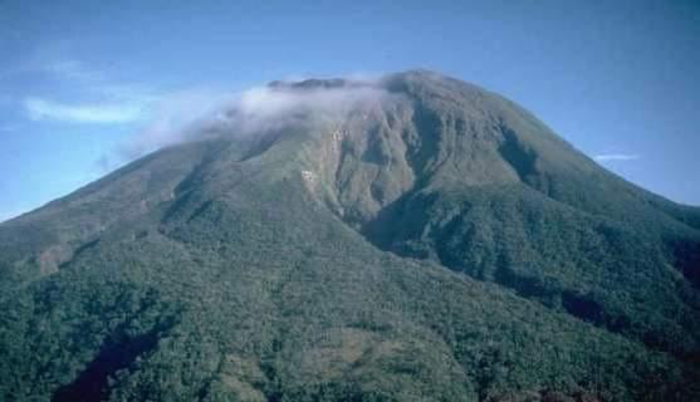
After an eruption that happened in 1860, a new island was formed in the Didicas — the first recorded cone of Didicas breaching the sea surface.
However, this island eroded beneath the sea because it mainly consisted of loose tephra.
In a 1969 eruption, three fishermen who were fishing near the volcano drowned by way of a volcanic tsunami, which was triggered by this eruption. In 1978, fresh volcanic ashes covered the whole island. However, no lava extrusion and usual agitation of the sea water were noticed.
Hibok-Hibok 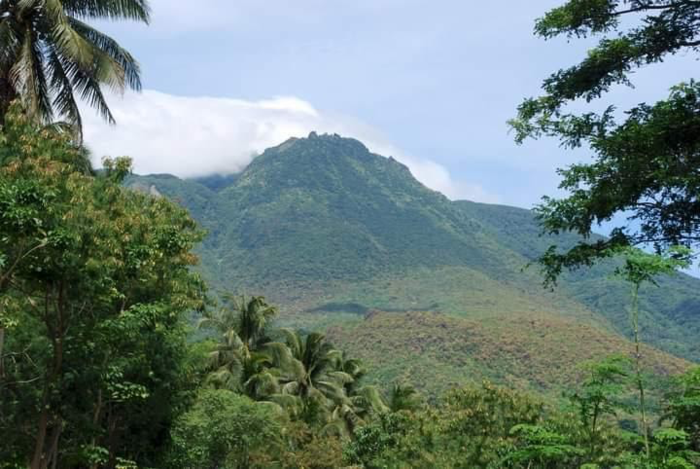
Also known as Catarman Volcano, Hibok-Hibok is the youngest and the only historically active volcano on Camiguin Island, located roughly 9 kilometers north coast of Mindanao islands. The island itself is 20-kilometers-long (a whopping twelve miles) and composed of four overlapping stratovolcanoes, as well as some flank cones. It has six hot springs, six adjacent volcanic edifices, as well as domes and cones located in the six neighboring hills.
Mt. Hibok-Hibok is a popular hiking destination in Camiguin Island at present, but this mountain has raised fear among its residents from its four historic eruptions. The last two have been from vents on the flank of the volcano and caused fatalities. In the 1861 eruption, 326 deaths were caused by ash flows that reached the sea. They drowned while trying to flee in boats. All of these eruptions were pelean, which created dome building and a generation of nuèes ardentes (hot pyroclastic flows generated by partial dome collapse).
8. Smith Volcano – Cagayan
Location: Babuyan Island
Height: 2,257
Last eruption: 1924
A cinder-cone shaped active volcano, Smith Volcano is located in Babuyan Island in North Luzon. Its last recorded eruption was in 1924, and there have been five recorded eruptions. 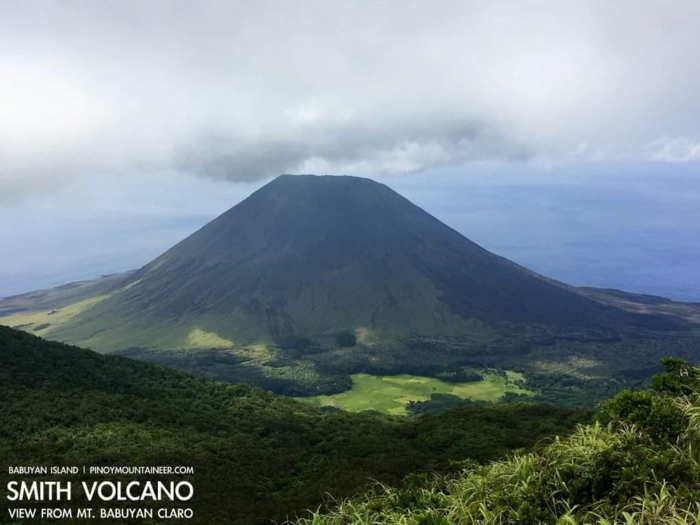
9. Babuyan Claru – Cagayan / Mt. Banahaw – Quezon
Location: Babuyan Island
Height: 3,543
Last eruption: 1860
Babuyan Claru
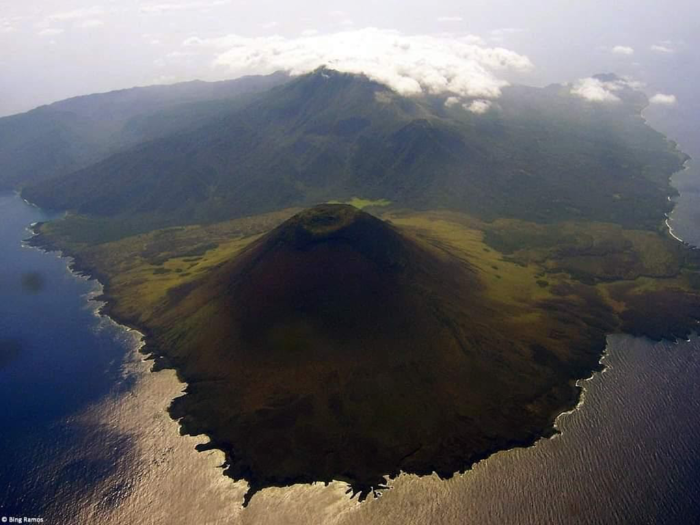
Located on Babuyan Island 100 kilometers off the north coast of Luzon, Babuyan Claru is the youngest among the five volcanic centers in the island. In 1980, a landslide occurred 600 meters above sea level, damaging rice fields and roads, thus forcing the evacuation of nearby residents.
Mt. Banahaw
A place of healing
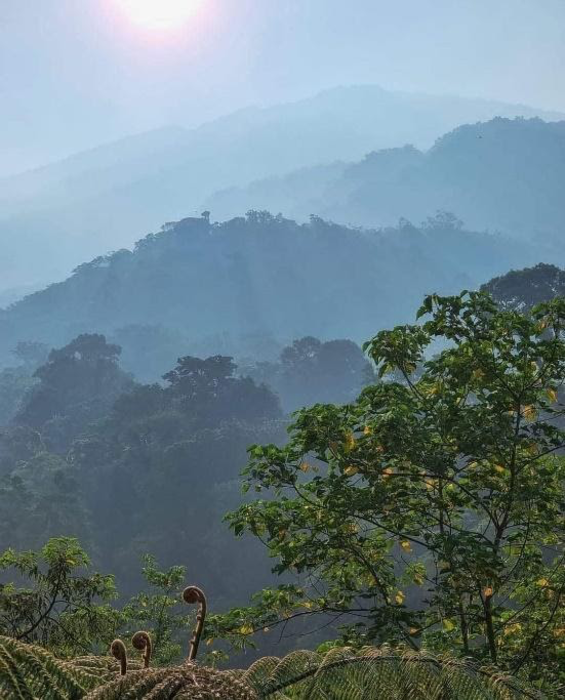
Also called Banahao or Banajao, Mt. Banahaw is considered to be a “holy mountain” in the Philippines and has become a custom pilgrimage site for locals. This is considered so because the locals deemed the mountain itself and its surroundings holy. The sacred springs are regarded to be “holy water” for its allegedly beneficial and miraculous qualities. You can also find boulders, caves, and streams around it with names that have biblical allusions. There are also shrines erected in, on or around them.
It is said in the story told by locals during the Spanish colonial era that this place was revealed to a man named Agripino Lontoc by the “Holy Voices,” which also gave names to the environs in this mountain.
Mt. Banahaw is frequented by many for spiritual reflection or to simply escape from the rigors of everyday life.
10. Dequey – Batanes / Mount Parker – Cotabato
Location: Batanes, Luzon
Height: 79 feet
Last eruption: 1978
Dequey is one of the islands in Batanes in north Luzon. This island is uninhabited, so the submarine eruptions reported in 1773, 1850 and 1854 that were likely to have originated from this volcano didn’t raise much of an alarm because there were no noted casualties.
Mount Parker
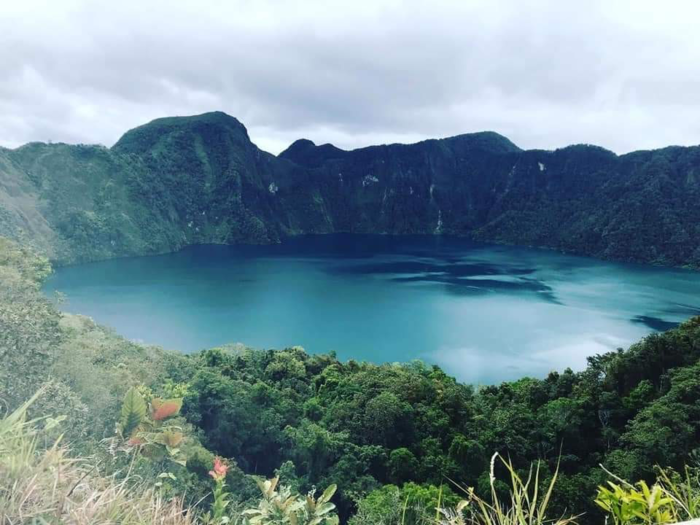
Also known as Mt. Melibingoy, Mt. Parker lies in South Cotabato in the southern part of the island of Mindanao. The volcano’s English name is taken from an American General, Frank Parker, who reportedly spotted the mountain and claimed to have discovered it during a flight he piloted in 1934. The 1641 eruption was one of three large explosions of Parker volcano within the last 3,800 years. This eruption caused devastating pyroclastic flows and lahars, and heavy ash fall and darkness over Mindanao Island.
You can read more about the precautionary measures, before, during, and after volcanic eruptions at https://knoji.com/article/precautionary-measures-before-during-and-after-volcanic-eruptions/
Buying Guide
With ten incredible volcanoes in the Philippines, it must be hard to figure out which one you’d visit. We suggest visiting Booking.com first, that way you can get a discount on your trip to the Pacific Ring of Fire.
If you’re anything like us (petrified of lava) you may want to buy a pair of REI’s Skymaster binoculars, that way you can enjoy the view of a volcano from a safe, lava free distance.
Or maybe you love lava. So much so that you’d want to wear it. We’d recommend checking out the lava jewelry from Karma and Luck. That way you can wear your eruptions!
Memories fade but photographs last forever. Why not buy a Canon camera for your trip? That way your memories will be memorialized.
Perhaps the most important thing you’d need to buy for a volcanic excursion are the perfect pair of hiking boots. Because of the unpredictable weather in The Philippines, we think you should check out Merry People hiking boots, which double as rain boots. And it doesn’t hurt that they’re really cute, too.