The Tropical Fruit Physalis: Its Nutrition and Gastronomical Uses
EducationThe Tropical Fruit Physalis: Its Nutrition and Gastronomical Uses

The name physalis is Latin taken from the Greek word phusan, which means “to puff out‘. The term appropriately describes the appearance of this tiny, attractive orange colored fruit covered by a puffy lantern-shaped papery husk. Physalis peruviana is a member of the Solanaceae botanical family, commonly known as nightshade, which includes tomato, tree tomato and eggplant. There are over eighty species of physalis.
Physalis peruviana is sometimes confused with physalis alkenkengi. Both are edible, although the former has an orange husk with orange colored fruit and is cultivated mainly as food in many of the worlds subtropical and tropical regions, including Australia and New Zealand. The later is a red colored fruit with a red husk that is grown more as an ornamental plant. Botanists disagree on the origin of alkenkengi, which is also known as bladder cherry. Some believe it is native of Europe, while others say it originated from Japan or China. Physalis peruviana is a higher quality fruit, although it is less hardy than physalis alkenkengi, which can be cultivated in the same climates as the tomato.
Physalis peruviana, also known as Chinese lantern, Peruvian cherry, Inca berry or just, physalis, is thought to have originated from South America, in particular the highlands of Colombia, Ecuador, Peru and Chile. Plants were brought back to England in the 18th century and taken to South Africa by early settlers who cultivated the fruit in the Cape of Good Hope, hence the popular name cape gooseberry.
Physalis and its Gastronomical Uses: To eat physalis, remove the husk and wash both the fruit and stem to remove any toxic substances, which can cause diarrhea. This fruit has a slightly strange, sweet scented flavor with hundreds of tiny edible seeds. Although this fruit is great eaten raw, physalis are better cooked and because it has a high pectin content, often no pectin needs to be added to produce jams, compotes or marmalade.
Physalis are excellent in fruit or mixed salads. They can also be used as filling for pies or turnovers. With a little sugar, to cut their tartness, they make a refreshing juice. Because of their appearance they also make a nice garnish for fruit trays or petits fours. Physalis are available from February to March.
Physalis and its Nutrition: Physalis peruviana has traditionally been used as a medicinal folk remedy for a large number of ailments. Indeed, it acts as a febrifuge, a diuretic and has anti-inflammatory, antirheumatic properties. And in recent years numerous studies in to the health benefits of this fruit are helping us to understand why.
Physalis is one of the best natural sources of antioxidants. It contains a high amount of vitamin C or ascorbic acid, vitamin E, and vitamin A or beta carotene. These powerful antioxidants are essential to help keep us healthy, protect us against our environment and inhibit the grow of free radicals which cause diseases such as cancer. Physalis also has vitamin P, or bioflavonoids and B complex vitamins. Vitamin P is seldom talked about but is also very important as it helps our bodies to absorb vitamin C and strengthen our immune system. B complex vitamins such as thiamine are essential for a healthy metabolism and for skin, eyes, brain and cells. Physalis also contains calcium, essential for strong bones and protein, essential for the production of red blood cells. Also pectin, a type of fiber which is thought to lower cholesterol. Minerals found in physalis include iron, potassium, phosphorus and the trace minerals magnesium and silicon.
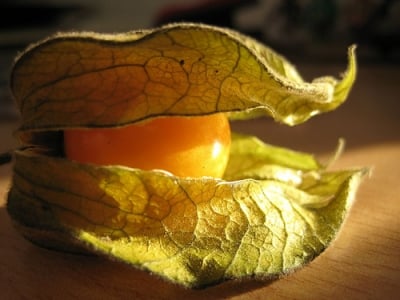
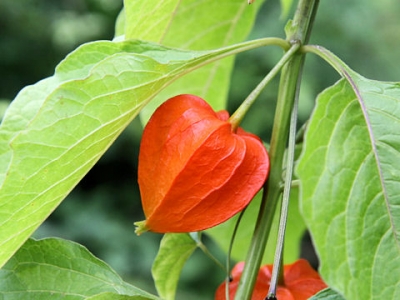
Above physalis peruviana and below physalis alkenkengi.
Images from commons.wikimedia.com and flickr.com with creative commons licence.