The Tropical Fruit Loquat: Its Nutrition and Culinary Uses
EducationThe Tropical Fruit Loquat: Its Nutrition and Culinary Uses

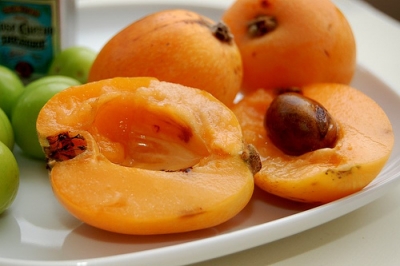
Loquat is a tiny, pear shaped, yellow tropical fruit (green when unripe) that grows in clusters on an evergreen tree in most of the worlds subtropical regions. In the USA they can be found anywhere from California to Florida, often in peoples back yards. Many people have no idea what they are, what to do with them, or even if the fruit is edible.
The loquat (Eriobotrya japonica) actually originates from China and became naturalized in Japan over a thousand years ago. The Japanese have popularized the fruit and improved it through hybridization. In the 18th century the loquat tree was successfully propagated at the Royal Botanical Gardens at Kew, England. It was also taken to the Riviera and the loquat tree’s timber became sought after by European stringed-instrument makers. Cultivation of loquat was spread throughout the British empire, including Australia, New Zealand and South Africa. Chinese immigrants spread the propagation of loquat throughout South East Asia, the Indian subcontinent, and are thought to have been responsible for introducing the fruit to Hawaii.
Although you could not tell by its appearance, loquat is part of the Rosaceae family, of which also belong the pome fleshy fruits, apple, pear and quince. However, after tasting the ripe succulent loquat, the botanical connection becomes apparent. The taste of ripe loquat could be described as a cross between apple and pear with a hint of apricot. By contrast unripe loquat is extremely tart and sour.
The size and appearance of loquat had botanists confused for many years. They originally thought that loquat was closely related to mespilus germanica also known as Japanese medlar. The medlar is actually from the Maloideae family, a subgenus of Rosaceae.
Today there are over 800 hundred varieties of loquat in Asia, alone. They range from oval to round shaped. Their colors range from light orange, through Dark orange and yellows. Only a handful of the best varieties are cultivated in California and just one variety, known as ‘wolf’ is cultivated in Florida. Loquat season is late winter to early spring.
Loquat and its Nutrition: loquat is an excellent source of vitamin C and contains B complex vitamins. The fruits yellow or orange flesh has Vitamin A or beta-carotene and other carotenoids such as lutein. The fruit has the minerals potassium, iron, copper and magnesium.
Apart from the aforementioned, loquat has other antioxidants. The flesh and especially the skin, are high in epicatechin; a type of flavonoid, in the subgroup of catechins, which helps neutralize harmful free radicals and suppress LDL oxidation in the body. Other polyphenolic compounds in loquat include chlorogenic acid, a compound that is a known antioxidant also found in coffee beans. Chlorogenic acid also helps slow the release of glucose into the blood stream after a meal.
Loquat, its Culinary Uses and storing: because loquat is picked as soon as it ripens it is best to eat without delay. However, it will keep for about 2 weeks in the refrigerator. Look for smooth skinned fruits. Brown spots are normal and not a sign that the fruit is bad. Loquats contain a number of hard black seeds. Never eat the seeds. The seeds of some varieties contain amygdalin, which when consumed, produces hydrogen cyanide, a deadly toxin. Loquat leaves can also contain a small amount of hydrogen cyanide.
In South East Asia loquats are often peeled, seeded and canned in syrup or candied. They are also great fresh and combine well with other fruits in fruit salads. Loquat often need sugar to balance its tartness and pairs well with spices such as cinnamon, cloves and allspice. It is often poached or made into sorbet for desserts. Because of its high pectin content loquat fruit is used to make jams and jellies. Loquat can also replace apples or pears as a pie filling and pairs well with coconut or orange. In China there are loquat wines and the Italians make home made loquat liqueur.
Primary image credit, flickr.com