The Treasure Caves of Sir Henry Morgan and the Spanish Treasure Fleet Routes
EducationThe Treasure Caves of Sir Henry Morgan and the Spanish Treasure Fleet Routes

The 16th century buccaneer Sir Henry Morgan is said to have used caves for storing plundered treasure from the Spanish main and Spanish treasure fleets in the Caribbean Sea. The islands that had been colonized by the English, such as Jamaica and Barbados gave save haven to buccaneers form which they could attack Spanish convoys at will, hit and run style. In return the buccaneers had to give half of there captured booty to the English. So its little wonder that pirates needed hidden locations such as deep caves to stash their treasure. No treasure has ever been found in the caves, but that is not surprising given the knowledge of their existence in local history.
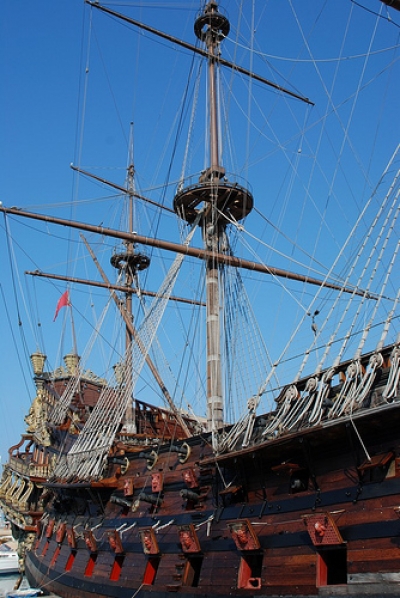
Replica of a 16th century Spanish galleon.
The Spanish Treasure Fleets: The golden age of the Spanish treasure fleets was from 1550 to 1700, during which time huge quantities of treasure were shipped from the New World to Spain. The Spanish crown developed an organized flota system that was well implemented. For the most part the system was highly lucrative, barring hurricanes and pirate attacks.
Twice a year large convoys of galleons would cross the Atlantic; they brought slaves from Africa in order to increase production of sugar cane and other commodities in the Caribbean. Quick-silver ( mercury) was brought from Europe to be used in the production of silver in Peru. A convoy usually consisted of thirty to forty galleons, it included Spanish merchant ships and royal war ships for the convoy’s protection.
When the convoy reached the Caribbean Sea it divided into three separate units. One fleet sailed for Portobello in Panama to deliver tons of mercury and pick up silver shipped from Peru. Another headed for Cartagena to collect gold; pearls from Ecuador and emeralds from Colombia. Another fleet sailed for Mexico, where it collected goods from Manila, that had been shipped to Acapulco and then transported overland to Vera Cruz. This included spices, porcelain and silks, which the Spanish traded for silver in the East. A fleet also stopped at Trujillo in Honduras, to collect indigo dye and spices from central America.

A traditionally dressed lady at the Caribbean port of Cartagena.
After stopping at various ports the entire fleet reunited in Havana for the beginning of the perilous return journey to Spain. By this time the galleons were of course weighed down with treasure and considerably slower. Privateer ships headed by the likes of Sir Francis and later Sir Henry Morgan would attempt to attack the convoys when they were at their most vulnerable. Such as when small fleets of galleons were moored at harbor, or they would pick of the stragglers from the smaller convoys before they reached Havana.
.jpg)
Pirates sought refuge on the island of San Andres.
On the island of San Andres, which forms part of an archipelago, 480 miles northwest of Cartagena, Colombia, there is a deep cave. Only part of the cave is accessible without dive equipment, because most of the cave is under water. The legend is that Henry Morgan stored his treasure in the cave. The cave would have been considerably smaller in Morgan’s time as the natural action of the sea has eroded it.
The island was once claimed by the English, but changed hands between the English,Spanish and Dutch several times. England eventually realized the Spanish claim to the islands in 1793. On the neighboring island of Providence there are remains of a sixteenth century fort, including cannons. This is thought to have been used by Morgan and his buccaneers to defend the islands.
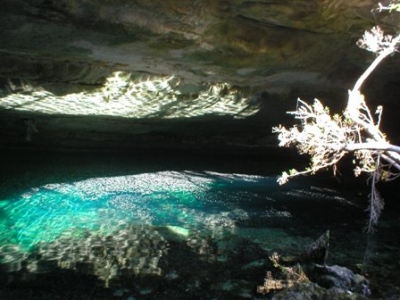
Morgan's Cave hideout on North Andros Island.
Another of Henry Morgan’s hideouts could have been a cave located at on North Andros Island, near the town of Morgan’s Bluff in the Bahamas. The stalagmite filled cave and the nearest town were named after Morgan. The islands were used by privateers during proprietary rule until the British crown restored order to the islands in the mid 17th century.
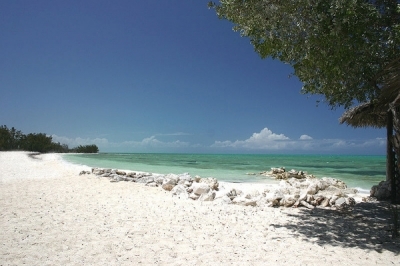
Hope Bay Lodge on North Andros Island. Pirates ruled this island until the mid seventeenth century.
Images from commons.wikimedia.com and flickr.com.