The Royal House of Hanover - A Family History
EducationThe Royal House of Hanover - A Family History

The German royal house of Hanover ruled over Great Britain for 187 years, from 1714 - 1901, by way of 6 monarchs, five kings and one queen.
.jpg)
King George I ascended the throne upon the death of Queen Anne in 1714, as he was the the late queen's closest Protestant relative, through his mother Queen Sophie, who was the grand daughter of King James I of England, by way of her mother, Elisabeth of Bohemia.
King George's ascension brought about the Jacobite Rebellions ( 1715 - 1746 ) - a series of uprisings and rebellions aimed at restoring the Royal House of Stuart as Britain's monarchs - an act designed to replace him with Queen Anne's half brother, James Francis Edward Stuart, an act that failed, mainly due to the Stuart's Catholocism.
King George came to the British throne at the age of 50 and was not liked or welcomed by the British people, probably for no other reason than he was a foreigner. It was said that he did not speak English, although records show that he both spoke and fully understood English. His reign also saw a diminishing of the monarchy and more power and control by the government, which, by the time of his death in 1727, had left full power of the running of the country to Robert Walpole, Great Britain's first Prime Minister.
Personally, he is best remembered for his long time feud with his only son, the future King George II.
George was born in Hanover on the 28th of May 1660, the eldest of seven children of Ernest Augustus and his wife Sophie of Rhineland - Palatine.
In 1682, by way of an arranged marriage of state, he married Sophia Dorothea of Celle, daughter of George William, Duke of Brunswick - Luneburg and his long term mistress, Eleonore d'Esmier d'Olbreuse.
Sophia Dorothea is best remembered for her affair with Philip Christoph von Konigsmarck, which when found out, resulted in her spending the last thirty years of her life incarcerated in the Castle of Ahlden in her native Celle, where she was denied any contact with her children again.
Her lover, it has been reported, was murdered - supposedly by order of the King - for his audacity, but this has never been verified.
Before her affair and subsequent divorce and incarceration in 1694, this union had produced two heirs, the future King George II of Great Britain ( 1683 - 1760 ) and his sister Sophia, future Queen of Prussia ( 1687 - 1757 ).
Although the Queen consort had been imprisoned for her part in an affair, the King had also indulged in a long term affair, which resulted in at least three illegitimate daughters.
His affair had been with former lady in waiting to Queen Sophia, Ehrengard Melusine von der Schulenburg ( 1667 - 1743 ) , Duchess of Kendal and Munster, who became Princess of Eberstein in 1723, giving rise to many rumours, that the king had secretly married her at some point during their relationship.This union produced at least three daughters. they were :
Anna Luise 1692 - 1773.
Melusina 1693 - 1778.
Margaret Gertrude 1701 - 1726.
Ehrengard died in May 1743 at the age of 75, 16 years after King George, who died whilst on a visit to his native Germany on the 11th of June 1727 at Osnabruck. He is buried in Herrenhausen, Hanover, Germany.
.jpg)
King George II came to the throne upon the death of his father in 1727. He was the eldest and only son of King George I and his wife Sophia and was born on the 30th of October 1683 at the Herrenhausen Palace, Hanover.
He was the last British king to be born on foreign shores and the last king to lead an army into Battle, at the Battle of Dettingen in 1743.
It was during his reign that the national anthems of Great Britain, Australia, Canada and New Zealand were written and performed.
He is best known for his long and bitter feuds both with his father and his own son and heir.
In August 1705 he married Caroline of Brandenburg - Ansbach, daughter of John Fredrick Margrave and his wife Eleonore Erdmuthe of Saxe - Eisenbach, in the Royal Palace at Hanover.
Like most things that he did in his life, his father was angry with him, this time for his choice of bride, not through any dislike for her, but because he did not want to see his son in a loveless, arranged marriage such as he had endured. As it was, George and Caroline had a very successful marriage, that produced nine children.
Caroline was an intellectual woman and lover and patron of the arts.She was well liked both by the parliament and the people of Britain, so much so, that Caroline County, Virginia, U.S.A was named in her honour.
Just before she died of a ruptured womb in 1737 aged 54, she pleaded with her husband to remarry, but he promised not to, preffering to take mistresses instead.
When she was interred in Westminster Abbey, the king had her coffin fitted with a false side, so that he could be interred along side her when he too died.
They had two children that died in infancy, Augustus George born in 1716 and George William born in 1717 who died within one year.Their other 7 children were:
Fredrick, Prince of Wales - 1707 - 1751.
Anne, The Princess Royal - 1709 - 1759.
Amelia - 1711 - 1786.
Caroline - 1713 - 1757.
William - 1721 - 1765.
Mary - 1723 - 1772.
Louise - 1724 - 1751.
Even though the royal couple's marriage was one of friendship and trust, the king still took mistresses, one of whom produced him with a recognised, illigitimate son, Johan Ludwig Graf von Wallmoden - Gimborne born in 1736 ( - 1811 ) by his married mistress Amalie von Wallmoden.
King George died on October 25th 1760 aged 75, of an aortic aneurysm, and true to his word, he was interred in Westminster Abbey in the same casket as his Queen.
(1).jpg)
King George III came to the throne upon the death of his grandfather, George II, as his own father and heir to the throne, Fredrick, Prince of Wales, had died nine years previously.
George III's reign is reknowned for two things, the loss of the American colonies that lead to the American War of Independence and subsequently the union of the United States of America, and his mental illness, that dominated the latter years of his life.
George was born in London on the 4th of June 1738, the son of the former Prince of Wales, Prince Fredrick and his wife Princess Augusta of Saxe - Gotha. George was the second born and first son of their nine children and was never born to be King of Britain.
He died, blind, deaf and insane on the 29th of January 1820 at the age of 81.
It is claimed that the king's mental illnes was due to the hereditary condition, porphyria.
He married Charlotte of Mecklenburg - Strelitz ( 1744 - 1818 ), daughter of Duke Charles Louis Fredrick of Mecklenburg - Strelitz and his wife Princess Elizabeth Albertine of Saxe - Hildburghausen, on the 6th of September 1761, in London. This was to become a successful marriage that bore 15 children, one of which was the future King George V! of Britain.
Charlotte was a lover of music and it is said that she was friends with both the composers Bach and Mozart. Another of her friends was the French Princess Marie Antoinette, with whom she had a long and close relationship,until Marie Antoinette's execution in October 1793.
She enjoyed her married life and caring for her children, but was not happy with court life due to the interference and controlling manner of her mother - in - law, the Princess Augusta.
This led to the King obtaining Buckingham House as their family home, which is better known today as Buckingham Palace, which has remained to this day, the official home of the British monarch.
During her latter years Charlotte became the legal guardian of the King during his long mental illness.
She died of the effects of old age in 1818 at the age of 74 having been married to the king for 59 years, making her the longest serving Queen Consort in the British monarchy and the second longest serving consort after the Duke Of Edinburgh, consort of the present Queen Elisabeth.
Their marriage produced 15 children, they were:
George, Prince of Wales and future Prince Regent and King George VI - 1762 - 1830.
William - 1763 - 1827.
Charlotte - 1766 - 1828.
Edward - 1767 - 1820.
Augusta Sophia - 1768 - 1820.
Elizabeth - 1770 - 1840.
Ernest Augustus - 1771 - 1851.
Augustua Fredrick - 1773 - 1843.
Adolphus - 1774 - 1850.
Mary - 1776 - 1857.
Sophia - 1777 - 1848.
Octavius - 1779 - 1783.
Alfred - 1780 - 1782.
Amelia 1783 - 1810.
.jpg)
King George IV came to the throne upon the death of his mentally ill father, after having been the Prince Regent in the king's absence for the previous 11 years.
George is best remembered for being selfish, unreliable, irresponsible and frivolous and for his only feat in life, the building of the Brighton Pavilion and for his extravagant lifestyle contributing to the British Regency period of fashion and architecture.
( Read about King George IV's finest achievement the-royal-pavillion-brighton )
He had indulged in a sham marriage at the age of 23, in 1785, to one of his long time mistresses, Maria Fitxherbert. The marriage was declared null and void as it had not passed the Royal Marriage Act by way of approval by King George III.
He was then ordered to marry Caroline of Brunswick ( 1768 - 1821 ), the daughter of Karl Wilhelm Duke of Brunswick and his wife Princess Augusta of Britain ( the sister of George III ), on the 7th of April 1795, a marriage that was ill matched and lasted just over a year.
It has been said that the royal couple had sex just three times, so loathed was George towards his new wife, but three times was enough to produce a daughter, the Princess Charlotte, born in January 1796 ( - 1817). After the birth of the princess, Caroline left the royal court, and the couple never lived together again.
George never remarried, preffering instead to have many mistresses, and no doubt many illegitimate children, although no-one has been recognised as such.
George became Prince Regent in 1810 and King in 1821. By the time of his accession he was obese, addicted to laudanum and in the first stages of dementia, although this hardly made a difference to his ability to run the country as he would have been inept had he been of good health.
For all his misgivings however, King George IV was liked by the general masses and took Great Britain into an age of opulence and sophistication by way of his love of fashion and the work of architect John Nash, leaving the country a legacy of Regency chic that every British man, woman and child was more than happy to inherit, by the time of his death in 1830.
Princess Caroline also remained unmarried, ( as the royal couple had never divorced ) but had indulged in many affairs, and eventually left Britain, only to return upon George's accession to the throne, but he refused to recognise Caroline as his Queen.
On the night of King George's coronation ( 21st of July 1821 ), Caroline was taken ill in her bedchamber. She was ill for three weeks, before dying from an unspecified illness, of which Caroline had been sure was poisoning, on the 7th of August. Her body was then taken to her native Brunswick in Germany, for buriel.
.jpg)
With the death of King George IV and the tragic death of his daughter Charlotte in childbirth in 1817, there was no heir presumptive to follow him onto the throne.
The accession was therefore handed over to his younger brother Prince William, Duke of Clarence, who came to the throne at the age of 64.
After a successful naval career his reign was best remembered by his political reforms of the day, of which he took an avid interest.
He oversaw an update of the poor laws, a restriction on child labour, the abolition of slavery, and a reformation of the electoral system, he was also the last monarch to appoint a British prime minister.
His ' real ' family was with Irish actress and long time mistress Dorothea Jordan, with whom the Duke had ten children, all of whom were recognised and titled.
His 20 year relationship with Dorothea lasted from 1791 until they seperated in 1811.
The Duke took over the care of the boys and Dorothea was given a yearly stipend to look after the girls, provided she did not go back onto the stage.
Due to family problems, Dorothea was forced back onto the stage to pay off a family debt in 1814. When the Duke heard of this, he took away both her daughters and her stipend.
To avoid the wrath of creditors, Dorothea went to Paris, where she died in 1816, apparantly living in abject poverty.
Their children were all given the surname of FitzClarence, Fitz means son / daughter of a royal, and Clarence was the Duke's honorary title from birth.
They were:
George - 1794 - 1842.
Henry - 1795 - 1817.
Sophia - 1796 - 1837.
Mary - 1798 - 1864.
Fredrick - 1799 - 1854.
Elisabeth - 1801 - 1856.
Adolphus - 1802 - 1856.
Augusta - 1803 - 1865.
Augustus - 1805 - 1854.
Amelia - 1807 - 1858.
The Duke married Adelaide of Saxe - Meiningen ( 1792 - 1849 ) daughter of George I, Duke of Saxe - Meiningen and his wife Luise Eleonore of Hohenlohe - Langenburg, in July 1818, and had two daughters - Charlotte born in 1819 and Elisabeth born in 1820 - both of whom had died in infancy.
His marriage to Adelaide, although a marriage of convienience due to his mounting debts, actually became a happy and devoted one on both sides.
Adelaide was beloved by the British people and well respected both at court and by the British parliament.
She was religious, modest and charitable, and the whole nation mourned with her upon the tragic loss of both her babies.
Adelaide was honoured by way of having the South Australian capital city of Adelaide, named after her, upon it's founding in 1836.
Adelaide died of natural causes in 1849 at the age of 57 and was interred in St Georges Chapel at Windsor Castle, alongside her husband who had died eight years previously in 1837 from heart failure.
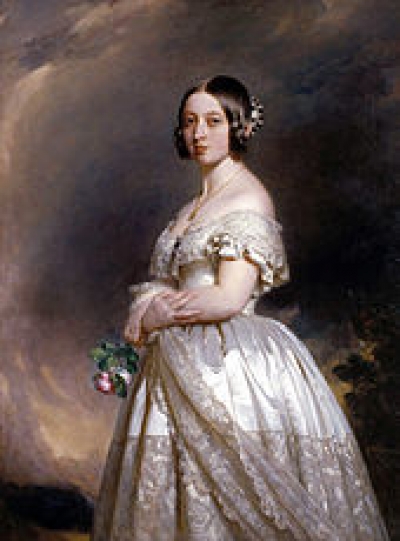
With the death of King William in 1837, the monarchy was left for a second generation, without an heir presumptive.
This time the royal accession was bestowed upon the 18 year old daughter of the 4th son of King George III, Augustus, Duke of Kent and his wife Princess Victoria of Saxe - Coburg - Saalfeld, the Princess Victoria.
Victoria was born on the 24th of May 1819 at Kensington Palace in London, the only child of the Duke and his wife, as the Duke died just a few months after her birth from pneumonia.
After a lonely and closetted childhood at the hands of her widowed and dominant mother, Queen Victoria went on to be Britain's longest ever reigning monarch and the longest reigning Queen in the world, after a reign of 63 years, 7 months and two days. She reigned throughout 4 assasination attempts,the deaths of three of her children, the tenur of 20 prime ministers and saw more historical, scientific, medical, industrial and political changes and witnessed more governmental and social reforms than any other British monarch.
Her love affair and marriage to her consort, Prince Albert is legendary, as is her lifes work and historical achievements.
No other monarch has had more written about her, more statues dedicated to her, more places named after her or more research done into her life, than Victoria, and she is hailed as the world's most famous ever royal, instantly recognisable to all, throughout the world.
Victoria became Queen on the 20th of June 1837 at the age of 18 and was crowned a year later in June 1838.
She married her cousin and the love of her life, Prince Albert of Saxe - Coburg and Gotha ( 1819 - 1861 ) on the 10th of February 1840 and their union produced 9 children, one of which went on to be the next King of Great Britain, which due to the long length of her reign, holds the title of the oldest ever monarch to take the throne, at the age of 69.
Their nine children were:
Victoria, the Princess Royal - 1840 - 1901.
Edward, Prince of Wales and future King - 1841 - 1910.
Alice - 1843 - 1878.
Alfred - 1844 - 1900.
Helena - 1846 - 1923.
Louise - 1848 - 1939.
Arthur - 1850 - 1942.
Leopold - 1853 - 1884.
Beatrice 1857 - 1944.
Victoria was widowed in 1861, and went into mourning for the rest of her life, although it is recorded that she did have male friendships during that time, but whether any of them were romantic relationships is unclear, all that is known is that she definately had certain, male favourites.
Prince Albert died from what was thought to be typhoid fever at the time of his death, but further research by modern historians are of the impression, due to his last two years of waning health, that he probably died from a chronic illness or even a type of cancer.
He died on the 14th of December 1861, in the Blue Room at Windsor Castle, after a recent trip to Cambridge to visit his son Prince Edward the Prince of Wales, who had recently been involved in a love scandal with a woman of low repute, which the Queen and Prince Albert feared could have led to financial recriminations.
Due to this, Queen Victoria, for ever blamed her son for the death of her husband, banishing him from her life, until her final days, finally speaking to him and hugging him on her death bed at Osbourne House.
Prince Albert was originally interred at St Georges Chapel, Windsor Castle, then removed to the mausoleum at Frogmore a year later, after Victoria had had the mausoleum commissioned and built in his honour.
Her death in 1901 saw the end of the Royal Dynasty of the Royal House of Hanover, and the end of Britain's most prolific and historical royal era.
She died of a stroke at Osborne House on the Isle of Wight on the 22nd of January 1901, at the age of 81 and was interred alongside Prince Albert at the Frogmore Mausoleum at Home Park situated in Windsor Great Park, near Windsor Castle.
She was succeeded by her son Prince Edward, who was the first monarch of the Royal House of Saxe - Coburg and Gotha. The name of this royal house was then changed by his son to the Royal House of Windsor, due to the war that Britain had with Germany, the present British Royal Dynasty that rules to this day.
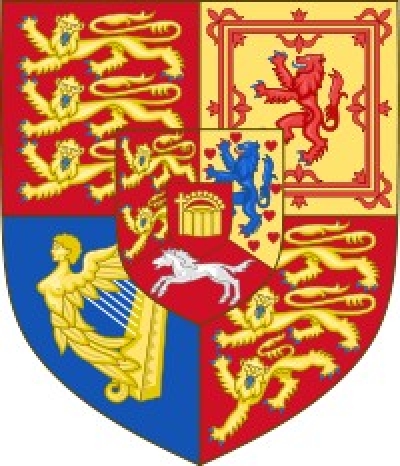
THE ROYAL HOUSE OF HANOVER.
George I - 1714 - 1727. 13 year reign.
George II - 1727 - 1760. 33 year reign.
George III - 1760 - 1820. 60 year reign.
George IV - 1820 - 1830. 10 year reign.
William IV - 1830 - 1837. 7 year reign.
Victoria. - 1837 - 1901. 63 year reign.
FOR OTHER BRITISH MONARCHY TIMELINES PLEASE READ
timelines-of-the-british-monarchy-1066-2010
FOR MORE ARTICLES IN THIS SERIES PLEASE READ:
the-norman-dynasty-a-family-history
the-plantagenet-dynasty-a-family-history
the-royal-house-of-lancaster-a-family-history
the-royal-house-of-york-a-family-history
the-tudor-dynasty-a-family-history