Shipwrecks and Treasure: the Portuguese Frigate Santo Antonio De Tanna
EducationShipwrecks and Treasure: the Portuguese Frigate Santo Antonio De Tanna

By the late 17th century Portugal no longer enjoyed a monopoly on the lucrative Asian trade routes as it had over the previous hundred years. Portugal was in decline as a major sea power and Portugal’s main rival the Dutch India Company had successfully encroached on its colonial territories by establishing fortified bases at Batavia and other locations. The British East India company had also established trading posts in India, after victory against the Portuguese at the Battle of Swally in 1612. Portugals colonial grip was further lossened when Arab forces revolted in the Persian gulf.
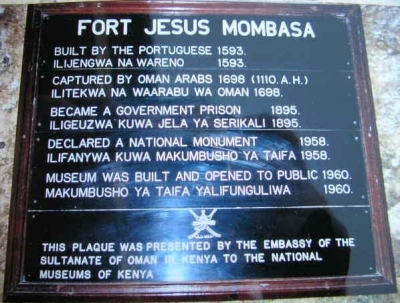
One of Portugal’s East Africa bases was at Fort Jesus, which guarded the harbor of Mombasa. Local Omani Arabs refused to pay the taxes levied upon their vessels by Portuguese officials. Moreover, the Arabs were rebelling against the oppression and exploitation of the colonial ruler. Arab forces besieged the fortress which was held by a small garrison of mixed Portuguese and African soldiers.
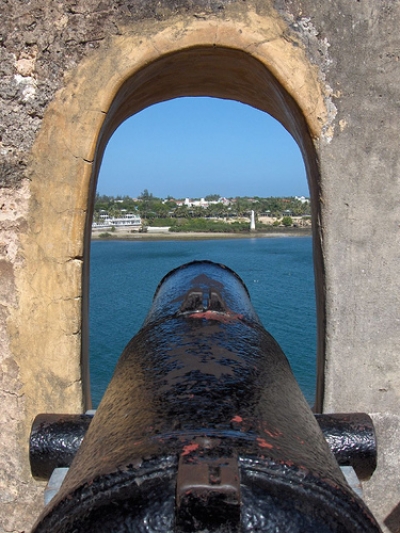
Three frigates were sent from Portugal’s principle port in Goa, India to curtail the uprising. One of the frigates was the Santo Antonio de Tanna and the fleets commander was General Luis de Mello Sampaio. On October 20, 1697 the scene at Fort Jesus was desperate. After changing hands several times during the conflict the fortress was about to fall to the Omani Arabs. The Santo Antonio de Tanna was overcome by fire from Arab vessels, eventually capsizing and sinking by a reef.
In 1976 the Museum of Kenya contacted the Institute of Nautical Archaeology, after a number of divers had reported the location of an ancient shipwreck, at a depth of 60 feet, near the walls of Fort Jesus. The museum knew that the shipwreck, known as the Mombasa wreck, was of a 17th century galleon but had not been able to positively identify the wreck.
Between 1977 and 1980 the wreck site was fully excavated. From the early stages of the excavation it became apparent that the wreck had been built by Portuguese shipwrights in Goa, India, due to its style of construction. The fact that the frigate was Portuguese, its period of construction and location, meant it could only be one vessel. The flagship of the Portuguese fleet, the Santo Antonio de Tanna.
The discovery of the Santo Antonio was highly significant because at that time very little was known about 17th century Portuguese seafaring. Moreover, Lisbon had suffered a massive earthquake in 1755, that had destroyed many government records. The shipwreck was the first Portuguese galleon to be excavated. The discovery and excavation of other Portuguese vessels such as, Nossa Senhora dos Martires would following in the 1990’s.
Ultimately the excavation yielded over 6,000 objects; Chinese porcelain, ceramics, jewelry made of jet, pewter ware, silver-plated candlesticks and silver coins. And to further support the shipwrecks identity, the ship was carrying relief ordinance for Fort Jesus, all be it a modest amount; (this was due to Portugal’s shortage of armaments at the time) two bronze swivel guns, iron shot, incendiary devices, powder flasks and a sword hilt were discovered.
It took over ten years to stabilize and conserve the many artifacts recovered; a large selection of which can be seen at Fort Jesus Museum, Mombasa, Kenya.
All images from commons.wikimedia.com