Shipwrecks and Treasure: the San Pedro of 1733
EducationShipwrecks and Treasure: the San Pedro of 1733

The San Pedro was a Dutch built Spanish vessel that was part of the New Spain Fleet in the 1733 Spanish treasure fleet disaster. After running around in Hawk’s Channel, off Indian Key, Florida as the result of a hurricane, she was salvaged then burned to the water line by her crew. In 1961 she was rediscovered in 18 feet of water surrounded by turtle grass. In 1989 the Islamorada Chamber of Commerce joined forces with local businesses to establish the San Pedro Underwater Archaeological Preserve. The project included replica cannons and mooring blocks, so that boats could tie up and not drop anchor near the wreck site. There is also a bronze plaque which identifies the Spanish shipwreck as the San Pedro and thanks those who were involved in preserving the site of the shipwreck for future generations.
When the San Pedro left Vera Cruz, Mexico she was one of ten ships headed for Havana, Cuba. The merchant vessel displaced 287 tons. Her valuable cargo consisted of desirable commodities such as silks, cotton, porcelain, indigo, cochineal and a variety of spices, such as cinnamon and nutmeg. Other goods in the ships manifest were ivory, jewels, jewelry, silver and gold. The vast majority of the San Pedro’s cargo originated in the Asia Pacific and was brought by the Manila galleons to Acapulco. The goods were bought in Manila with Spanish silver coins which had become the most valuable currency of the day. As was common practice there were valuables not included in the ships manifest that were smuggled onto the vessel by wealthy Spanish folk who had evaded tax officials of the Spanish crown.
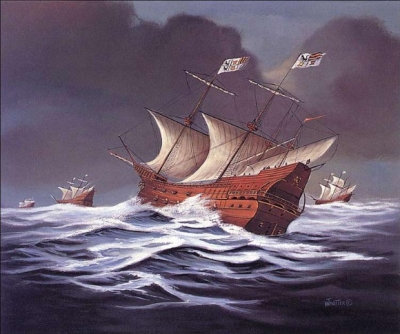
The San Pedro by William Trotter.
At the port of Havana the San Pedro joined with 20 other vessels which included four heavily armed Spanish galleons. One of those vessels was the flagship or capitanía was El Rubí Segundo. Aboard the Rubi was the fleets commander, Lieutenant General Don Rodrigo de Torres. The captain of the San Pedro was Gaspar López de Gonzáles. The fleet set sail for Cádiz, Spain on July 13.
The fleets usual route was north east to the east coast of Florida where the Golf Stream and Atlantic currents took them east across the ocean via the Azores. For the first two days the fleet encountered clam seas and warm Caribbean weather. However, on the evening of July 14, it began to rain heavily and strong winds whipped up the surf which crashed down on the ships decks. With poor visibility the fleet lost formation and became separated. Some of the vessels dropped anchor where they could find shelter and attempted to wait out the storm. Others headed for the open ocean. By the following morning the entire fleet save one vessel, the Nuestra Señora del Rosario, was shipwrecked along more than 80 miles of the Florida coastline. Some of the vessels including the San Pedro had run aground, while others had been destroyed. The del Rosario returned to Havana to alert authorities and ships arrived a few weeks later to salvage vessels and rescue survivors.
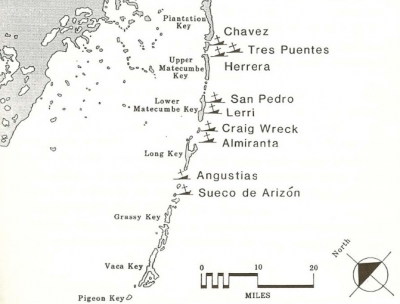
Map shows the location of known shipwrecks of the Spanish treasure fleet disaster of 1733. The shipwrecks of four other vessels in the fleet have never been discovered.
All images from commons.wikimedia.com