Planting The Fall Vegetable Garden
EducationPlanting The Fall Vegetable Garden

Depending on your planting zone, planting the fall vegetable garden will yield you fresh vegetables for the Thanksgiving feast. On the south coast of New England, the prevailing southwest winds keep us warmer well into the winter. This is ideal for planting another round of cool weather crops and root crops. As the days shorten and activities turn to indoors, putting up vegetables and fruits for the winter is such a homey activity.
Most seed packets call for 90-120 days from germination to harvest. Plan ahead according to your area's frost date. Keep in mind that the weather can turn abnormally cold. You have a couple of months to prepare for this. Set up your rows to allow for easily providing row covers. Flexible PVC tubes cut in pieces 4 times the height of the full grown plant can be bent over the row twice the width of the full grown plant and stuck into ground. Place rocks or bricks along outside edge of tubes now so they are ready when you need to cover. Have heavy gauge clear plastic rolls on hand or tarps. Tall individual plants can be staked with at least three outer stakes higher than the full grown plant and set wider than the full grown plant to be wrapped against the elements. An appropriately sized trash bag can easily be used in this application. One additional stake next to the plant (tied) will keep it from toppling over. Shorter tender plants will benefit from cold frames and are an excellent use of discarded windows and casings.
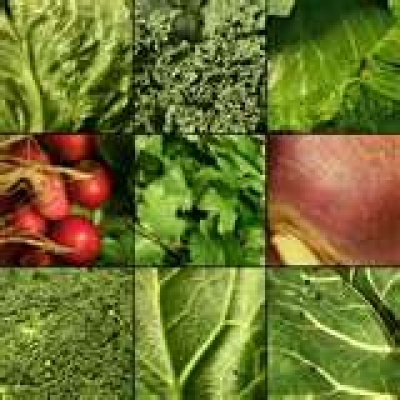 Cole crops
Cole crops are a variety of plants belonging to the Brassicaceae, formerly Cruciferae, or mustard family. These include cool season crops such as Brussels sprout, cabbage, cauliflower, collard greens, kale, kohlrabi, mustard, broccoli, turnips, watercress, turnips, Chinese cabbage, bok choi, rapini, canola, radishes, and horseadish.Their origin is traced back to the wild cabbage from the Mediterranean and Asia Minor area.
Cole crops should be planted or sown when soil temp is between 65° and 75°F. Optimal growing temperatures 60 to 65°F. Many of this family can withstand freezing temperatures. Collards and kale are actually sweeter when harvested after a hard freeze.
Lettuces
Lettuce and salad greens are cool weather crops that you want to have another go at to have with your late summer tomato and cucumber harvest. Leaf varieties do well and can be extended well into the winter with a cold frame. Just harvest leaves as you need them for a continuous supply. Head varieties take longer to mature and harbor insects you may not wish to deal with.
Root Vegetables
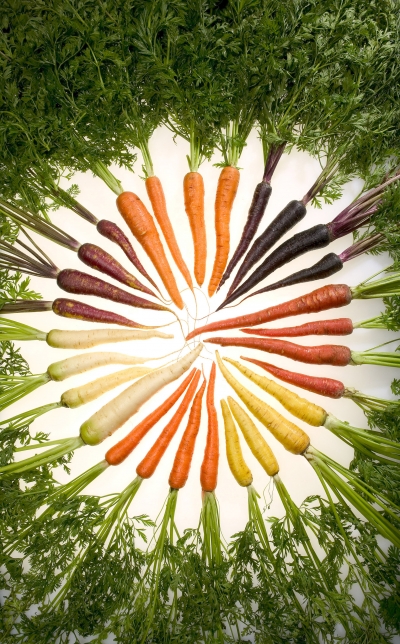
Root vegetables are a must for the fall vegetable garden. Early spring and summer insects are less threatening providing a healthy harvest of turnip and beet greens without the insect holes. The soil stays warmer than the air providing a natural protection of your crops. Beets, onions, turnips, parsnips, rutabagas, carrots, horseradish, and radishes are choice selections. Garlic planted now can be harvested in spring. When young plants have emerged, give a healthy layer of compost or mulch as added protection and nutrition.
Perennial Plants
If you didn't plant these favorites in the spring, do it now to establish them in the vegetable garden or in their own separate patch. Rhubarb and asparagus will continue to develop their root systems throughout the winter months. If plants are not available at your local nursery, try a neighbor or local farmer. Don't forget the many berry plants like strawberries, blackberries, blueberries.
Herbs
This is also the time of the year to establish perennial herbs. Be aware that mints are invasive. Plant them in deep pots and sink the pots into the soil. Herbs of choice are oregano, chives, parsley, sage, and thyme. Rosemary is touchy. Parsley continues to grow even under a snow cover. Fresh parsley added to a hearty winter chicken soup makes it all the healthier.