Interestingly Amazing Tidbits About the Uluru or Ayers Rock
EducationInterestingly Amazing Tidbits About the Uluru or Ayers Rock

Ayers Rock or Uluru, which is located in Australia, looms like a sleeping giant on a desert plain. With its enormous size, it completely dominates its surrounding. Here are some interesting facts about one of Australia’s most recognizable natural icons and one of the world’s most famous rock formations.

1.) Uluru, an island mountain, is a massive hulk of rock which is one of the largest monoliths in the world.
2.) This mass of golden-red sandstone which is about 340 meters high with a circumference of more than 9 km was formed about 450 million years ago.
3.) Barren, stark and enormously huge, it is visible from a distance of more than 100 km.
4.) Uluru’s color, which is reddish, changes under differing light throughout the day.
5.) Some of the debris worn away from the rock mass long ago can still be seen nearby in the form of sand dunes.
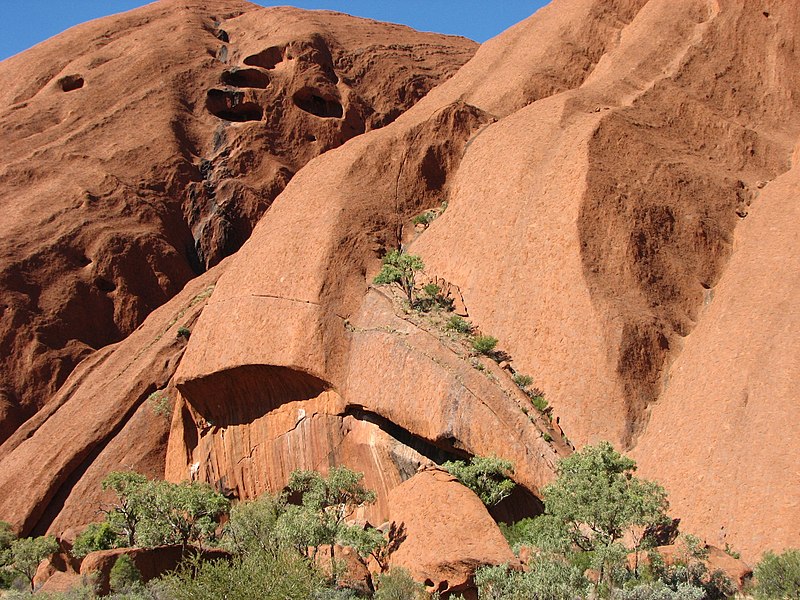
6.) Uluru is almost completely bare and supports very minimal life only at its base.
7.) There is one huge broken debris that slid down the north face of Uluru with the shape of a long carving arc known as the “Kangaroo’s Tail”.
8.) Another bizarre feature of Uluru is the development of honeycomb-like or tafoni hollows, and even caves in its surface.
9.) Numerous large caves near the base of the rock have been used since time immemorial by the Aborigines. The walls of these caves are decorated with pictographs and paintings.
10.) Uluru has also numerous springs and water holes and it was listed as World Heritage Site.

11.) Climbing Uluru is a popular attraction for visitors and since its declaration as World Heritage Site it receives more than 400,000 visitors annually.
12.) There have been 35 recorded death related to recreational climbing of the Ayers Rock.
13.) The local Anangu, the traditional owners of the Uluru, do not climb the rock because of its great spiritual significance.
14.) There are 21 known native mammal species, 73 reptile species and 4 frog species that live around the Uluru region.
15.) Centralian Bloodwoods, which grow in the area, are used in making boomerangs, spearheads and bowls. The sap is used as disinfectant and inhalant for coughs and colds.

See also
-
World’s Most Impressive Rock Formations
-
Philippine Extremes
-
Quick Facts About Norway
-
Interestingly Unique Facts About Israel
-
Interesting and Random Facts About Italy
-
Amazing Facts About Places in the World
-
Interesting Facts You Need To Know About Japan
-
Amazing and Interesting Facts About Planet Jupiter
-
99 Interesting and Random Facts About Places in the World
-
Geological, Geographical, Historical and Other Interesting Facts About Iceland