Geological, Geographical, Historical and Other Interesting Facts About Iceland
EducationGeological, Geographical, Historical and Other Interesting Facts About Iceland

Iceland is an island nation consists of volcanic plateaus located in the North Atlantic Ocean. Iceland, largely a barren country with extensive lava flows, is officially known as the Republic of Iceland, a well-developed and technologically advanced country.

1.) The beautiful country of Iceland is usually considered the westernmost country of Europe.
2.) Vatnajukoll, Iceland’s largest glacier is located in the southeast region of the country.
3.) Iceland is one of the most volcanically active areas in the world. Earthquakes are frequent.
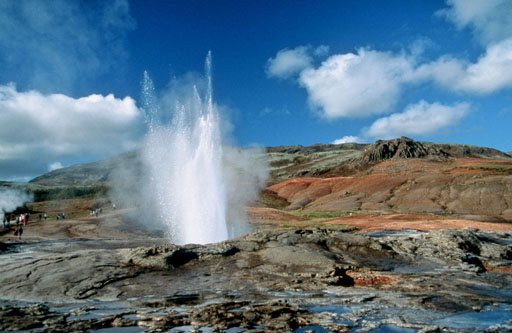
4.) There are many hot springs in the country and the most famous is the Great Geysir in Haukadalur valley, the world’s oldest known geyser.
5.) Another famous geyser in Iceland is Strokkur, which erupts every 5–10 minutes.
6.) Most buildings in the country’s capital – Reykjavik, are heated by hot water piped from deep wells.
7.) Iceland has the freest press in the world.
8.) As the world’s 18th largest island, Iceland is geologically part of North America and Europe.
9.) Iceland’s longest river is Thjorsa while its largest lakes are Porisyatn and Pingvallavatn.
10.) According to the United Nations Human Development Index, Iceland is the fourth most productive country per capita.
11.) In world ranking, Iceland is considered as the 14th most developed country in the world.
12.) Commercial fishing is the principal economic activity in Iceland.
13.) Hay, oats, potatoes, muttons and turnips are the five most significant crops of Iceland.

14.) Iceland has no railways or inland waterways and depends heavily on roads and coastal shipping for transportation.
15.) Most of the islands of Iceland are uninhabited and the country has no standing army.
16.) The language of the country is Icelandic. English is widely spoken too and Danish is likewise widely understood and spoken.
17.) There is complete religious freedom in Iceland but most people belong to the Evangelical Lutheran.
18.) Iceland was first settled by Norwegians in 874 CE.
19.) In Iceland, it is customarily to use patronymics instead of surname (e.g. Olafur Jonsson-Olafur, Jon's son or Katrín Karlsdottir-Katrín, Karl's daughter). In connection to this, telephone directory in Iceland is listed alphabetically by first name rather than by surname.
20.) Althing, Iceland’s Parliament, is the oldest parliamentary body in the world. It was established in 930 C.E.
21.) Surtsey, one of the youngest islands in the world which was created by volcanic eruptions from 1963 to 1967, is considered the southernmost point of Iceland.
22.) The first Puffin (a bird species) nests were found on Surtsey in 2004
23.) The hottest temperature recorded in Iceland was 30.5 °C on June 22 1939 at Teigarhorn and the coldest was −38 °C on January 22, 1918 at Grímsstaoir and Moorudalur.
24.) The only native land mammal when humans arrived in Iceland was the Arctic Fox and there are no endemic reptiles or amphibians on the island.
25.) Iceland is the 14th longest-living nation with a life expectancy at birth of 80.67 years
26.) Dettifoss, which is located in northeast Iceland, is Europe’s largest waterfall in terms of volume discharge, with an average water flow of 200 m3/second.