Architectural History
EducationArchitectural History

The ways in which architectural history has been studied have a crucial influence on the ways we understand and interpret the built enviroment. The discipline of architectural history has only become self-reflexive comparatively recently. Many of the key writers have been reticent when it comes to analysing their own procedures, methods and assumptions and the implications these have for the subject. As it was traditionally practised, architectural history was highly empirical in nature, with an emphasis on establishing the date, authorship and style of buildings. David Watkin’s assertion that the aims of architectural history are practical (‘to establish what was built, when it was built, and the names of the patron and designer’), historical (‘why the building was built’), and aesthetic (‘to describe and perhaps account for the visual or stylistic differences between one building and another’) sets out the basic concerns of the discipline but seems rather uninspiring.
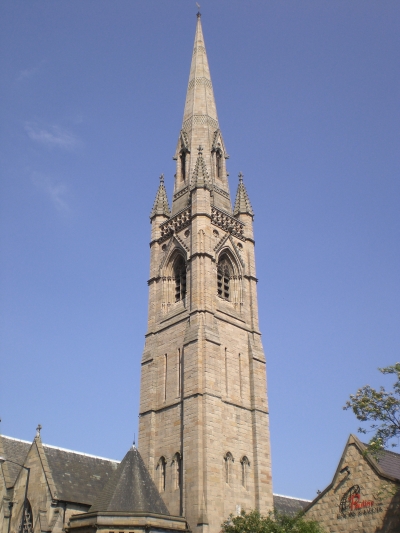
St. Mary's R.C. Cathedral, Newcastle Upon Tyne. Augustus Pugin, with a tower and spire by Dunn and Hansom.
Architectural history has used traditional techniques such as formal analysis, dating and the ascription of value. There has been a particularly strong emphasis on classification according to pre-existing categories such as author or style. With a major concern being to establish a canon, priority was given to named architects and the practice of attribution became a dominant methodology. Buildings to which names could not be assigned received more cursory treatment. For example, Howard Colvin’s A Biographical Dictionary of British Architects, 1600-1840 (1954) became something of a handbook for architectural historians. Colvin advocated empirical research – concentrated on the wide range of documentary sources which architecture produces – instead of speculative attribution on the basis of style. This marked a step beyond the techniques of the connoisseur, but remained focussed on the architect as ‘author’. Such studies foreground the architect and assess buildings primarily as part of his or her oeuvre. Another method favoured by architectural historians is to compile ‘histories of style’. These chart the development of specific architectural styles and often take the form of teleological narratives, illustrated with a parade of iconic buildings, each one influencing the next. Style is one of the major categories into which architectural history has been divided: buildings are grouped together according to common stylistic traits. It is logical to use this strategy, as styles do indeed form neat categories that yield much of interest when subjected to formal analysis. Style, however, is only one of the ways in which architecture communicates meaning.
By such means, architectural historians have mapped out the architecture of the past, establishing a body of knowledge and a range of procedures for extending it along accepted trajectories. These are the key works of architectural history; they have established the remit and form of the discipline and have developed useful analytical strategies for studying architecture. However, many of these methods have epistemological implications which must be investigated. Arguably, these approaches emphasise certain styles, individuals and developments at the expense of others according to the cultural and political beliefs of the author. As Dana Arnold has pointed out, such accounts make architectural history conform to a teleological narrative of progress, implying a coherence and sense of intellectual purpose that may not have been present or comprehensible at the time. Overall, there is a tacit agreement on the benefit – and indeed the possibility – of letting buildings ‘speak for themselves.’
In the last decade there has been a growing awareness of the need for greater theoretical rigour and reflexivity. Recent work has begun to ask additional questions of architecture, concerning its economic basis, its political functions and its role in structuring the identities of its consumers – patrons, users and critics. Intersections: Architectural Histories and Critical Theories (2000), a reader edited by Iain Borden and Jane Rendell, systematically applied a range of theoretical and analytical strategies to the study of architecture. Dana Arnold’s Reading Architectural History (2002) identified problems inherent in the discipline as it has traditionally been practised, and highlighted the need for a radical rethinking. In 2006 a conference was held at the Yale Center for British Art, entitled Histories of British Architecture: Where Next? This investigated some of the theoretical and methodological problems facing practitioners of the discipline. Addressing epistemological issues, writers have also begun to question the role of architectural history in mediating one’s experience of architecture.
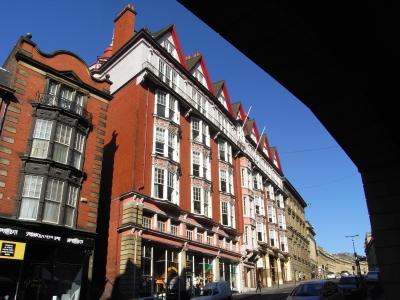
Cathedral Buildings, Newcastle Upon Tyne. Oliver and Leeson.
Please see my related articles on architectural history.
Georgian:
https://knoji.com/palladianism-the-incredible-influence-of-andrea-palladio/
https://knoji.com/the-picturesque/
https://knoji.com/the-greek-revival/
Victorian:
https://knoji.com/cragside-romantic-country-house-of-a-victorian-inventor/
https://knoji.com/victorian-architecture-dilemmas-of-style/
https://knoji.com/an-english-echo-of-chambord/
https://knoji.com/englands-most-elegant-railway-station/
https://knoji.com/hindu-gothic-the-bizarre-architecture-of-the-elephant-tea-rooms/
Twentieth Century:
https://knoji.com/modernism-in-design/
https://knoji.com/the-bauhaus-a-revolutionary-school-of-art-and-design/
https://knoji.com/towards-a-new-architecture-le-corbusiers-modernist-manifesto/