Linguistics and the Study of History
EducationLinguistics and the Study of History

For all intents and purposes, linguistics cannot be separated from history.
In fact, language cannot be understood to any true resolve without considering the history surrounding it.
As linguist and Father of the “linguistic relativity” concept Benjamin Whorf (1897–1941) said a century ago, “studying language and studying culture is the same thing.”
Yes, linguistics in the broad sense of the term does mean the physical components relating to “sound production,” i. e., place of articulation (where the sound is produced: lips, teeth, throat), manner of articulation (how air stream is modified to produce sounds: nasals, fricatives/narrowing of vocal chamber), phonetics (stress, pitch, and length of tone), and morphology (the actual breakdown of word and word/syllable meaning), but none of that has real relevance without cultural context. And since every culture is dynamic and ever changing, the past (both written and oral tradition) must be factored in.
In actuality, the study of linguistics is the study of history, and linguistics is historically based in anthropology.
From the time of Franz Boas (1958–1942) founder of American Anthropology, linguistics became the concerted study of linguistic patterns (Mother tongues) that are often traceable to cultural developments thousands of years in the past, and related to how they evolved--and continue to evolve--cross-culturally.
.jpg)
Franz Boas
Many historians and historical linguists recognize that cultural and sociological developments are often tied directly to language–either those borrowed from other cultures or those evolving from a single language within a given society.
This perspective was shared by linguistic anthropologist Bronislaw Malinowski (1884–1942) who a century ago said that the context of what people say is the only real indication of their unique history, mythology and worldview.
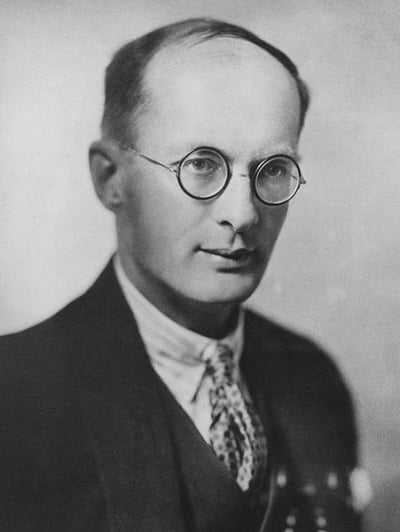
Bronislaw Malinowski
This perspective was also shared by Ferdinand de Saussure (1857–1913), founder of modern linguistics, who in the late 1800s pointed out that how people actually speak (as opposed to how society says they should speak) is indicative of that group’s comparative, societal uniqueness–thus reflective of their history.

Ferdinand de Saussure
So, too did Dell Hymes (1927–), creator of the field of “linguistic anthropology” agree, observing that when you learn a culture’s language, you are not just learning the verbal and sonic means of communication, you are gaining insight into that culture’s history, influences, worldview, religious and ritual inclination, and perception of their place in the past–as well as the future.

Dell Hymes
Today, historians rely on anthropological linguistics to greater and greater degrees to understand the past.
Trying to understand the evolution of linguistic patterns over just the past 50 years in the United States, for example (i. e., "cool" to "groovy" to "lame" to "dis" to "chill" back to "cool") is hard enough to fathom–let alone the language patterns of a people a century or more in the past–in another cultural setting.

Yet then as today, those language patterns are direct reflections of the socio-cultural climate of that time–patterns largely unique to that period. And this holds true regardless of the language, the culture, or the historic setting.
References:
Language Shock, M. Agar
http://www.washingtonpost.com/wp-dyn/content/article/2009/11/19/AR2009111904078.html
http://www.lsadc.org/info/ling-fields-history.cfm
http://www.french.uiuc.edu/people/faculty/kibbee/history%20of%20linguistics%20syllabus.pdf
Images via wikipedia.org except where indicated otherwise
Related Articles:
> Jainism
> The Harappan Culture of Indus Valley
> The Pikey Culture and Language
> Ebonics and Black Vernacular
> The Red Paint People of North America
> The Role of Blacks in the Founding of the United States
> The Moche Civilization of Peru
Visit JAMES R. COFFEY WRITING SERVICES & RESOURCE CENTER for more information