Winter Risks for Pets
EducationWinter Risks for Pets

This information is intended for owners of pets in areas where winter temperatures are regularly below freezing. Be aware that even indoor only pets may be at risk of some problems and concerns in the winter; we will talk about them first.
Winter Concerns for Indoor Only Pets
Even if you never let your pet outside winter can be a risk. A cat that never goes out and finds itself outside by mistake can be terrified and will usually hide.
Some small dogs should wear sweaters in the house on winter days as they can get chilled.
There are risks for smaller caged animals and fish, if the power goes off in the winter and they get cold. Their cages should be put in the warmest place of the house (if possible) and covered with a blanket. They should be taken someplace else it the power is going to be off for long. Some pets, such as a hedgehog, may try to hibernate and as this is not natural for them it can be fatal.
Caged birds particularly do not tolerate cold drafts well so their cage should be far from doors that open to the outside.
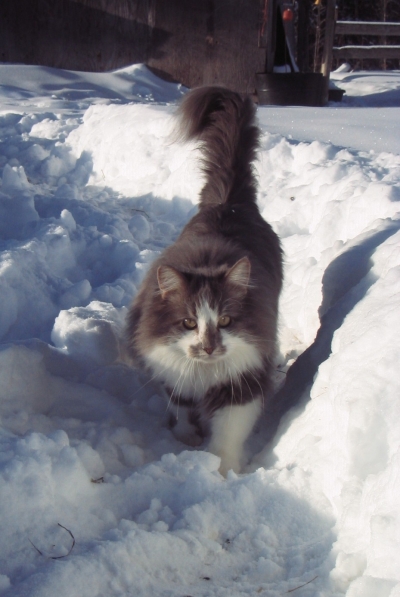
©by author
Concerns for Cats and Dogs that Go Outside
Pets that go outside face increased risks in cold winter weather, one risk is simply that the person who put them out forgets to bring them in. This does happen, and can be life threatening in cold weather. Children in particular should be told not to let pets out without telling somebody or nobody might think to let it in (especially before bed time).
When pets are outside for too long they risk getting frostbite on their ears, tails, and limbs. They also risk developing hypothermia. In addition the stress of being exposed to colder weather lowers their overall immunity, putting them at greater risk for infection, including pneumonia (very common with sudden temperature changes).
Dogs and cats with short nasal passages are especially prone to problems in cold weather. Their nose is not long enough to warm up the air.
Pets with arthritis will feel more pain on cold winter days, they may move slower and want to lay down more.
The paw pads of pets feet are at risk when they contact chemicals used melt salt on sidewalks, these chemicals can cause burns on the pads, or be toxic, a problem when the pet licks their paws. Additionally walking on ice or cold cement can hurt the pads; one reason why some dog owners use boots for their dog when on walks.
When ice gets on the bottom of an animals foot the animal sometimes bites at it to remove it, which can occasionally pull out fur, or cause bleeding.
Diarrhea is also more common for pets who go outside, weather changes are particularly harsh on the system, dehydration is then an additional risk.
If you suspect your pet is having any winter weather related health problems or concerns, for sure see your veterinarian.