A Guide to Valentine, Nebraska - Home of Cupid's Mailbox U.S.A
EducationA Guide to Valentine, Nebraska - Home of Cupid's Mailbox U.S.A

During the week preceding Valentine's Day, a sleepy town in Cherry County, Nebraska gears it's self up for it's busiest week of the year.
Valentine, otherwise known as Heart City U.S.A, will become a Mecca for lovers, a place of pilgrimage for the romantic at heart, and a sought after mail box ( known as Cupid's Mailbox during the first two weeks of February ) for the sending of the traditional Valentine's card.
HISTORY.
The town began life as an end of track town on the Sioux City / Pacific railroad in 1883.
It gained it's utopian title, not from any romantic inclination, but from Republican Congressman Edward Kimball Valentine, originally from Iowa, whom after years of military service, settled in Omaha Nebraska, where he studied law, before being elected to congress in 1879.
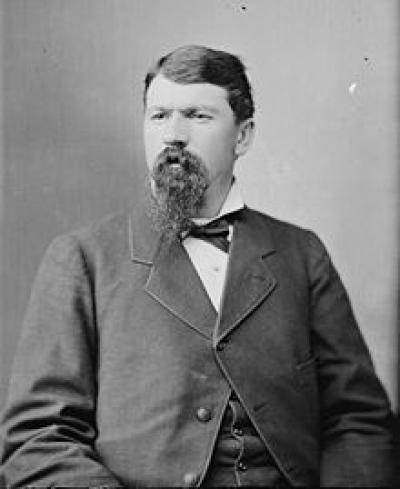
E.K. Valentine.
He became a popular and esteemed politician after passing a bill to protect settlers from land sharks, who would apply for land that had already been improved by homestead settlers and defeat their titles.
So popular was his bill the new town was subsequently named in his honour.
Years later the town would become notorious as the home of legendary outlaw, Doc Middleton, who lived on his ranch just outside town, called Rustler's Roost.
.jpg)
DOC MIDDLETON ( JAMES RILEY ) 1851 - 1913.
Born in 1851 as James M Riley, in Bastrop County Texas, it is rumoured he stole his first steed at the age of 14,where he was known as Texas Jack.
Fleeing Texas after a murder charge, he made his way north, where he went on to form a gang of horse rustlers, who were imfamous for stealing horses from local Indian Tribes.
After years of horse rustling all over the mid west, along with his gang The Pony Boys, James was to earn his self the legendary title of King of the Horse thieves.
Apparantly a likeable, good tempered and industrious man, who neither drank spirits nor gambled, he was to die following a bar room brawl,( of which he was the owner and not a patron ), after an infected stab wound to the stomach, eventually killed him 3 days later, in December 1913, in Douglas, Wyoming.
During the ensuing years the town went on to become prime cattle grazing country, within the boundaries of the indigenenous homeland of the Sioux and Pawnee Indians.
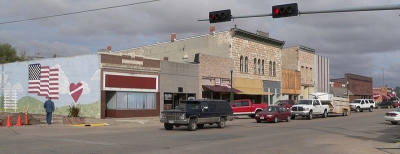
Main Street, Valentine, Nebraska, U.S.A.
TODAY.
Situated on State Highway number 20 in the Sandhills of Nebraska, a 20,000 sq mile area of grass covered sand dunes, and on the banks of the majestic River Niobrara, the stereo - typical wild west town is best known today for being the best region in the United States for beef cattle rearing.
The area round abouts is dominated by The Fort Niobrara National Wildlife Refuge, a 19,000 acre haven for elk and buffalo, which was established in 1912.
On the outskirts of the park, on the Nebraska / South Dakota line is the Rosebud Reservation, home to 18,000 Sicangu Lakota Sioux Indians.
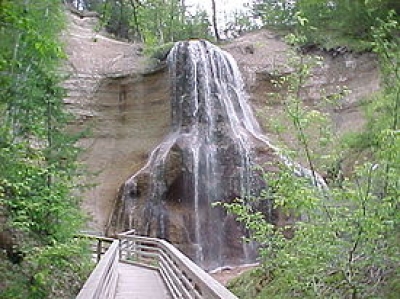
The Smith Falls.
On the other side of town is situated the Smith Falls State Park, an area of dense forestry which is home to native species of Paper Birch, Aspen and Ponderosa Pine, and the waterfall which gives the park it's name, the 75 foot high Smith Falls, tha highest of over 90 waterfalls in the state.
The area is also part of the Cowboy Trail, the 321 mile national trail that follows the route from Chadron to Norfolk along the former Chicago and Northwest rail track, and it is here in Cherry County along this trail, where the historic, cantilevered railroad trestle bridge is situated, known as Bryan Bridge.
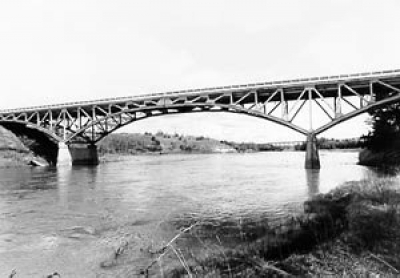
BRYAN BRIDGE.
The bridge, which was named after former governor of the county Charles Wayland Bryan, was designed by Russian emigre and engineer Josef Sorkin, and after it's completion in 1932 was selected as the most beautiful steel bridge in America, by the Society of America's Civil Engineers.
The 289 foot long arched, cantileverd, truss bridge is the only one of it's kind in the United States, earning it's self a place on the National Register of Historic Places, in 1988 and designated State Historic Civil Engineering Landmark in 1995.
The area is popular for tourists that enjoy fishing, hiking and cycling, and for those of us interested in the wild west history of Cowboys and Indians, and visiting the natural home of indigenous species of plants and wildlife.
The area enjoys fine hot, dry Summers, and long, cold, snowy Winters, all of which adds to the ambience of a traditonal old age America.
OTHER AMERICAN ARTICLES BY THE SAME AUTHOR.
facts-about-the-city-of-las-vegas
© D.B.Bellamy.February.2010.