Unusual Houses From Around The World
EducationUnusual Houses From Around The World

When our prehistoric ancestors went looking for a home, they used the natural resources around them as a means of shelter.
Caveman lived in caves as his name suggests, but man is an ingenious creature and as time progressed so too did man's abodes.
Through the ages man has also lived underground,in trees and under rock formations. As man's skills developed and he began to make his own homes he used every source imaginable, wood, metal, stone, brick, ice and animal skins.
Most of us consider homes to be brick built these days, with a few modern exceptions such as caravans, prefabricated buildings and wooden shelters.
Around the world however, some civilisations are still living in abodes used by their ancestors hundreds of years ago.
In this article I will show you some of the world's more unusual types of dwellings that man still calls home, hundreds of years after their first construction.

BAMBOO HOUSES
Bamboo is a fast growing, perenniel evergreen, grass that grows in a number of locations around the world.
Bamboo has been used to build dwellings for thousands of years in areas where it grows freely.
Bamboo is a particularly strong material,making it an ideal choice in drier climates of the world.
These particular bamboo constructions are modern, flat pack houses, designed to be used as a quick means to erecting a dwelling in disaster areas, but are based on ancient, South ast Asian dwellings.

BOTHY
A bothy is a small, usually stone, cottage found in Scotland, northern England and Wales.
Although the dwelling itself is nothing unusual, the concept of it is, as these small cottages are usually found in isolated areas with their doors unlocked to be used by anyone who finds themselves in need of shelter.
These types of dwellings have been used for hundreds of years and were used mainly by shepherds who found themselves unable to get back home after a long day walking with their flock.
Today these welcome retreats are used mainly by hikers and mountain walkers who run into inclement weather.

EARTH HOUSE
Earth houses, as their name suggests, are dwellings built under the earth, and along with caves, are probably the oldest method of house construction on the planet.
There are several modern constructions today, going by the name of eco - friendly earth dwellings, but the design is a centuries old idea found all over the world.
This particular state of the art eco - house is located in Germany.

GRASS HOUSE
The grass house is really another type of earth or underground house that utilizes a roof of dried grass.
This particular grass house has been built in a similar fashion to an iron age round house, with a chimney hole at it's roof's pinnacle.
This particular example is an old grass dwelling found in Galecia, Spain.
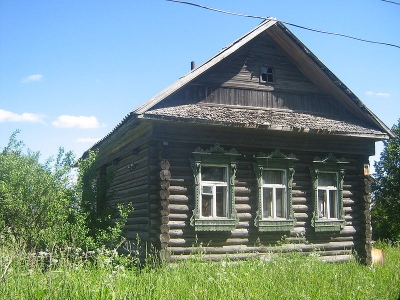
LOG HOUSE
Log cabins are well known, and generally used as holiday homes. But the use of log houses goes back many years, ever since man was able to cut large branches from trees.
Found in mountainous and heavily forested areas where logs are plentiful they were particularly prevalent in areas inhabited by new settlers and communities, such as the new world in the U.S.A and Australia. Today they are most notable in the European Alps and Scandinavia and given the name, chalets.
This particular log house is located in Izba, Russia.
(1).jpg) .
.
MUD HOUSE
Mud houses have been used for centuries as a quick way to construct a dwelling.
These types of dwellings are typically found in arid and hot climates around the world, especially on the African continent.
Soil or clay is mixed with water and sometimes grass is added and then made into blocks, where they are put out in the sun to bake hard, then they are ready to use just like any other building brick.
These particular mud houses are in Nepal.
.jpg)
CHINA TURKEY
ROCK / CAVE DWELLINGS
This concept needs no explanation as man's original "des res" has been around since the beginning of time.
Some very old examples still exist today, such as these examples from China and Turkey, both of which are hundreds of years old.

STILT HOUSES
Stilt houses can be found in many parts of the world where regular flooding of the local area is common place, either due to weather extremes or high tidal areas or in areas of marshland.
A house on stilts can be made from any material, but generally wood or bamboo, and are most prevalent in southern Asia.
This particular stilt house is situated in Attapeu, Laos.

TREE HOUSES
And you thought these were just for the kids.
In fact tree houses are quite commonplace in jungle areas around the world, where the local terrain is infested with snakes, dangerous wild animals and high crawling insect populations.
They are also used as a temporary dwelling in areas where flooding and heavy monsoon rains occur.
This tree house is in Korowai, Papua New Guinea, and is situated 40 ft off the ground.
TENT HOUSES
Tents are a popular means of shelter for lovers of the outdoors and are regularly used for quick erection of shelter in disaster areas.
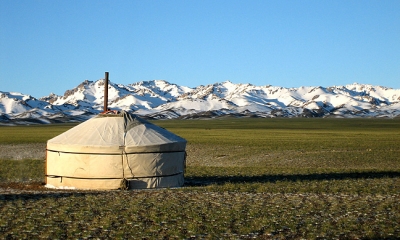
Large tents, generally made from animal skins have been used as a regular dwelling by many civilisations down the ages, the most common being those of the American Indians.
Today tent dwellings are used mainly by nomadic people, such as the Bedouin tribes of Arabia and Mongolian herdsmen whose shelter the Yurt (pictured above) have been in existence for generations.

TIMBER HOUSES
Once man was able to cut and shape wood, timber became one of the earliest and most commonly used construction materials.
This trend continues in many parts of the world today, particularly in Scandinavia, Iceland and Greenland, where wood is plentiful.
Once erected these timber houses are liberally covered with brightly coloured paint, not just for decoration, but because the paint helps preserve the wood and stave off mildew and rotting.
The houses pictured are situated on the Brygge in Bergen, Norway, where even the pavements / sidewalks are made of timber.

TURF HOUSES
Turf houses were once common place all over northern Europe, but these days are only seen in parts of Scandinavia and Iceland.
These types of dwellings have a wooden frame and are then overlaid with turf, which helps to keep the interior warm.
These particular houses are Icelandic turf houses.

UNDERGROUND HOUSES
We have already touched on some types of underground dwellings, but these particular types are completely underground.
Found mainly in areas where the summers are very hot and the winters very cold as these types of dwelling maintain a regular temperature irregardless of outside temperatures.
This particular house is located in Australia.
FOR PART TWO OF THIS SERIES.
more-unusual-houses-from-around-the-world
MORE UNUSUAL BUILDINGS FROM THE SAME AUTHOR;
© D.B.Bellamy.August 2010.
Images courtesy of wikimedia commons.