The Tropical Fruit Quince: Its Nutrition and Gastronomical Uses
EducationThe Tropical Fruit Quince: Its Nutrition and Gastronomical Uses

This pome fleshy tropical fruit from the botanical family of Rosaceae is thought to have originated from the forests of Western China. The small quince (cydonia oblonga) tree will only flower and fruit effectively in tropical climates and at the very least needs the warmth of the Mediterranean region. Quince is truly an ancient fruit. It was cherished by the ancient Greeks and the Romans who introduced the fruit to Europe from the middle east around the 10th century.
Even today the Greeks especially value quince. Quince is often served at weddings in Greece and other Latin countries. The Greeks believe it brings good luck and it is considered a symbol of fertility and love. This idea stems from Greek mythology and Aphrodite, the Greek goddess of love, who was gifted a quince by her lover Paris. The Romans used quince to make perfume and essential oils.
Quince and its Nutrition: quince contains the flavonoid quercetin, mostly in its peel, which is a powerful antioxidant. Quercetin helps neutralize harmful free radicals, has anti-cancer and antibacterial properties. Quince flesh contains many antioxidants, the most abundant is chlorogenic acid. Chlorogenic acid, also found in coffee, has long been known for its antioxidant activity. It is thought to be particularly useful, as part of a healthy diet, to prevent type 2 diabetes and cardiovascular disease. It’s a good idea to eat quince after a meal because chlorogenic acid helps slow the release of glucose into the bloodstream and aids the gastrointestinal system. Quince contains protein; fiber, is high in vitamin C and potassium. Quince also contains the mineral copper.
Quince: its Gastronomical Uses and Storing: unlike other members of the Rosaceae family such as apples, pears, apricot and loquat, quince are not usually eaten uncooked. This is because they can have a bitter taste, that dissappears during cooking, which is caused by their high pectin content. A good pectin content, however, is excellent for making jam and marmalade. In fact, the word marmalade comes from the Portuguese word marmelada, which means ‘quince jam.’
Similarly to apple, quince oxidizes when cut, so its needs lemon juice or should be cooked immediately. Quince keeps it shape and texture during cooking and can be used for the same recipes as apples or pears. It also blends well with other pom fruits and berries in jams, jellys and syrup. Quince is often served, especially in Eastern Europe, as a compote or added to simmered dishes with strong meats such as wild boar, venison or poultry.
In Europe and South America a paste is made from cooked quince flesh and sugar, known as dulce de membrillo in Spanish or cotagnata in Italian. Membrillo looks and taste similar, though more aromatic, to guava paste. In Spain it is usually paired with the Spanish sheep’s milk cheese, Manchego. Membrillo is thought to have originated from an old English recipe that became known in Spain.
Quince are usually available through the autumn months. Look for quince that are slightly green and let them ripen at room tempreture. Once ripened, a tip for storing them is to rap them individually and refrigerate. You can also freeze them, but they should first be cooked and pureed, with or without sugar. Raw quince does not freeze well.
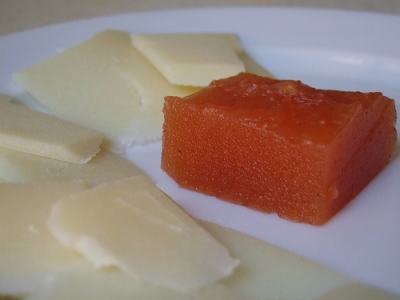
A perfect combination; membrillo with Manchego cheese. Image credit, flickr.com. Primary image, flickr.com