The Increase of Rabies in India Likely Related to the Vanishing Vulture Population
EducationThe Increase of Rabies in India Likely Related to the Vanishing Vulture Population

Rabies is a zoonotic disease, meaning that it can be transferred from other animals to humans. In the past decade India has seen a boom in cases of rabies in humans, with an estimated 25,000 to 30,000 deaths per year. In India the health facilities are seeing roughly 15 million people who require shots for exposure to rabies as the result of animal bites every year.
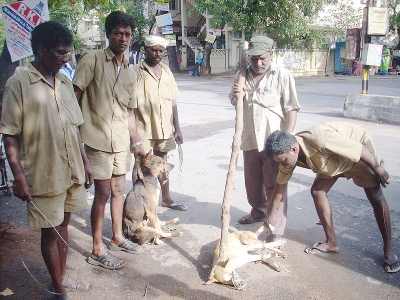
catchingTAMILNADU36India.jpg)
In a report on Rabies in India, Rozario Menezes, notes that the vast majority of rabies cases come from dogs, particularly feral dogs. The feral dog population in India has been growing in part due a lack of sterilization for the dogs, and in part due to a long bizarre chain of events involving dead cattle, and disappearing vultures.
What Happened to the Vultures?
Indians see cattle as sacred, when cows die they are not eaten, instead their bodies are taken to speical areas known in India as “carcass dumps”. Prior to 1990 thousands of vultures frequented these dumps and would pick a carcass clean in less than an hour. A dog at the dump did not have a hope of finding enough food to eat, so dogs were relatively uncommon at these places. Since the early 1990's fewer vultures have been seen at the carcass dumps, dogs are feasting on the dead cattle and their populations are growing.
Vultures were also noted to be missing around the Towers of Silence, places where India's Zoroastrians conducted sky burials, where human corpses were left out for the birds to eat.
Scientists working to discover the cause of the declining vulture population initially looked at disease, and chemical pesticides, eliminating both as the source of the problem.
Finally, in 2004, a link was made between a veterinary drug for helping lame cattle, and the deaths of the vultures. The drug diclofenac had been used on some of the cattle disposed of at the carcass dumps. When ingested by the birds, diclofenac caused acute kidney failure, and death. By this time India's vulture population had been reduced by up to 95% of what it had ten years earlier. Two years later, in 2006, the Indian Government banned the sale, and use, of veterinary diclofenac.
Another drug, Meloxicam, is suggested as a replacement for diclofenac, and is shown to be safe on vultures, however it will be years before there are any vultures to reclaim the carcass dumps from the feral dogs.
Breeding programs for India's white rumped vulture have been established. Vultures do not breed until five years of age, and even then, only lay one egg per year, making their come-back quite delayed. The earliest expected release date for captive bred vultures is the year 2015. Until then, the dogs will have their way and continue to pose a health risk to the people of India, particularly those who venture near the carcass dumps.
Diclofenac is still used in humans, and in livestock in other parts of the world, including neighboring Pakistan. Its effects on the reintroduced vultures will not be known for some time.