SALT: Essential, Sacred, Therapeutic, Practical
EducationSALT: Essential, Sacred, Therapeutic, Practical

On March 12, 1930, Mohandas Gandhi (the “Mahatma“), staged a Salt Satyagraha (Salt March) during which he led an estimated 25,000 of his people 241 miles to the sea at Dandi, a journey lasting 24 days, at the end of which he made salt to assert India’s inalienable right to utilize their own god-given resources.
Even into the later half of the 20th century, British colonies were forbidden to make salt due to the economic, spiritual, and practical independence it symbolized. And while Gandhi succeeded in striking a passive blow for a substance critical to his people’s survival, he was undoubtedly aware of the larger role salt has played throughout the history of humankind. A history unlike any other.
Before humankind was aware of its biological essentiality, salt was used primarily as a preservative, carrying a higher trade value than silver, diamonds, or even gold in many ancient cultures. (Most sociologists agree that our addiction today to this harsh mineral is actually the side-effect of its long-standing use as a preservative.)

17th salt production
And in countless religious systems around the world (including Judaism and Christianity), salt became ritualized for its life-affirming abilities, carrying potent purification and protective properties. Salt is, of course, a prominent feature of many Old Testament stories. And even today, traditional Egyptian funerary practices include an offering of salt for the departing, a practical and spiritual connection to the ancient mummification process.
Salt. NaCl. For most of us, it’s considered the most essential condiment in our pantry. A great many of us impulsively put it in most everything we cook, and wouldn’t think of eating most foods without a generous coating on top.
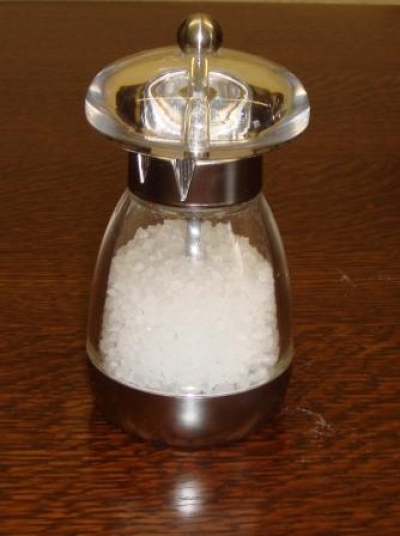
Essential for animal life (necessary for regulating the fluid balance of the body), it’s toxic to most plants, and deadly even to humans when consumed in too large of concentrations. Still, most Americans never sit down at the dinner table without a salt shaker within reach, with the average American consuming 4X as much as the body actually requires.
But does that mean we should value salt less? Not at all. But our taste addiction has side-tracked us from its many practical and therapeutic uses.
For instance. When it comes to oral hygiene, nothing can surpass the effectiveness of salt. A solution of salt dissolved in warm water can relieve the most sever sore throat and sinus infections (gargle every 2 hours); can relieve the mouth and gums of ulcers, sores, cuts, and abscesses (rinse every 2 hours); and can cure minor tooth ailments; those not requiring immediate attention from a dentist (rinse every 2 hours).

Also, a cup of salt dissolved in bath water can ease the sorest of muscles (it was an essential element of bath salts for centuries)--though you may need to rinse off afterwards, a half-cup in a footbath can rejuvenate tired and sore feet, works miracles for blisters and even athlete‘s foot, and does the same for over-worked and blistered hands--especially when followed by a thin coating of petroleum jelly.
And as was common practice for centuries, salt added to the laundry can get out stains and ground-in dirt detergents alone can’t.
And if that weren’t enough, a mixture of salt, buttermilk, and vinegar is an excellent cure for poison ivy and other rashes, makes colors richer when added to Easter egg dyes (and is essential to tie-dying t-shirts), and makes a quick modeling clay for kids with nothing to do on a rainy day when mixed 1:2 with flour and a little water.
So while we Americans do consume far too much salt, that doesn’t necessarily mean we should buy less. We just need to shift our attention to the many practical uses that doesn’t negatively impact our health.
(Note: Should you have any adverse effects from any of these remedies or salt uses, discontinue immediately. As with any curative, some individuals will have a negative reaction.)
References:
http://www.ivillage.com/why-does-gargling-salt-water-help-your-throat/4-n-142239
http://www.medterms.com/script/main/art.asp?articlekey=16167
http://www.ehow.com/list_6006553_medicinal-uses-sea-salt.html
http://thenagain.info/webchron/India/SaltMarch.html
Back to Eden, Jethro Kloss
images via wikipedia.org except: gargling via lifehackery.com
Related Articles:
Visit JAMES R. COFFEY WRITING SERVICES & RESOURCE CENTER for more information