Raw Honey: Good For What Ails You Inside and Out - Far Superior to White Sugar
EducationRaw Honey: Good For What Ails You Inside and Out - Far Superior to White Sugar

.jpg)
Raw honey is made from plant nectar mingled with the digestive enzymes of bees. It is composed of equal portions of glucose and fructose (termed “inverted sugars”), and contains aromatic volatile oils (which conveys its flavor), proteins, various enzymes, and a vast array of vitamins. Because of its chemical make-up, raw honey is easily absorbed into the body without the salivary, gastric or intestinal secretions. White sugar, by comparison, is a “disaccharide” which means that for it to be digested and utilized by the body, it must be broken down into glucose and fructose, a process which labors the digestive mechanism--and quite often is never completed. In cases where individuals routinely eat large quantities of sugar, consuming additional amounts before the previous intake can be digested, a biological toxicity results that has been linked to arteriosclerosis and has been known to cause ulcerations of the kidneys.
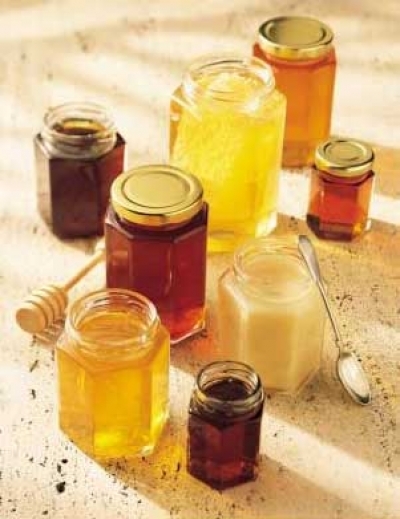
As any bee keeper will tell you, when it comes to honey, the darker the color the higher the mineral content--which makes it especially effective as a curative. When heated, such as for processing, the chemical structure of the amino acids in honey are changed, which reduces its nutritional value. But, heating also gives honey a stronger taste. Honey that has been heated and liquefied is also typically filtered, which removes the trace amounts of errant pollen commonly found in raw honey, which reduces the healing effects of honey even more. It is for that reason that raw honey is preferred over processed honey when seeking either nutritive and curative properties. But any processed honey is still far superior to white sugar.
.jpg)
.bmp)
.jpg)
Among honey’s beneficial by-products are pollen (far above left), royal jelly (far above right), propolis, beeswax, bee venom (delivery end, bottom), and of course, table-use honey--all of which have a number of both oral (internal) as well as topical usages. And while relief from constipation, insomnia, and obesity are among the many internal applications known to honey users, its topical usages are what impress many people most. A fact known to Asian doctors for centuries, American physicians are now recognizing the benefits of choosing honey over conventional salves and ointments when treating severe burns. Recent studies show that while typical salves and creams left burned skin rough, scarred, and discolored, raw honey produces supple and unblemished skin. One of the major advantages of using honey is that when changing dressings, conventional salves must be scraped off and reapplied (which is extremely painful and counterproductive in that salves typically stick to the wound), while honey dressings peal off easily and virtually painlessly, with the majority of the honey having been absorbed into the burn and already speeding up the healing process.
Another interesting factor about raw honey is its anti-bacterial properties. Raw honey will not support the growth of pathogenic bacteria which commonly attacks wounds while healing. Additionally, because honey shields against bacteria and in essence acts as a self-functioning bandage, major wounds need to be bandaged for shorter periods of time, and less severe wounds often need no bandage at all--thus speeding the total healing process time. Honey also appears to promote skin cell growth--something most topical salves do not.

A survey of beekeepers around the world revealed that most keepers soon discover a great number of other uses for raw honey beyond the application to burns and cuts including the treatment rashes, acne, eczema, and even dandruff, and it becomes a substitute for a wide range of over-the-counter products including hydrogen peroxide, anti-bacterials, and trendy sprays. They know it and now we know it! Why use anything else?