Apparel
Artificial Intelligence
Automotive
Beauty
Blockchain & Web3
Business
Education
Electronics
Entertainment
Food & Restaurants
Health
Hobbies & Toys
Home & Garden
Money
Pets
Shopping
Software
Sports & Outdoors
Quick Facts About the Polar Auroras
EducationQuick Facts About the Polar Auroras

Here are some interesting tidbits about the Aurora Borealis and Aurora Australis which are also known as Aurorae or Auroras. These natural displays of lights in the sky are also known as Northern and Southern Lights.

1.) Aurora Borealis is a natural light display in the sky that occurs in the area of the north magnetic field. It is also known as Northern Lights.
2.) A similar glow occurs in the area of the south magnetic field at the same time called Aurora Australis or Southern Lights.
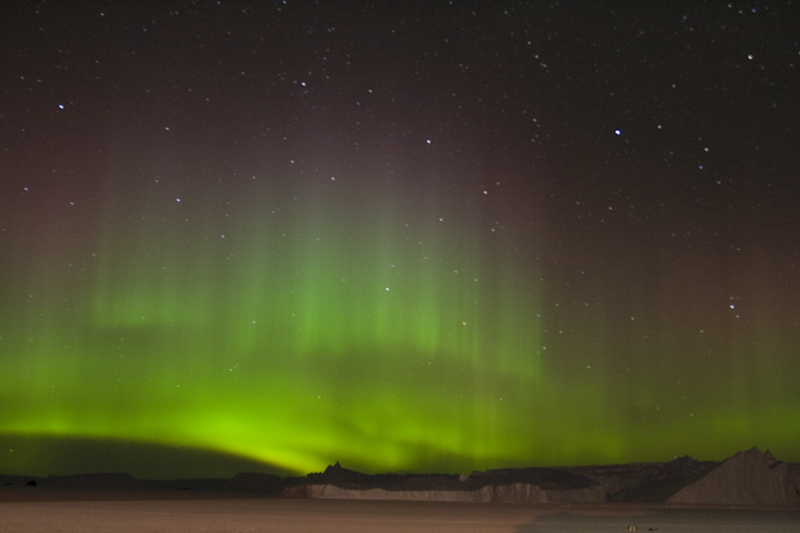
3.) Aurorae or Polar lights are glows in the night sky in regions near the north and south magnetic pole.
4.) Aurora Borealis is brightest and most frequent in a circle about 23º from the north magnetic pole.

5.) The brightest Auroras are about as bright as the full moon.
6.) Their color is often a pale green but sometimes includes white, shades of pink, blue, red, purple or gray.

7.) Auroras appear in different forms like arcs, bands, crown-shaped corona, draperies, flames, rays, and shapeless glows.
8.) Northern and Southern Lights may last only briefly, or all night.

9.) Some Auroras remain motionless while others dance, shift and weave.
10.) Auroras usually occur in the upper atmosphere 95 to 320 km above the Earth.

11.) Auroras are the result of bombardment of the atmosphere by electrically charged particles from space.
12.) The term ‘Aurora’ is from the name of a goddess in the Roman mythology, Aurora – the goddess of the dawn.

13.) The term ‘Polar Auroras’ is a misnomer because they can be spotted throughout the world.
14.) An Aurora is most visible closer to the poles due to the longer periods of darkness and the magnetic field.
15.) Yes, Auroras can be spotted also in other planets.
See also