New Zealand's Worst Maritime Disaster: T.E.V. Wahine
EducationNew Zealand's Worst Maritime Disaster: T.E.V. Wahine

New Zealand is a coastal island country, often exposed to rough weather. In the early years of settlement ships often foundered around the coast. However, New Zealand’s worst maritime disaster happened on 10 April 1968 at the entrance to Wellington Harbour, close to land and within view of residents in the nearby suburbs.

The inter-island ferry, TEV Wahine left Lyttelton in the South Island on 9 April on its overnight journey. There were storm warnings, but nothing worse than weather often encountered in the renowned Cook Strait region, so there were no concerns.
However, by the time the vessel approached Wellington Harbour on 10 April, Cyclone Giselle had travelled down from the north, meeting with another storm travelling up from Antarctica. The two merged in Cook Strait, creating a new storm that has become known as the worst in New Zealand’s history. Winds reaching up to 160 km per hour proved too much for the inter-island ferry, Wahine.
After battling the storm for some time, the Wahine eventually hit Barrett’s Reef at the entrance to Wellington Harbour about 6.40 a.m. and foundered on Steeple Rock. Tug boats were sent from Wellington to try and haul the vessel off the rocks, but their lines broke.
Passengers stayed on board at first, this considered being the safest option during the height of the storm. However, the Wahine started tipping and the order was given to abandon ship at 1:15pm. By 2.30 pm the ship had rolled onto its side.
The rescue was made more difficult because of the weather. Only four lifeboats were able to be launched and the first of these was swamped by a huge wave, tipping the people into the water. Residents on both sides of the harbour worked hard, helping those who made it to shore. Of the 610 passengers and 123 crew members on board, 51 lives were lost on the day and 2 more at a later time.
The major cause of the disaster was the unexpected intensity of the storm. However, at a later hearing it was also shown that human error, both on board the Wahine and on shore, was a contributing factor to the disaster.
Many New Zealanders have stories to tell of that fateful day. Because New Zealand is such a small country, many families had either family members or someone they knew on board the Wahine. Others, especially Wellingtonians, tell stories of what the weather was like and the horror they felt as they watched the Wahine founder.
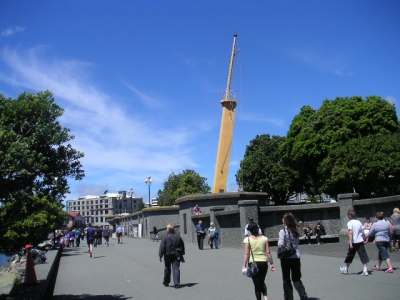
Today Wahine Memorial Park marks the disaster. It is situated in the seaside suburb of Seatoun, close to where many of the survivors reached shore. There is another memorial across the other side of the harbour on the coast where at least 200 survivors had been washed. Frank Kitts Park in central Wellington displays one of the masts of the Wahine. Wellington City and Sea Museum also has a permanent exhibition on display.
An Introduction To Cook Strait, New Zealand
Wellington: Capital City Of New Zealand