Monosodium Glutamate (MSG) and Wheat Gluten
EducationMonosodium Glutamate (MSG) and Wheat Gluten

Monosodium glutamate, also known as sodium glutamate and MSG, is a sodium salt of the naturally occurring amino acid glutamic acid, which in its pure form appears as a white crystal.
Although this salt occurs naturally in many foods, it was not discovered until 1866 by German chemist Karl Heinrich Leopold Ritthausen, and identified as a flavor enhancer until 1907, when Japanese Professor Kikunae Ikeda of the Tokyo Imperial University identified brown crystals left behind after the evaporation of a large amount of kombu broth (an edible kelp) as glutamic acid. Ikeda termed this flavor umami, which was subsequently patented by the Ajinomoto Corporation of Japan in 1909.
Currently, MSG is used as a food additive, and is commonly marketed as a flavor enhancer under the trade names Ajinomoto, Vetsin, Accent, and Tasting Powder throughout the world.
Though once made predominantly from wheat gluten, today it is made from a bacterial fermentation process using starch, sugar beets, sugar cane, or molasses. And although once associated exclusively with foods in Chinese restaurants, MSG is now used by most fast-food chains (especially in America) and in many foodstuffs--especially processed foods.
MSG is also commonly found in prepared stocks known as stock cubes or bouillon cubes, condiments such as barbecue sauce and salad dressings, canned, frozen, and dried prepared foods, common snack foods such as flavored jerky, artificially flavored potato chips (and crisps), flavored tortilla chips, and in popular powdered seasoning mixtures.
Fermented products such as soy sauce, steak sauce, and Worcestershire sauce also have levels of glutamate similar to foods with added MSG, however, glutamate in these brewed products may have 5% or more of the adverse-effect causing “D-enantiomer.”
About 1.5 million tons of MSG was sold in 2001, with 4% annual growth for each successive year.
Glutamic acid is also commonly found in a wide variety of other additives including hydrolyzed vegetable proteins, autolyzed yeast, hydrolyzed yeast, yeast extract, soy extracts, and protein isolate, which since 1998, must be labeled with these common and usual names and cannot be included as they once were as, “spices and flavorings.”
The food additives disodium inosinate and disodium guanylate, which are ribonucleotides, are usually used in conjunction with monosodium glutamate-containing ingredients (so look for these on product labels).
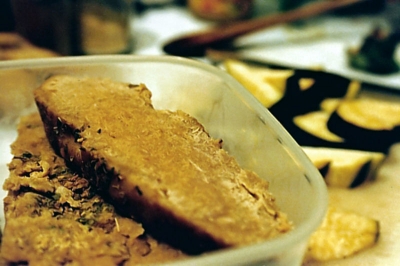
While no longer used as the primary source of MSG, wheat gluten (also called seitan, wheat meat, Mock Duck, gluten meat, or the “vegetarian white meat,”) is still used as a food, made from the gluten of wheat by washing wheat flour dough until all the starch dissolves, leaving an insoluble elastic mass which is then cooked before being eaten.
According to Barbara and Leonard Jacobs in their popular book Cooking with Seitan, The Complete Vegetarian "Wheat-Meat" Cookbook, seitan has been a staple food among vegetarian monks of China, Russian wheat farmers, peasants of Southeast Asia, and Mormons for centuries.
People who had traditionally eaten wheat also discovered a method to extract the gluten and create a meat-like product.
In many parts of the world, wheat gluten is used in place of soybean-based meat substitutes such as tofu. Some types of wheat gluten have a chewy and/or stringy texture more like meat than most other substitutes, and is therefore sometimes preferred in Asian, vegetarian, Buddhist, and macrobiotic cuisines (particularly in Japan).
"Simulated duck" made from wheat gluten is readily available throughout Asia and in Asian neighborhoods throughout the world.
, wiki.jpg)
Gaining popularity with the vegetarian sector, gluten is often a key ingredient in “not-dogs” and in many other commercially-made, ready-to-eat products like wheat gluten burgers, sausage-style and chicken-style seitan, as well as fajita strips.
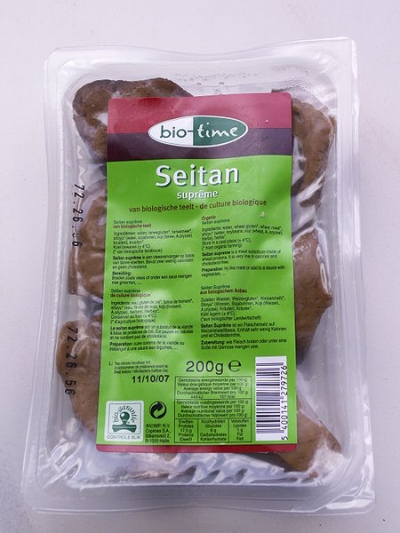
Commercially prepared tubs or vacuum packsed bags of seitan soaking in marinade is available by White Wave and Lightlife Foods, as well as many regional manufacturers around the world. It can also be found in the refrigerator or freezer section of many natural and health food stores.
Frozen or fresh gluten can be found in Asian markets by the name Mi-Tan.
Seitan can be stored in broth in the refrigerator for up to about a week, and individually-wrapped cutlets can be frozen for up to a month or more without a loss in texture or flavor. (It’s best to thaw them before using.)
References:
http://www.truthinlabeling.org/
http://chinesefood.about.com/
http://www.asian-nation.org/asian-food.shtml
http://www.asiancook.co.uk/history-of-indian-food-and-cookery.html
images via wikipedia.org
Related Articles:
Visit JAMES R. COFFEY WRITING SERVICES & RESOURCE CENTER for more information