Is Tramadol an Addicting Drug?
EducationIs Tramadol an Addicting Drug?

Morphine is classified as narcotic analgesic. It is strongly hypnotic. Morphine controls pain caused by serious injury, neoplasm, migraine, pleurisy biliary and renal colic. Morphine is usually administered as a preoperative sedative with atropine to control secretions. With scopolamine, it is given to obtain the so called ‘twilight sleep’. This practice is used in obstetrics, but care is still exercised to prevent respiratory depression in the unborn.
Not only that morphine can trigger vomiting, nausea and constipation, its use can also cause drug dependence. This untoward effect is the main reason; morphine is only given in situations when other pain relievers prove to be inadequate.
Tramadol can be one of those pain reliever cited. However as an opiate, we may wonder if tramadol can also be addicting.
- Tramadol facts
Tramadol is a centrally acting analgesic, indicated for moderate to severe pain. It was developed by the pharmaceutical company Grünenthal GmbH in the late 1970s. Although considered as an OTC medicine in a few countries, tramadol is known as controlled substance in the US and Canada.
Brand names: Tramal, Cetodol, Dolotral, Milador, Siverol, TDL, Tradomal, Tramal, Ultram
Usual dose: 50 to 100mg every 4 to 6 hours. Total dose should not exceed 400mg a day not unless prescribed by a registered physician.
Precaution: Tramadol may impair ability to drive or operate machinery. It should be used with care in patients with renal or kidney failure and should be avoided if renal impairment is severe. It should be also used with caution with epileptics, elderly, pregnant and lactating women.
Drug interactions: MAOIs and neuroleptics, carbamazepine, quinidine, CNS drugs.
Adverse effects: Dizziness, somnolence, nausea, constipation, dry mouth, sweating and pruritus.
- Tramadol as an opiate
Tramadol is a synthetic equivalent of codeine. Codeine has been known as an antitussive and used in many cough preparations. It is one of the most widely used morphine-like analgesics that are less addicting than morphine.
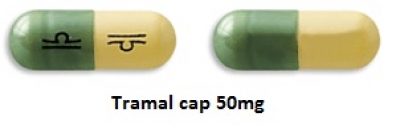
Image by the author
So is tramadol addicting like morphine?
Grünenthal has promoted tramadol as an opioid with a lower risk of dependence than that of traditional opioids. Grünenthal offered a theory that, since the M1 metabolite is the principal agonist at μ-opioid receptors, the delayed agonist activity reduces abuse liability. The norepinephrine reuptake inhibitor effects may also play a role in reducing dependence.
More to this, the term ‘opioid’ has been devised to refer to synthetic morphine like compounds. Many of these substances offer the same narcotic and pain relieving properties of morphine but they are not addicting.
Unfortunately, tramadol is not one of those synthetic morphine like compounds. There are cases of tramadol dependence. The use of this medication can be addicting and the best way to avoid this is not to take tramadol frequently. There are other drug alternatives, just ask your doctor or pharmacist about them.
© Phoenix Montoya @ December 16, 2010
References:
Tramadol leaflet
More articles by this author:
Can Robust be as Effective Viagra?
What is The Best GERD Medicine to Take with Plavix?
Ascof and Solmux: A Comparison of Two Cough Remedies
Erythromycin Antibiotic Alternatives
The Oral Contraceptive Pill Versus The Injectable Contraceptive: Which Method is Better?