Involving Young Children with Pet Ownership
EducationInvolving Young Children with Pet Ownership

Let us begin by saying that a child should never be considered as the owner of a pet, no matter how harmless this might seem. A preschooler, for example, cannot understand the concept of making a lifetime commitment to a living animal nor will they be paying for any of the costs associated with ownership. As such it is a parents responsibility to oversee any, and all, care for the pet. Legally the parent is the owner of all pets in a home and are the ones legally responsible for the pets care.
In this article we are primarily talking about young children, those between the age of 1 year and 7 years.
Involvement in Pet Selection
Preschoolers should not have much say when picking out a pet, but can be included. The choice of pet must be the adults decision. If, for example, the decision is to get a cat, the parents need to make all decisions regarding breed, age, and gender. If they find two cats they like, it might be okay to let the child pick which one, but the parents should never allow the child to beg with the parents to get a different one. This is particularly true when the parents are set on an adult dog, or adult cat, and the child wants a puppy or kitten.
Puppies and kittens are a lot more work and may not be suitable for young children. If the preschooler is allowed to change a parents informed decision the pet the child selected might not be suited to the family and the results could be disastrous. Preschoolers may pick based on "Cuteness", not practicality.
Naming
Young children will tend to pick basic names such as “Fluffy”, “Cuddles”, or “Blackie”, otherwise they may name the pet after a favorite television or Disney character. If a parent wants a more sophisticated name they would be best to say either the pet came with a certain name or to have 3-4 names in mind and let the child pick. If acquiring an adult dog it might be best to keep the dogs original name or to only change it slightly.
Where the Pet Lives
Pets should live in a central location, not be kept in the bedroom of a preschooler. This is especially important with caged pets, as many make noise at nights and will keep the child awake. Additionally a parent might not be aware of a problem with the pet until it is too late. Children, in the privacy of their own room, might try to play with the pet when they should not, or may overfeed the pet, as they think they are being nice. As well kids might put things in the cage that do not belong there and could harm, or poison, the pet.
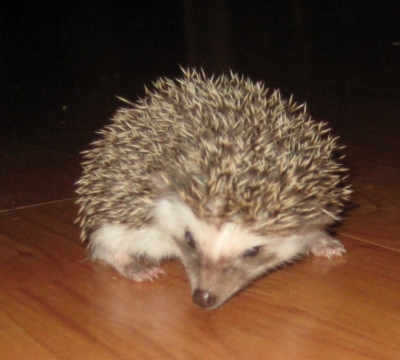
©Photo by Author. This is my daughters pet hedgehog. As a nocturnal animal she is very loud at night. My daughter is 15 so is not a young child as this link refers to. She did buy the hedgehog and its supplies with money she makes at her summer job.
Cleaning
The cleaning duties should always be done by a parent. If it is a caged pet, children might not clean the cage enough, or might take short cuts. Pets who do not have their environment cleaned properly are more prone to getting ill. Even a cats litter box should be cleaned by an adult. Many health concerns show up as a change in an animals feces.
Preschool children can be allowed to brush furry pets with a soft brush, but only under adult supervision. Adults can groom the pet properly before, or after.
Feeding
Feeding is something that young children love to do because they know it makes the pet happy. Sadly feeding is one of the biggest reasons children also kill pets. They think if a little food is good, a lot may be better and often over feed their pets, particularly fish who are one of the animals that sometimes to not regulate their own eating. On the flip side when kids are put in charge of feeding a pet and are not supervised, or reminded to do so, they sometimes get lazy and forget about it. This is again, one important reason why pets should not be kept in a child bedroom.
With birds it is important to note that a bowl might appear to be full of seeds but it might actually be full of seed husks, so an actual check should be done by an adult.
Exercise and Holding
One of the greatest difficulties in having a preschooler and pets is that the child always wants to hold it and few are properly able to hold the pet without hurting it. For animals such as rabbits, cats, and small dogs, the child must be taught to hold and support the pet correctly, and to put it down gently when it squirms.
Pets must be exercised daily and the children can slowly be introduced to helping with this. When walking a dog, even a small dog, preschoolers should never hold the leash, but two leashes can be used and they can hold one. They can throw toys for the cat and play with it that way.
With small caged pets parental supervision is again, a must. Small pets will bite if held too tight or too long. They will also bite if they are startled or woken suddenly.
Children should never be allowed to pull a dogs ears or to ride it. Even if the dog is friendly and gentle, preschoolers should never be left alone with a dog. The same thing applies to cats and other pets. They should be treated with respect.
Children should never be allowed to punish a pet.
Kids should be taught when a pet needs to be left alone. They should be taught to ask parental permission every time they want to play with the pet.
.jpg)
http://www.flickr.com/photos/tintin1212/3521912554/
Children must be taught to wash their hands after handling pets.
Pet Death
Eventually there will come a time when a pet dies. While some parents rush out and replace it and hope the child does not notice, this is the worst thing that can be done. Perhaps the pet died of natural causes, this gives a parent a chance to talk to the child about death. If the pet died as the result of a mistake made in its care, by ignoring (and covering up) the mistake, it means although the child may not have intentionally tried to kill the pet, they are not taught that they still did wrong.
Related Reading
Selecting the Right Kind of Pet for a Child
What to do When a Child Brings an Animal Home and wants to Keep it