How to Use Sheet Composting for a No-Dig Garden
EducationHow to Use Sheet Composting for a No-Dig Garden

Sheet composting has been around for centuries and has many practical applications today. Also referred to as “lasagna composting” or sheet mulching, sheet composting is a cold composting method that has been used by people around the world. It is an excellent way to convert grass to vegetable beds, create new or enlarge perennial borders, improve soil and soil structure, and recycle organic material at home. If you have difficulty digging or bending over for long, this is a great alternative to tilling soil and you can also use this method inside a raised bed frame. As with all compost, sheet composting needs carbon, nitrogen, oxygen, and water in proper proportions to break down the organic materials into a good growing medium.
To build any good compost you need to plan ahead. Sheet composting is best started several months before you want to use the planting area. Fall is an excellent time to sheet compost as the material breaks down slowly over the winter and is ready for planting in the spring. But a bed may be started any time materials are available. The technique involves placing alternate layers of carbon materials and nitrogen materials directly onto the soil. Some gardeners make carbon layers twice as thick as the nitrogen layers, but equal layers work well and are easy to keep track of. One inch is recommended although deeper layers can be used.
There are several advantages to sheet composting:
It is an easy method of composting.
It can be done a little at a time as materials are available.
It can be done in various sizes and shapes.
It can be used to improve soil or add to existing beds and borders.
It is an easy way to expand a garden with a minimum amount of equipment, material and time.
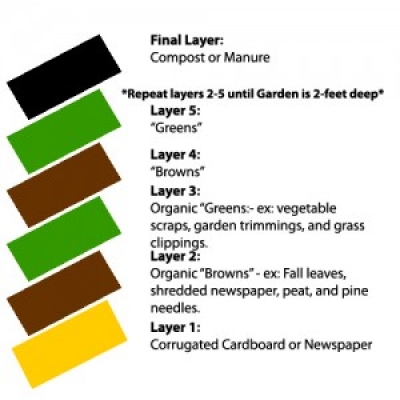
Sheet Composting Schematic
1. Begin by mowing the grass or other vegetation down to a low level for the length and width you would like the finished bed to become. Three or four feet wide is best so you can reach the center of the bed from either side. This may also be done directly in a constructed raised bed.
2. Make sure there is good drainage by loosening the soil underneath the bed with a spading fork. It is best not to place the sheet mulch in a low lying area.
3. Remove any invasive or persistent weeds such as blackberry, bindweed, morning glory, etc. Sheet composting may not smother these weeds.
4. Cover the ground with several overlapping layers of newspaper or cardboard. This carbon material smothers the grass and weeds underneath by preventing light from allowing photosynthesis of the plants.
5. Wet the newspaper or cardboard thoroughly and cover with a one-inch layer of a nitrogen source such as manure.
6. Top the nitrogen with an inch of leaves, straw, bark or other carbon material.
7. Add an inch layer of nitrogen; kitchen scraps, green produce scraps, manures or fresh green weeds with the seed head removed or any combination.
8. Cover with another layer of carbon material; straw, shredded paper, leaves, wood ash, etc.
9. Continue to add alternating layers of carbon and nitrogen until the final height is reached. The bed will compress over time so 18 to 30 inches works well.
10. Continue to add alternating layers of carbon and nitrogen, as materials are available. As the material decomposes more layers may be added always ending with a carbon layer. This is the cap that discourages flies from laying eggs on exposed nitrogen material, such as kitchen scraps. The height of a bed may vary depending on the amount
of material and when the bed will be planted. The greater the volume of material the longer it will take for decomposition to take place. The final layer may be covered with burlap to keep the materials in place. The burlap will decompose over time but may be removed when planting the bed.
11. If a pile becomes too wet, cover it with a sheet of black plastic loosely weighted down at the sides. This will help to warm the pile and encourage faster decomposition. This will also help prevent nutrients leaching during heavy rains.
Sheet composting is a slow process since there is little or no heat generated from the microorganisms to speed the process along. A sheet compost bed may take 6 months or longer to decompose sufficiently to allow for planting. The bed will be finished when thee original materials are no longer recognizable and it looks and smells like fresh earth. Or you can get plants started by adding a 2 or 3 inch layer of garden soil on top of the bed and plant directly into the sheet of material.
The following are commonly used materials for sheet mulch/lasagna gardening, but any garden debris may be used.
Nitrogen sources Used coffee grounds
Vegetable scraps
Composted manures
Fresh grass clippings
Alfalfa pellets
Cottonseed meal
Fresh weeds, no seeds
Soybean meal/blood meal
Carbon Sources
Sawdust
Peat moss
Leaves
Newspaper/cardboard
Corn stalks
Straw
Pine needles
Wood Chips
August and September are great times to start sheet composting as you will get a few warm months in to break down the layers and can add leaves in the fall.