How to Train a Kitten to Use a Litter Box
EducationHow to Train a Kitten to Use a Litter Box

Congratulations on your new kitten, or if you own a mother cat, congratulations on your new kittens. Now you have to litter train the kitten, or kittens. This is actually pretty easy, in fact you may not need to do anything, but read on for some good litter box training tips.
Litter Box Training a Litter of Kittens
When kittens are with their mother they should be kept in a room with her. That room should have a bed for the kittens, kitten food, water, and one, or two, litter boxes. If only one litter box is used it should be large, and not too deep that kittens cannot climb in, and out, of it. If two litter boxes are used, one should be a very shallow pan, for the kittens. In either case only non-clumping, non-scented, cat litter should be used. Clumping litter can stick to the mothers nipples and be swallowed by kittens, and scented litter is bad for the kitten's lungs.
The room should be fairly tidy, with toys, and places to play, but not with blankets, towels, and such on the ground as the kittens may learn to use those for going to the bathroom on. As well the room should be fairly free of hiding places, as when given places to hide, some kittens also pee there. By confining them to a room where the litter box is close they are more likely to use it. Amazingly enough some kittens will start to use the litter box on their own at three, or four, weeks of age (assuming the edge is low enough for them to climb into).
The kittens will naturally play in the litter and will eventually, and often without help or encouragement from their owner (or mother cat), use it for urination and defecation - this is a very natural behavior for cats. By keeping the kittens, and their mother, in the room since birth, and by not providing them other places to do their business, they will do exactly what they should be doing, and properly use their kitten box. Most kittens are almost fully litter trained at six weeks of age, but will need another few weeks of litter box habit reinforcement.
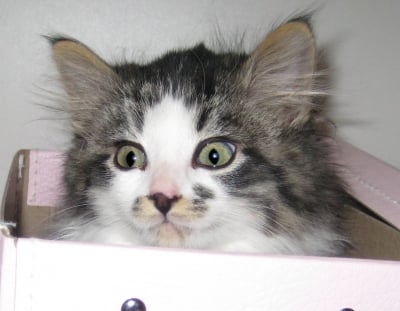
Litter Box Training a New Pet Kitten
Most kittens come with the basic litter training, as mentioned above, so the only thing they need is reinforcement, and to learn the placement of the litter box in your home. All new kittens should be kept in the room where their litter box is to remain, for the first few days, and while their owner is away. This will help them be aware where it is, and will prevent accidents from happening. Typically if a new kitten is allowed the whole house, it will be overwhelmed, and unable to find its litter box and will start making small messes throughout the house, leading to problems later.
The kitten can be out of the room for periods of play, and when being watched, but may need to reside mostly in the room with its litter box, and food, and water, for a week or two, upon being brought into a new home.
Barn kittens, feral kittens, and those who were not raised where they could use the litter box, will need additional reinforcement. These kittens should be kept in a small room, ideally with a floor (not carpet), such as a bathroom. They should have their litter box, food, and water, in that room, and be kept in the room for the larger part of the day, out only when they can be supervised. In extreme cases they may need to be confined to a large dog crate with food, water, and a litter box.
The kittens who are having accidents should have their mess picked up, and put in the litter box to help them get the idea.
Various training aid, spray products, are available to be sprayed into the box to encourage use. Other products are available to discourage potty habits in other places, however should never be sprayed on the cat as a punishment.
Tips for Litter Training
- Better kitten food means less poop.
- Rule of Thumb: One litter box per can, and ideally one extra!
- Kittens prefer to use litter boxes that are relatively clean.
- Worms can cause diarrhea, and as such may lead to accidents.
- Declawed cats often have litter box usage issues, some right from the start, some later in life.
- Never shut kittens into small rooms, or cages, as punishment. Rather use the room as a way to safely keep the kitten out of trouble at night, or when you cannot watch it to reinforce litter box use habits.
- Some breeds, such as Manx, and Himalayans, often have “issues” with using their litter boxes, or controlling their bowels.
Speak to a veterinarian if a cat suddenly stops using its litter box as it may have a health concern.