How to Double the Size of Your Garden with Vertical Gardening
EducationHow to Double the Size of Your Garden with Vertical Gardening

We look at our garden and wish we had a bigger garden. You can double the size of your garden easily with vertical gardening.
Average Garden Size
Gardening has always been a favorite hobby and during certain times in our history, gardening and growing your own food was almost a necessity. During the Great Depression and during World War II we had the Victory garden.
According to the National Gardening Association, the median size food garden in the United States is 96 square feet with 57% having that size garden. 26% of the gardeners in the survey had a food garden of between 101 and 500 square feet. Half of all food gardening households in the US also grew food in container gardens.
According to this study, the average food garden can yield ½ pound of food per square foot. A 100 square foot garden (10 feet by 10 feet) would grow about 50 pounds of food per growing season; that is pretty good considering the price of some vegetables.
Double the Size of your Garden by Growing Food Vertically
You want to grow more and different vegetables but either do not want to dig up anymore lawn or don’t have the room for a larger garden. You can double the size of your garden easily by growing vegetables vertically on supports and using what is called trellis netting.
If you have a 6 foot wood fence around your yard or even one side, you can put trellis netting along the fence and more than double your garden size. If your garden is backed by a fence a house or shed, you can put the trellis up along the walls. If your garden is out in the open, you can make supports for the trellis using 1 inch by 2 inch furring strips and staple or tack the trellis to the strips.
You might have a deck in your backyard with a dull or vacant area under it; you could support the trellis netting on the deck. Vertical gardening can add beauty to your yard with a green wall of growing vegetables. These vegetables growing up a trellis wouldn’t take up much room on the ground, just a strip of dirt for the base of the vegetable plant.

Zucchini in a vertical garden doesn't take up much ground.
Trellis Netting Material
You can make your own trellis out of chicken wire or there are commercial brands of trellis netting. Ross makes trellis netting made of polypropylene and will not rot in the ultraviolet of the sun, so it is reusable year after year. Other commercially available trellis netting includes the Gardener’s Blue Ribbon Sturdy Vine Trellis made of a lightweight string material.
The Ross trellis netting comes in sizes of 6’ x 8’, 6’x 12’ and 6’ x 18’. The Gardener’s Blue Ribbon trellis netting is 5’ x 8’. If you have a lot of extra room for vertical gardening, you can combine the trellis netting for a large vertical garden. With just one trellis netting, you have almost doubled the size of your garden and the amount of vegetables you can grow.
Vegetables for Your Vertical Garden
There are many plants that you can grow with vertical gardening. Zucchini, crookneck summer squash, cucumbers, peas, pole beans, strawberries and smaller winter squash like acorn squash are some of the vegetables you can grow vertically. I have not tried winter squash yet, but I have heard from others that it works.
For heavier winter squash and melons over 10 ounces, you would also need some type of support for the vegetable. Some gardeners make a sling out of nylon stockings or other material to support the growing squash and melons. Growing squash in a vertical garden will keep the squash off of the ground and prevent the rot that can happen when squash lies on the ground.
.jpg)
Different types of vertical gardening. Pumpkin growing on a chain link fence trellis
Combining Vertical Gardening with a Container Garden
If you don’t have much room for a garden and would like to grow the large vegetables that vine all over, you can still grow them in a container garden using the trellis netting.
Use a 5 pound container as a minimum size, probably 10 pound will work better or you can build your own container. Find smaller varieties of the vegetables. Use poles, like bamboo or plastic for supports and put the trellis netting around the supports.
Other Uses for Trellis Netting
You can make your own tomato cages using supports and wrap the trellis netting around the tomatoes. Use it as a quick and cheap fence around your garden to keep out the cherry tomato eating family dog, rabbits or dear. Use it to make a bin to hold your compost pile. And you can also use it as a cover over newly planted vegetables to keep the birds off of the vegetables.
Vertical gardening also includes having the trellis netting above the garden to hold up plants and teepee type designs for vegetables that vine.
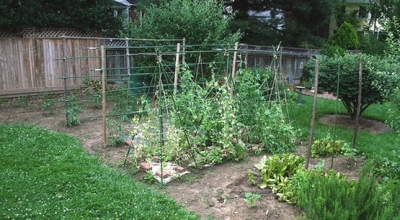
Teepee type trellis for peas.
Advantages of Vertical Gardening
There are numerous advantages with vertical gardening. After planning a small garden, you can add a trellis and double the amount of food you get and the size of your garden. Growing certain vegetables that can vine and grow all over your garden take up a lot of space, with vertical gardening, you can use that ground space for more compact and bush type vegetable plants. You can also see the vegetables easier on a trellis and pick them at the right size, which for zucchini is best at six to twelve inches.
© June 2010 Sam Montana
Resources
National Gardening Association Study
Images: Pdbreen, Woodleywonderworks, Digika