Alternatives to Declawing a Cat
EducationAlternatives to Declawing a Cat

Declawing a cat is cruel and illegal in many areas. Even where it is allowed cats who go through the procedure often have side effects, from becoming more nervous, or more aggressive, to refusing to use their litter box, and suffering back pain later in life.
There are many alternatives to declawing a cat.
Do Not Get a Kitten
Kittens are naturally claw aggressive, if you are concerned about clawing, do not get a kitten. Kittens claw everything. Even selecting a kitten who is six months old will reduce some concerns, but otherwise getting a cat that is somewhere over a year old can reduce clawing behavior by as much as 80%. You may even be able to find an older cat for adoption that is already declawed.
Breed Selection
Some cat breeds are far less claw aggressive than others. Selecting a cat such as a Persian or Himalayan can reduce clawing behavior totally as some of these cats simply do not use their claws.
Clipping the Cats Nails
An owner can trim their cats nails. This does not reduce the cat's clawing behavior, but can reduce the amount of damage their nails will do. This can be done every 6 – 8 weeks and is fairly simple. There are many products now available to the cat owner to make nail trimming simple but a person could take their cat and have this done by a veterinarian or pet groomer.
Cat Furniture – Scratching Posts
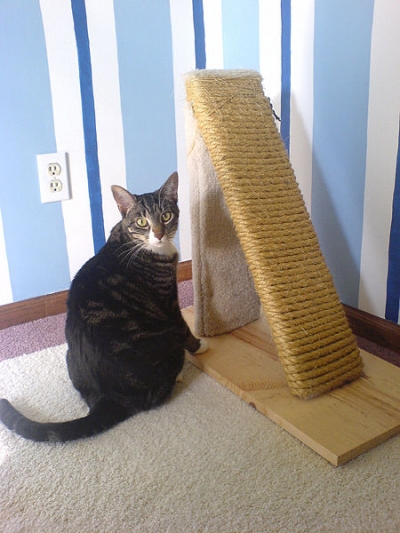
photo source - basic scratching post

One of the best alternatives to declawing a cat is to provide it with a place where it can claw. In this way you work with the cat's natural behavior, rather than against it. Cats generally enjoy clawing on up right surfaces, when outside they will often claw on trees or poles.
There are many types of scratching posts on the market today, ones that offer the cat a place to sleep are excellent. You can encourage a cat to use the scratching post by rubbing cat nip on it if your cat is old enough.
Smelly Stuff
There are many sprays that a person can use on their furniture to stop the cat from scratching it. Some smells turn cats off. These products have to be reapplied every few days and should only be used if the cat is given an alternative place where it is allowed to scratch.
Claw Protectors


Another, even more effective alternative to declawing is to use claw protectors. There are many claw cap products available, including Soft Paws, and Soft claws. These products are glued onto the cat's nail and come in a variety of colors (as well as clear and natural).
Soft Paws, and Soft Claws, can be found at some veterinarian offices, and better pet supply stores. They do fall off and need to be replaced, but if you find the nail that has fallen off, you can reuse it.
Acceptance
If a person is really concerned about clawing they should not get a cat. Clawing is a natural part of cat behavior. To remove a cat's ability to claw is no different than removing a bird' ability to fly – you have deprived it of its very nature. Such people should perhaps get a rabbit instead. Otherwise a person who loves their cat should accept it for being a cat, if it claws your sofa, has it really done any damage (can you still sit on your sofa?). To risk the behavioral (and physical) changes a cat experiences after being declawed is not worth it if you truly love your pet.