Heckle and Jeckle: Cartoon Icons of American TV
EducationHeckle and Jeckle: Cartoon Icons of American TV

Heckle and Jeckle are popular cartoon characters created by artist Paul Terry, and released by his own studio, Terrytoons, for 20th Century Fox. Their names were inspired by Robert Louis Stevenson's famous novella, the Strange Case of Dr. Jekyll and Mr. Hyde.
Combining the wit of Bugs Bunny and a mischievous streak reminiscent of Woody Woodpecker, Heckle and Jeckle are a pair of identical magpies who calmly outwit their numerous foes in each adventure. (Many viewers mistakenly think they are crows.) In many episodes, however--“Moose On the Loose,” “Free Enterprise,” “The Power of Thought,” and “Hula Hula Land,“ their foes inevitably come out on top.
One magpie--Jeckle--speaks with a distinguished British accent, while Heckle, a Brooklyn, New York dialect. Heckle frequently refers to Jeckle simply as 'chum' or 'pal,’ while Jeckle refers to Heckle as 'old chap,' 'old boy,' and 'old featherhead'-- indicating the close friendship between them.
The first Heckle and Jeckle cartoon premiered in 1946, a short entitled “The Talking Magpies,” which cast the pair as a husband and wife looking for a new home, but all subsequent episodes featured the two bird buddies as males.
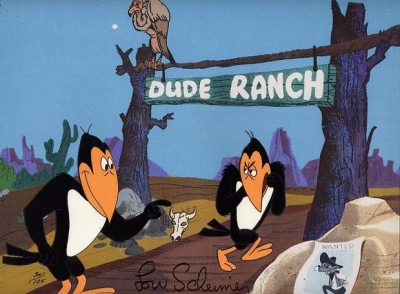

Characteristically, Heckle is slightly more cynical than Jeckle. While both treat their mutual enemies with threats and rudeness, Heckle typically makes his intentions clear from the outset, while Jeckle will at first treat enemies politely in order to lull them into a false sense of security before unleashing his patented brand of “magpie mischief and mayhem.”
In the short “Blind Date,” Heckle is able to forcibly disguise the unwilling Jeckle as a girl, indicating that Heckle is the physically stronger of the two. In “The Power of Thought,” it is Jeckle who profoundly realizes the unlimited possibilities of being a cartoon character, while Heckle is more than willing to go along once this is pointed out to him. In a later short called “Rival Romeos,” the magpies are simultaneously smitten by the same female, sending them both running home to get dressed in their courting best. Subsequently, they show up to occupy two sides of the same tree--after which the comedy and typical Heckle and Jeckle antics ensue.
After being on and off the air numerous times due to several studio personnel changes through 1960, Heckle and Jeckle reappeared in 1979 in their own segment of Filmation's The New Adventures of Mighty Mouse and Heckle & Jeckle. The two have been the focus of numerous product campaigns, and have had their share of comic books and and fan collectables.


PRODUCTION
Concept: Paul Terry
Artists: Paul Terry, Al Chiarito, George Bakes
Voices: Dayton Allen, Sid Raymond, Roy Halee, Ned Sparks and Frank Welker (for both Heckle and Jeckle)
Producers: Paul Terry, Gene Deitch, Bill Weiss, Dave Tendlar and Martin Taras
Technical Directors: Eddie Donnelly, Mannie Davis, Connie Rasinski
POP CULTURE TRIVIA
>Heckle and Jeckle made an unexplained appearance in Homer's vision of his funeral in The Simpsons episode "The Wizard of Evergreen Terrace.”
>Heckle and Jeckle make a cameo appearance in the final scene of Who Framed Roger Rabbit among the crowd of Toons.
>In "Mr. Monk and the Candidate,” the first episode of the USA detective series Monk, Monk and Sharona have codenames Heckle and Jeckle on a stakeout. Also, in "Mr. Monk Goes to the Ballgame,” the famous baseball player refers to his bodyguards as "Heckle and Jeckle.”
>In the last scene of Kill Bill Vol 2, Beatrix's daughter B. B. is watching "The Talking Magpies" in the hotel room.
>"Heckle and Jeckle" is frequently mentioned on "Laverne and Shirley" because it is Lenny and Squiggy's favorite TV show.
>In Cannonball Run II, J J McClure (Burt Reynolds) calls Blake (Dean Martin) and Fenderbaum (Sammy Davis Jr), "Heckle and Jeckle dressed as cops.”
References:
http://www.absoluteastronomy.com/topics/Heckle_and_Jeckle
http://www.skooldays.com/categories/saturday/sa1083.htm
Thumb via http://www.mediaoutlet.com/images/HeckleAndJeckleAll43TerryToonsCartoons2DVDSet.jpg
Related Articles:
> Snoopy, an American Pop Icon
> Aesop, the Master Teller of Fables
> The Hidden Meaning Behind Children’s Nursery Rhymes
> Underdog
Visit JAMES R. COFFEY WRITING SERVICES & RESOURCE CENTER for more information.