Heat Stroke in Dogs
EducationHeat Stroke in Dogs

Heat stroke is a very real danger for dogs during the hot weather. It is an owner’s responsibility to ensure their dog is well protected from the heat. Heat stroke happens when a dog’s body temperature becomes higher than the dog is able to dispel. Unlike humans, dogs do not perspire; they expel their heat through panting and through their footpads, nose and with some dogs, their ears. When a dog’s temperature hits 104° immediate action needs to be taken, any temperature 106° or over constitutes an emergency. At 106°, a dog will go fully in to heat stroke, which can cause permanent damage to their organs and muscles and sadly in many cases cause death.
Signs that a dog is approaching or has gone in to heat stroke are:
- A temperature of 104° or over
- Non-stop frantic panting that can be noisy
- Gums and tongue that are dark red
- Lying down with the inability or no desire to get up
- Saliva that is thicker than normal
- Dizziness or confusion
- Collapsing, staggering, loss of consciousness or coma
- Lethargy
- Vomiting
- Diarrhea that may have blood in it.
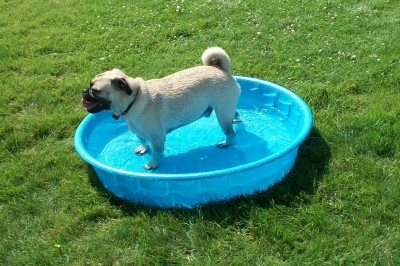
When a dog is showing even the slightest sign of heat stroke, it is advisable to start cooling the dog immediately. It is always better to err on the side of caution than to make the mistake of ignoring it and having the dog get worse or even fall in to a coma or the worst die. Start by moving the dog inside, preferably somewhere with air conditioning, or at least in to the shade. Cool wet clothes should be placed on the dog, paying special attention to feet pads, underbelly and around their head. If possible, place the dog in a tub of cool water. Ice or extremely cold water should not be used as it can cause hypothermia and can cause blood vessels to constrict which can prevent cooling. Be sure to offer the dog a cool drink of water but not force them to drink or try to pour water in to their mouth. Seek veterinary care immediately if possible.
Thousands of dogs suffer from Heat Stroke each year and sadly, many of them die from it. There are many things that pet owners can do to help ensure their dog stay safe:
- Never, leave dogs in a parked car during warm weather, even with the windows open. In the matter of minutes, a car can reach 160°
- Exercise during the heat of day is dangerous. Exercise dogs in the morning and evening, after the heat of the day dissipates.
- On extremely hot days keep exercise minimal and mellow. Try to stay in the shade as much as possible.
- Be sure, there is always fresh cool drinking water available.
- Never, leave dogs tied up in an area or left in concrete dog runs that offer no shade.
- When traveling to a warmer climate be sure to give the dog time to acclimate to the higher temperatures, before any vigorous activity.
Some dogs are in more danger of heat stroke than others are:
- Puppies
- Obese or older pets
- Dogs with black coats, a thick coat
- Dogs with heart disease, lung problems or airway obstructive problems.
- Breeds with short muzzles, pushed in faces or short heads like Pugs, Bulldogs and Boston Terriers.
Sources
http://dogs.about.com/od/dogandpuppyhealth/qt/heatstroke.htm
http://www.petwave.com/Dogs/Dog-Health-Center/Multi-Body-System-Disorders/Heat-Stroke.aspx
http://www.pets.ca/articles/article-heatstroke.htm
http://dogs.suite101.com/article.cfm/dogs_and_heat_stroke
http://www.orato.com/home-family/how-to-deal-with-heat-stroke-dogs