Halloween
EducationHalloween

Lanford in his article "Halloween," described Halloween as holiday observed on the evening of October 31 in most areas of North America and in some areas of western Europe. The holiday is symbolically associated with death and supernatural. Halloween falls on the eve of All Saint's Day, which is a holy day established by the Catholic Church and Anglican churches. All Soul's Day, a holy day established by the Catholic Church in the 10th century, is also closely linked in Halloween. All Souls' Day, on Nov.2, is observed to help purify the spirits of the dead.
Contemporary Customs
Most Halloween festivities are based on folk beliefs concerning supernatural forces and spirits of the dead. Halloween decorations typically feature imagery associated with supernatural beings like ghosts, witches, werewolves and vampires. Are commonly featured in Halloween decorations are images thought to symbolize bad omens- such as spiders, black cats or bats as well Halloween masks.
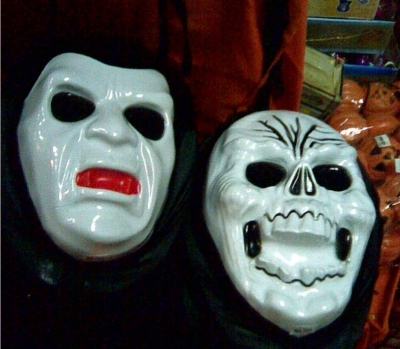
Halloween masks
.jpg)
The most celebrated Halloween decoration according to Lanford is the jack-o'-lantern, traditionally a hallowed-cut pumpkin carved to resemble a grotesque face illuminated by a candle placed inside. The jack-o'-lantern derives its name from a character in British folk tales. According to these tales, the soul of a deceased person named Jack O' Lantern was barred from both heaven and hell and was condemned to wander the earth with his lantern. Black and orange, colors associated with pumpkins and darkness respectively, figure prominently in most Halloween decorations says the author.
Jack O' Lantern
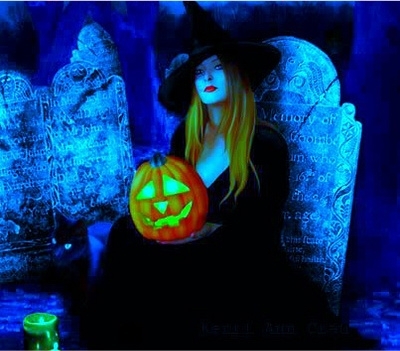
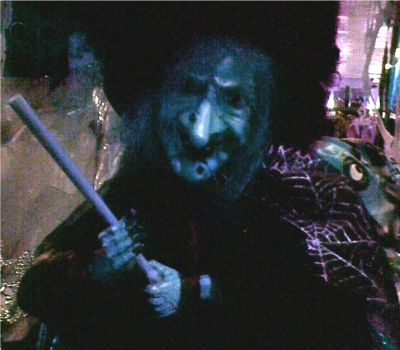
Dressing in costume is one of the popular Halloween customs especially among children. Traditional costumes usually represent witches, ghosts, and other supernatural beings.
Halloween costumes
Trick-or-treating is another Halloween tradition, in which costumed children go from house to house soliciting candy or other treats from their neighbors. According to this custom, children greet each homeowner with the cry "Trick or Treat," suggesting that some sort of prank will be played unless treats are provided. Formerly, trick-or-treaters vandalized the house if no treats were produced or if the treats met with their disapproval. Beginning in the 1970s, the practice of trick-or-treating went into a sharp decline after unsubstantiated rumors spread about homeowners distributing poisoned Halloween candy to children. Today, many parents accompany their children when they go trick-or-treating.
Vampires
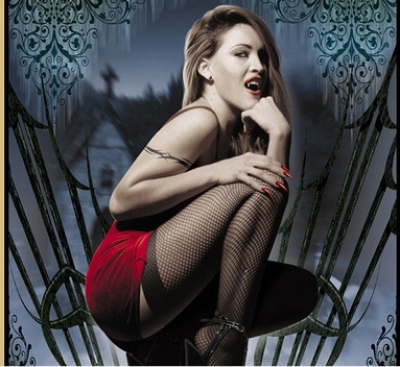
In some areas of the country, costume parties have replaced trick-or-treating as the favored form of Halloween entertainment. Host of these parties often held contests to select the best costume among the guests.
Resource:
Lanford, Brent. "Halloween." Microsoft. Encarta 2009 (DVD). Redmond, WA: Microsoft Corporation, 2008.