Expired Medication Cover-Ups
EducationExpired Medication Cover-Ups

Just like bottled drinks, milk, canned goods etc. all medicine has an expiration date indicated in their labels or containers. It is a requirement by the Food and Drug Authority upon its approval for the general market.
Disappointingly, some drug outlets - hospitals and private clinics in particular, ignore the expiration date's importance and dispense expired drugs, solely for business reasons. Without even knowing it, you could have been a victim.
The following can be useful in recognizing expired medications:
Scissor Cuttings
This is a usual strategy in selling expired tablets and capsules. Drugstore personnel simply cut the part of the blister or foil pack where the expiration date is indicated. This is not noticeable when buying in quantities below ten since, the pack will be cut according to the customer’s request.

Ointments or creams expiration in foil tubes can also be taken care of by this scheme. The expiration dates engraved in the tubes end is sliced then folded to prevent its content from leaking. Definitely, this medicine tube will be given to the customer without a box.
Acetone Cleaning
This is done in blister and foil packs when the expiry date is written in ink. A piece of cotton is dabbed in acetone- a liquid chemical also used as a nail polish remover. They do it neatly; wiping the expiration date, yet sometimes, leave the lot number just to confuse their customers.
Tablet Loosening
When the first two options above would not work, they resort to this strategy. Drugstore personnel loosen the tablet or capsule into a container, and then attach a false expiration date.
Permanent Ink Magic
There are two types of permanent ink used- the silver-Grey color and the black type.
Silver-Grey marker is applied in blister or foil packs, covering its expiration date written in stubborn ink.

Black marker on the other hand is used in bottled medicines- syrups, suspensions, drops. The box of the product is normally not provided with the bottle containing the expired medication. Here, the black permanent ink is used to cover up the expiration date by directly writing the dosage direction over it.
Blade Scrape
This is also done in bottled drugs. They would remove the box and simply scrape the expiration date with a razor blade as neatly as possible.
Re-bottling
When blade scrape and using marker can be very obvious, they simply re-bottle. Liquid forms of medicines as syrups or suspensions are transferred into a new bottle with a new label.
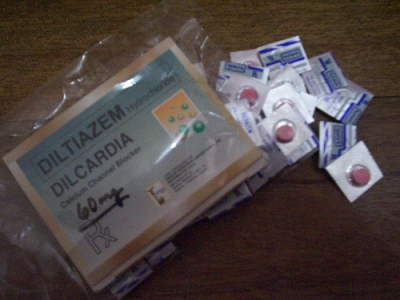
While some multinational drug companies claim that their products can still retain potency even after five years of expiration, most health practitioner believes that other medicine only loses effectiveness after its six month allowance. As a result, they sell expired medicine, risking the health of their patients or customers.
Expired drugs can be very harmful. In extremely rare cases, the use of these medicines had led to seizures and even death. The commonly prescribed antibiotic tetracycline, for example, can degrade into a poison over time, when it ages and result in death.
In addition, taking expired antibiotics may also aggravate rather than destroy an infection. The bacteria builds up its defenses and that could lead to a super-infection. This will make a person really ill, instead of curing him.
Be on a look-out for any expiration cover-ups. You health could be at stake.
© Phoenix Montoya at December 16, 2010
References:
Smart Medicine by Peter Weaver
Wilson and Gisvold’s Textbook of Organic Medicinal and Pharmaceutical Chemistry 9th edition
More articles by this author:
Things to Consider Before Taking Any Medicine
Erroneous, Violative or Impossible Prescription
Captopril, Salicylic Acid, Isosorbide Mononitrate and Other Drug Mix-Ups