Easter Island; The Ruin of Rapa Nui
EducationEaster Island; The Ruin of Rapa Nui

Situated in the south pacific-ocean-, some 3,510 km from Chile and 2,075 km from it's nearest inhabited neighbour of the-pitcairn-islands/, lies the tiny 163 sq km island of Easter island ( Rapa Nui ).
The volcanic island that rises from the sea is situated along an underwater mountain range known as the Sala y Gomez range, that stretches for over 2,700 metres along the seabed of the -pacific-ocean-and attains heights in excess of 2000 metres.
The island received it's anglicized name from Dutch mariner Jacob Roggeveen, after he visited the island on Easter Sunday 1722, whilst looking for Davis island, an uninhabited island 465 km off the south coast of New Zealand's South Island, part of the present day uninhabited, archipelago of the Auckland Islands.
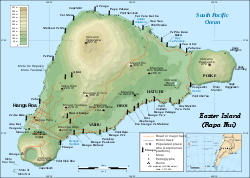
Map of Rapa Nui / Easter Island / Isla de Pascua.
Rapa Nui is world famous for it's 887 monolithic stone statues, known as Maui, that have stood on the island for between 700 to 1000 years.
These nine metre high and several ton in weight, extant, volcanic ash statues have intrigued historians for centuries, leading to many variations as to the whys and hows of their construction.
It is believed that the island was first inhabited by Polynesian settlers, this has been verified by means of carbon dating fossils found on the island and by language patterns of the native people.
The Polynesian language of the Rapanui's is similar to a dialect spoken on the Mangareva islands,1,287 km away, which historians have deduced, would take around 19 days to row to by boat, a feat often undertaken by Polynesian people at that time.
It has also been said that Captain Cook visited the island in 1774, and whilst there, one of his crew who hailed from Bora Bora in the Society Islands, was able to communicate with the locals.
Mangareva and Bora Bora are all part of the present day French Polynesia Islands, which were all related by way of culture and language at that time.
During that time the island would have been a lush, green, heavily forested, paradise isle, boasting a tropical climate and sporting soft, pliable volcanic ash from it's many extinct volcanoes, for the construction of shelters, making it ideal for growing crops, rearing livestock and sheltering their families.
There are no rivers for fresh water on the island, but three extinct volcanoes supply the island with fresh water lakes.
Living as they did free from external influences, the local people, historians believe, made these enormous effergies of their dearly departed relatives.
This theory has been reiterated by the findings at another ancient site on the island, that of the village houses of Orongo, round,low structures made from volcanic ash from the nearby Rano Raraku volcano, that were apparantly built in order to house their dead.
It would seem that the Rapanui's held great respect for their departed elders and built these monoliths and buriel chambers in order to immortalise their memory.
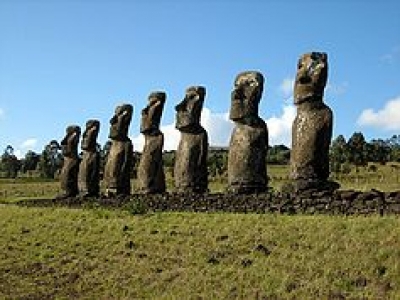
These monoliths called Ahu Akivi are the only ones positioned looking out to sea.
From the early 1800's European sailors happened upon the isolated island, giving rise to both the island and the local inhabitants demise, by way of epidemics, slavery, colonisation and famine due to over use and subsequent depletion of natural resources.
After decades of hardship for the islanders, including having to resort to cannibalism in order to survive, the island became annexed to Chile in 1888.
Although the local inhabitants were not keen to become dependent on another nation, at least the island became safe from maurauding Europeans and the threat of yet more disease and disaster upon their small community.
The islanders became prosperous thanks to Chilean government funding towards healthcare, housing and employment.
The island became world reknown for it's strange and wonderous monoliths, giving rise to the islands tourism boom by means of passing -pacific-ocean-cruise liners.
The small port and town of Hanga Roa grew with the construction of hotels, shops and a larger port to service the large liners that were berthing there.
An airport was built on the outskirts of town, to take daily flights from Santiago in Chile and Papeete on Tahiti, opening up another gateway for tourists to enter this distant island.
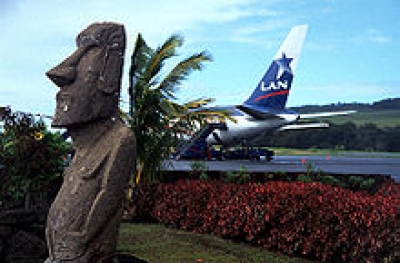
Mataveri Airport.
This led the islanders to become dependent on the proceeds of tourism, which was bringing in much needed funds for the local people and the island's economy.
The island also saw a surge in immigration from neighbouring Chile, with Chileans flocking to the island to cash in on the work bonanza that tourism had brought to the island in what they believed would become a mecca for history buffs and eco tourists.
The population today is around 4,000, with only half of that being made up of decendents of the island's original Polynesian settlers, giving rise to a whole new culture and language to the community now based there.
In 1995 the island was designated a UNESCO World Heritage Site, giving tourism there an even bigger boost.
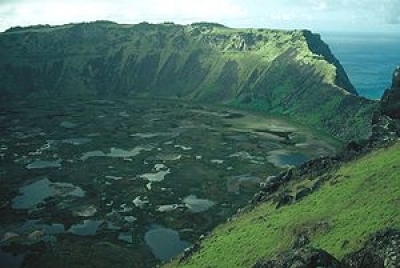
Rano Kau.
This has in turn led to more tourists, more construction, more use of natural resources and leaving the islanders with no means of being able to cope with the influx.
The main problems addressed for Rapa Nui today are refuse disposal and drinking water supply problems heralded by tourism and crime and drug abuse, heralded by migrants.
The island is one of the most isolated places in the world, which has led to an upsurge in the Chilean criminal fraternity using the island as a hideaway from officials on the mainland, bringing with them crime towards locals and tourists and drug dealing.
Some European tourists are also becoming worrysome to the islanders, owing to their alcohol / drug culture and the problems this in turn brings, with some tourists even defacing the monoliths whilst in their alcohol / drug induced states, leaving the island's small police force unable to cope with the upsurge of theft and alcohol / drug related crime.
Refuse disposal has become an ongoing cause for concern, with the island having only limited space with which to bury the islands tons of rubbish left over from tourists and mass immigration.
Although three large lakes provide the island with fresh drinking water, water is still a precious commodity as these stocks are quickly depleted during the summer months when the largest number of tourists visit and temperatures of more than 28 degrees daily can be expected.
.jpg)
Moai wearing a pukao, with the Chilean ship Buque Escuela Esmeralda in the background.
All this has culminated in the indigenous local people living there to rise up against these impositions, calling for a ban on immigration and sanctions to reduce the number of passing tourists to just carefully chosen guided parties allowed onto the island.
According to local residents the migrants are destroying the fragile eco system of the island, taking jobs away from the locals and bringing crime and drug culture onto the island.
The tiny island, which is just 25 km x 12 km in size, half of which is designated national park, is much too small to cope with these numbers of migrants, especially as thse migrants have no interest in the island's heritage and culture, but only there to serve their own selfish needs.
Chilean Premier Michelle Bachelet Jeria has personally introduced plans for a training programme aimed at development and sustainable eco tourism in which local people are given leading roles in the promotion of their heritage.
The airport at Mataveri, which takes one flight a day at present from Santiago in Chile, needs to be limited to just two or three flights weekly, in the hope of preserving more of the distinct eco region of the islands interior, which is home to the 71 sq km Rapa Nui National Park, where the majority of the ancient monoliths are located.
After centuries of living an independent and insular lifestyle, the people of Rapa Nui, who have already endured so much hardship and heartache at the hands of so called modern man,are in danger of losing everything they hold dear, their language, their nationality and their rare ecology as well as watching on helplessly as their homeland turns into a haven for Chilean fugitives.
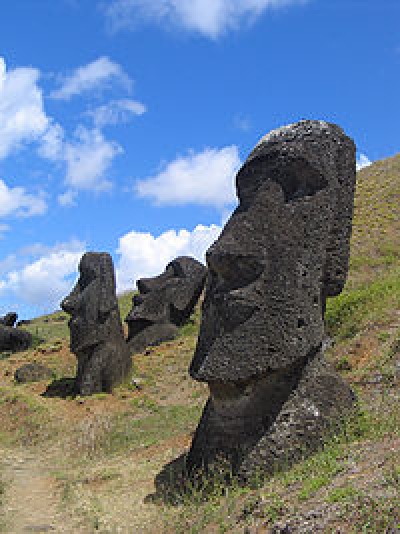
From this Close up shot of the maoi at Rano Raraku you can see that they were constructed from volcanic ash.
These special people who have preserved a long dead culture, a rich and unique heritage and unrivalled environment, deserve better.
Even the island's name is better known throughout the world by it's anglicized variant, rather than it's official Polynesian title, yet another loss of identity for the island's people.
For any of us that find ourselves priviledged enough to be able to visit Rapa Nui, we must treat the landscape, the monoliths and the people of this unique and mystical isle with the reverence and respect they all so rightly deserve.
SOURCES.
www.globalpost.com/easter-island-tourism
news.sky.com/Article/20080641310657
.
© D.B.Bellamy.March.2010.
All images courtesy of wikimedia commons.