Conwy ( Conway ) North Wales, Visitor Attractions
EducationConwy ( Conway ) North Wales, Visitor Attractions

The small walled, market town of Conwy, situated just a few miles from the bustling, seaside resort of Llandudno, on North Wales' Irish Sea coast, is full of surprises for the visitor, from it's ancient castle and town walls to it's vibrant, modern marina, the small county town of Conwy has something to offer everyone.
Built on the shores of the River Conwy estuary, famed for it's oyster industry whose farming methods have remained unchanged for centuries, what first appears as a sleepy little fishing town flanked by the Clywdian hills and it's larger neighbour Llandudno, suddenly reveals a 13th century castle, an eye catching suspension bridge and a bustling little quayside flanked by 16th century fisherman's cottages.
It's myriad of streets with medeival shopfronts, 15th and 16th century manor houses,Victorian railway station and 13th century church built into it's ancient walls are just a few of the surprises that await you as you make your way along it's hilly, cobbled streets.
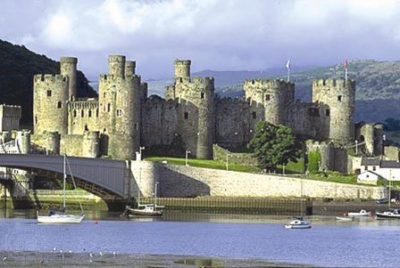
Image courtesy of C.J.Slade.
CASTLE AND TOWN WALLS.
The town's 13th century castle and town walls, owned and run by CADW( Welsh Heritage ), were built between 1283 and 1289 by King Edward I and incorporate towers, turrets, a toll house, a 13th century church, a railway bridge and a myriad of shops and cafes.
The walls are accessible and can be walked upon, giving the visitor a bird's eye view of the town and surrounding countryside.
Today the castle is hailed as one of medeival Britain's most outstanding military, architectural achievements.
CONWAY'S BRIDGES.
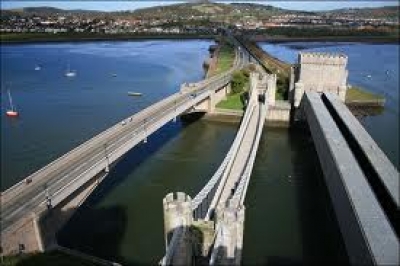
The town sports not one impressive bridge, but three, situated side by side straddling the River Conway estuary.
Thomas Telford's grand and impressive suspension, road bridge was built in 1826, followed 23 years later by Robert Stevenson's tubular, rail bridge built in 1849.
The suspension bridge is now only used for foot passengers with a modern road bridge built to replace it to the side of it.
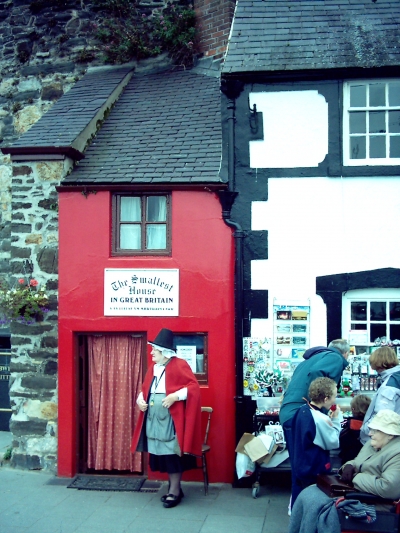
Image courtesy of C.J.Slade.
QUAYSIDE.
Conwy's small quayside overlooks the town of Deganwy, which is flanked by a backdrop of the Clwydian Hills.
The tiny quay is home to several 16th centuy fisherman's cottages, including Britain's smallest house, which is just a mere 3.05m x 1.8 m in size.
The old quay offers it's visitors boat trips around the estuary, or one can just take a seat on it's old stone wall and watch the local oyster and mussel fishers, some using traditional fishing methods that haven't changed in hundreds of years.
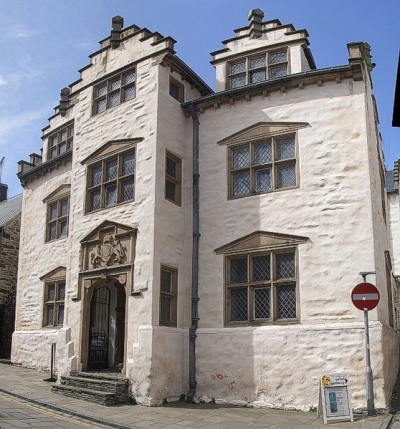
Image courtesy of Rob Farrow, wikimedia commons.
PLAS MAWR.
Built in 1576 for Welsh merchant Robert Wynn, Plas Mawr stands as a symbol of Conwy's former Elisabethan prosperity.
Today this fine town house which is owned and run by CADW, situated in Conwy's High Street, is Britain's finest example of Tudor, domestic architecture.

image courtesy of C.J.Slade.
ABERCONWY HOUSE.
Owned by the National Trust, Aberconwy House is the town of Conwy's oldest, surviving, domestic building.
Today the 14th century merchants house is a museum of domestic life spanning from Tudor times to Victorian.
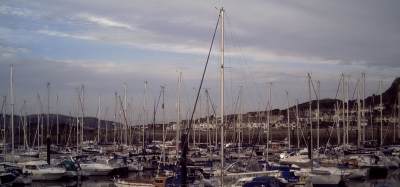
Image courtesy of C.J. Slade.
MARINA.
Situated on the outskirts of the town is Conwy's modern marina, home to an impressive array of craft from all over the world.
Set amongst new build, traditional town houses and the marina's modern complex of cafe's shops and chandlers office, all of which are flanked by a backdrop of the Clwydian Hills.
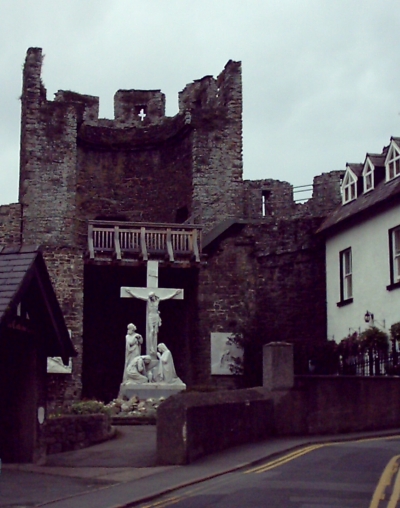
Image courtesy of C.J.Slade.
ST MICHAEL'S CHURCH.
St Michael's Roman Catholic Church is a rare and beautiful find situated in one of Conwy's back streets, Rosemary Lane. The original church on the site dates back to the 13th century and was built into the town's walls. Today the old church is marked by beautiful, religious sculptures and wall plaques.
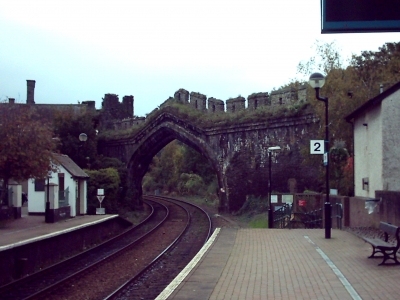
Image courtesy of C.J.Slade.
RAILWAY STATION.
Conwy's Victorian Railway station is overlooked by a large statue of Welsh hero Owain Glendwr and incorporates a bridge which is part of the town's ancient walls.
The station is situated amongst rows of tiny cottages and in front of the beautiful, medeival church of St Michael's.
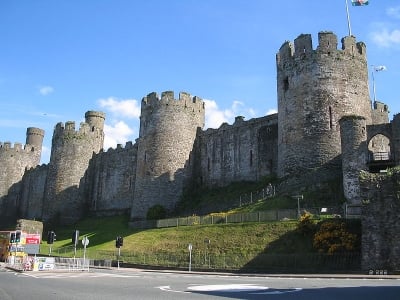
Image courtesy of David Benbennick, wikimedia commons.
SHOPPING.
Conwy's cobbled streets are full of tiny shops offering the shopper a varied array of local crafts or modern day trinkets, antiques or souvenirs, as well as all the traditional types of shops.
The town also has an unusual and interesting heraldic shop, The Knight Shop, which is well worth a visit and a well run and informative modern,Tourist Information Centre.
There are several cafes, coffee shops, pubs, restaurants and fish and chip shops on offer, some of which are located in ancient, historic or unusual buildings situated around the town.
The area surrounding Conwy ( Conway ) is surrounded by lush, green countryside, mountains, coastal beaches and a river estuary, all of which can be accessed by walking, cycling, rail or car.
For Conwy visitor information, please visit - www.conwy.com
Other North Wales attractions - bodelwyddan-castle-north-wales
portmeirion-village-gwynedd-wales
the-great-orme-llandudno-access-and-visitor-attractions