Considerations when Moving from the City to the Country
EducationConsiderations when Moving from the City to the Country

Many city people are itching to leave the rat race behind, return to the simple life, get away from the crime and the crowds. They want to move to the country. If not thought out well, this simple plan could be chaos.
What do you Want to do?
You will need to determine what you want to do when you move to the country. Will you be having some farm animals, or is living in a forest more to your liking? As this link is not on “how to start a farm” we will not get into specifics of keeping livestock as farm animals. When you decide what you want to do, you need to find a property that can accommodate it. Keep in mind that you should also check local zoning laws, particularly if you buy in a rural subdivision.
How Much Land?
In most areas country land is measured by acres. An acre is 43,560 square feet. One square mile is equal to 640 acres, this is also known as a “Section”. In the country land is often sold by the acre, quarter section, and so on.
Depending on what you want to do, you will need to find out how much land you need to do it. For a hobby farmer this can be anywhere from 2 acres to 80. To actually start a farm with livestock and/or crops, one usually needs more than 80 acres. Laws areas are different as will relate to how much space you need for different types of animals.
Where does the Waste go?
When you move to an acreage you will note that you probably have to take your garbage to the dump. Your sewage will either be pumped out into your field or will be contained in a tank that will need to be drained regularly.
Where does the Water come from?
In the country your water will probably come from a well. You may want to have this tested from time to time, especially if you are using it for drinking. Some people keep water tanks, and some buy bottled water for drinking. In areas where water may be scarce, a rain barrel may be used to collect water running off the roofs and used for watering plants, or even animals.
The Noise
The country is not as quiet as you might think. At night there are noises from animals, often coyotes. In snowy areas there may be snowmobiles in the winter. Over all it is still a good deal quieter than in the city, but a person not use to wildlife noises might be unnerved.
Driving
One of the most common complaints about living in the country is the long drive time to get into the city, as for shopping, or for employment, or for vehicle repairs. There are no sources for public transportation, so keeping ones car in good running condition is important. Kids must be driven to school, or generally get up early and take a school bus.
Neighbors – Humans and Other
In the country you might not be able to see your neighbors, people who live miles away will introduce themselves as your neighbor. You may land adjacent to you owned, and farmed, by somebody who lives a fair ways away. It is a good idea to know who your neighbors are and who owns the land around you.
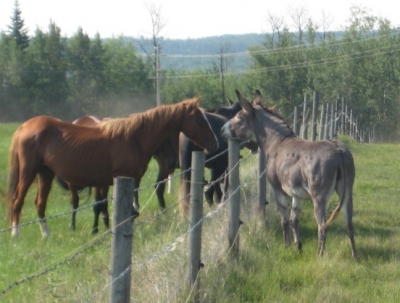
You will also have non-human neighbors, either in the form of livestock, or wildlife. Get to know who owns what kind of animal in your area as such if you find cattle loose on the road you might know whose they are. This is not uncommon and it is a whole lot faster to phone their likely owner than to phone the authorities who deal with stray livestock. In fact, in the picture below some strange horses showed up in my neighbors field one day.
Be aware what kind of wildlife is in your area and what kind of threat they may pose. Deer might eat your garden, coyotes might bother dogs left out, and eagles might snap up loose kittens. You will want to know the laws in your area regarding wildlife.
Getting Animals
If you plan on getting any animals, either as pets or livestock, check area laws first. Some only allow so many head on so many acres. Be sure you have the right kind of fencing and shelter. Know where your rural veterinarian is and find out what vaccinations are required in your area.
Your New Routine
If you live move to the country you will have a different daily routine. If you have animals they will need to be checked at least once, if not twice, daily. Some livestock animals can graze in the summer, others need to be fed, and most need feed twice a day in the winter. Care must be taken that animals have shelter in the winter and their water checked frequently. Fences will need to be checked, building maintenance, and so forth. You probably will have to walk, or drive, a short distance to collect your mail.

For the Record
I grew up in the city, but never much liked it, after many years made a move to the country. My husband and I bought a ten acre property and got sheep to keep the grass down, we also acquired a donkey and llama to guard the sheep, later we got hens for eggs and other animals for entertainment. I drink well water, and we have a small garden. The biggest challenge is when a vehicle breaks down, or when the power goes out. As work is hard to come by in the area I live in, the extra income made from writing to sites, like this one, helps pay for our critters.
*All photos by Author, not for reuse without permission.
Related Reading
Bantam Chickens - small and cute
How to Care for Bottle Baby Goats
How to Become a Sheep Producer
Join and Write your own Information Filled Factoid