Internet Alternatives: 5 Best Faster, Cheaper Options to Replace Cable
Internet ProvidersInternet Alternatives: 5 Best Faster, Cheaper Options to Replace Cable
Averil Gleason
The days of cable internet being the only game in town are over, folks. For so long, we’ve relied on Spectrum, Xfinity, and other cable company ISPs to provide us our WiFi. But choice is always good in the market, especially if those choices are often faster and cheaper than what we’re used to. Today, we’re going to share the top alternative internet providers on the market right now, and explain the different ways they get sweet, sweet internet into your home so you’ll know which one is right for you.
Internet Alternatives: Mobile Broadband
What is mobile broadband?
Mobile broadband is an internet connection service delivered to you through a mobile network using air waves [1] — basically, it's the same data service you get on your phone. While a fixed line connection can require visits from a technician and waiting for several business days, mobile broadband is ostensibly plug and play. You pull your mobile broadband modem out of the box, pop in the SIM card, connect your laptop to your new WiFi, and you're online. Easy as that.
Mobile broadband is all about the quick setup time, the no-contract option, and constant 4G or 5G internet access. But, like all things tech, with the good, comes the bad. A few drawbacks about mobile broadband are the potentially restrictive data caps and the fact that you’ll need a good mobile signal in your home.
Recommendation: Red Pocket Mobile

Red Pocket Mobile, from $10/month
Red Pocket Mobile is all about connectivity. Whether it’s with cell phone plans or mobile broadband, Red Pocket connects you using the major networks in America. This contract-free mobile and internet service allows you to pay for what you need, from 1GB of data to 20GB per month, the choice is yours.
Internet Alternatives: Fiber
What is fiber internet?
It’s faster than cable. It’s faster than dial-up. It’s faster than a speeding bullet — wait, that’s Superman, although this internet is pretty super, man. Ahem. Fiber internet small glass fibers to transmit data using pulses of light, rather than its slower counterpart, copper [2]. The light travels much like electricity would through a copper wire, but the advantage is fiber cables can carry multiple signals at once. They’re super small, and often bundled into larger cables called fiber optic trunk cables, each containing multiple fiber lines. This type of internet can carry large amounts of data in a single line, often reaching multiple terabytes of data transfer fairly easily.
However, the biggest drawback to fiber internet is the cost to the provider. Fiber is a lot more expensive to install and run, and often doesn’t justify the cost when cable lines are often already available.
Recommendation: Google Fiber

Google Fiber, from $70/month
In a world where our home internet has become our lifeline for work, connecting with friends, and simply staying sane during an otherwise hectic lockdown, you need an internet service provider you can count on. One that’s not just fast, but also reliable. Google Fiber provides internet with no contract requirements, data caps, or equipment set-ups. It might be a little more pricey than the internet you’ve got now, but the speed tradeoff could be a game changer. Google Fiber is available in several U.S. cities with more to come.
Internet Alternatives: Satellite Broadband
What is satellite broadband?
Satellite internet is pretty straightforward: it’s a wireless internet signal beamed down from satellites orbiting earth [3]. Rather than having your data transmitted through wires, satellite internet works by using radio waves to communicate with satellites. Since it’s the only internet service that’s available truly anywhere nationwide, satellite internet is often the only way to get online for many rural homes and businesses.
While satellite internet is widely available, it does have its drawbacks. Satellite communication requires a clear view between the dish and the satellite, meaning it’s weather-dependent. Rain, snow, and moisture can affect the type of band used in areas where heavy rain is a concern, along with line of sight.
Recommendation: HughesNet

HughesNet, from $60/month
Satellite internet is all about availability. And HughesNet is available everywhere. With HughesNet, the signal is sent from a satellite up in space to a satellite dish mounted on your property, which connects to a modem inside. The modem includes WiFi so that your phone, computer, and other Wi-Fi devices can connect to the internet. This satellite internet provider offers free installation. The speeds on HughesNet can reach up to 25 Mbps and you can get up to 60 gigabytes of data per month.
Future recommendation: Starlink
Starlink is still in its public beta phase, but is already a hotly-anticipated alternate internet provider from Elon Musk and the team at SpaceX. In its beta phase, Starlink is working out the kinks of performance and periodic outages due to its gaps in the satellite constellation. Starlink uses orbits low to earth, allowing for lower latency and faster speeds — which not all satellite companies have. As Starlink sends more satellites into orbit within the next few years, the internet availability will expand.
Internet Alternatives: Broadband via Radio Wave (aka Fixed Wireless)
What is broadband via radio wave or fixed wireless?
Broadband via radio wave, otherwise known as fixed wireless, is a reliable and cost-effective internet connectivity option. Radio wave broadband uses, naturally, radio waves to provide internet connectivity in remote areas where a DSL or optic fiber connection isn’t feasible [4].
Similarly to satellite internet, fixed wireless broadband is weather-dependent. Heavy rains and high humidity levels have been known to cause interference, thus reducing your internet’s speed. But many fixed wireless internet providers also offer adaptive modulation – meaning the transmitter automatically adjusts the modulation rate and speed of radio waves to boost signal strength. Fixed wireless speeds can reach up to 1,000 Mbps, but the most common speed users experience is around 25 Mbps.
Recommendation: Starry
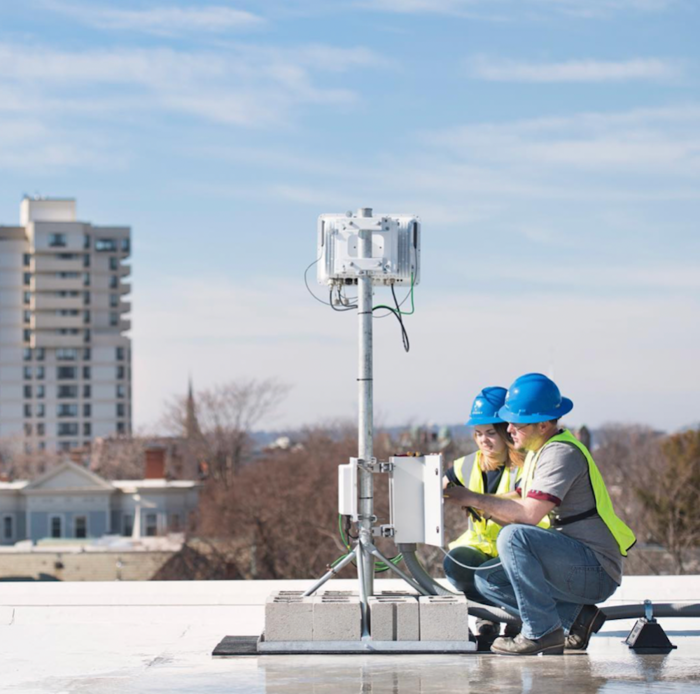
Starry, from $50/month
Alternate internet service providers understand that these days, the only thing you need is WiFi and an HBOMax login. That’s why Starry only provides what you need: the internet. Starry mounts their innovative antenna on radio towers and skyscrapers to transmit internet across the city. Starry offers unlimited data, a free WiFi router, free installation, with no long-term contracts.
Internet Alternatives: DSL
What is DSL?
DSL stands for digital subscriber line, a type of high-speed internet which provides access to the internet through telephone lines and a modem. DSL internet has 90% nationwide coverage and lower latency than other rural internet options, like satellite [5]. DSL works best for those who prefer a wired connection so this is the next best thing to fiber internet, especially if that kind of internet provider isn’t available in your area just yet.
Unfortunately, a DSL connection works better when you are closer to the provider's central office. The farther away you get from the central office, the weaker the signal becomes. DSL download speeds extend from one to 400 Mbps, and the upload speeds reach up to eight Mbps [6].
Recommendation: EarthLink

EarthLink, from $39/month
With no internet data caps, no unnecessary bundling, and no speed throttling, EarthLink is a top DSL internet service provider in the game. EarthLink doesn’t require an active phone service in order to get DSL, you just need a phone line in your home. Because EarthLink uses a wired connection, the latency is much lower. So depending on what you’re doing, it might actually feel faster than your previous provider.
External references
