The Giant Hogweed, a Toxic Invader
EducationThe Giant Hogweed, a Toxic Invader

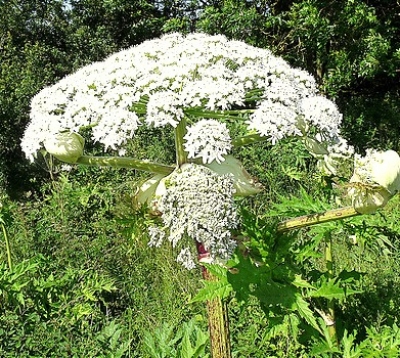
Giant Hogweed can reach 10-20 feet tall and is distinguished by its reed-like hairy dark red to purple stems, spotted leaf stalks and large serrated compound leaves. Giant Hogweed is a perennial, flowering each year in late spring to mid summer. During this time they are covered in an umbrella of lovely white flowers. It is a very popular plant with bees and bee keepers. It reproduces only be seed which it produces in capacious amounts. Giant Hogweed is a dominant plant which spreads quickly and overtakes local plants species, wreaking havoc on the environment.
Giant Hogweed is a threat to the environment not only because of its aggressive nature but due to its phototoxicity. It poses a serious risk to humans and some animals. Giant Hogweed produces a sap that is highly toxic and when touched can cause serious burns and blistering. The plant is phototoxic which means that it takes UV rays to activate its toxins. Those that get sap on them need to keep it covered for several days so it is not exposed and activated by the sun’s rays and it should be washed thoroughly with soap and water. One should seek medical attention immediately.
The reaction from Giant Hogweed toxins varies per person, some are far more sensitive than others. Most times it takes 24 hours for the first signs of the burn to appear. It starts with painful burning blisters, followed by a reddening and swelling of the skin. Symptoms can last for months and in some individuals a sensitivity to the sun can last for years. It takes just a miniscule amount of the toxins to cause temporary or permanent blindness if it gets in the eyes. It can also cause life long scarring.
Giant Hogweed also poses a threat to some animals. It is poisonous if eaten and there has been several reported cases of dogs being affected by its toxins. Dog owners need to learn to identify the plant and keep their dogs well away from it. If a dog does get any sap on them, owners should be careful not to touch it themselves. Just like with a human, the sap needs to be thoroughly washed off with soap and water and the area should be covered for several days to prevent exposure to the sun.
Due to their large size the Giant Hogweed is usually easy to identify and avoid. Any sighting of it should be reported to the proper authorities so it can be safely removed. Handling this dangerous plant alone is not advisable as it is difficult to cut down and simply far too unsafe. The Giant Hogweed is an alien plant which is causing some serious problems in certain areas. If all sightings are reported and no more plants are brought into countries where it is not natural, hopefully the spread of this toxic invader can be contained and kept under control.
Giant Hogweed is not the only toxic plant that has been brought to North America. The Castor Bean Plant is another non-native that is very dangerous. In the future it too may become under strict regulations, making them illegal for the private owner.