The Elements of Magic(k): Laws
EducationThe Elements of Magic(k): Laws

Throughout recorded history, the ability to influence the forces of nature has distinguished our greatest leaders–tribal chiefs, religious figures, and trusted imparters of wisdom.
From Ramesses I to Solomon, Leonardo to Pope Benedict XVI, those believed to possess the ability to reach through the veil separating the realm of the mundane from the otherworldly have been afforded particular status, authority, privilege, and often, power.
While in ancient times the practice of magic(k) was commonplace–magicians said to be on every street corner–it was often a matter of whose magic(k) was more powerful that ultimately determined societal ranking; those able to demonstrate their skills on command afforded more social clout.
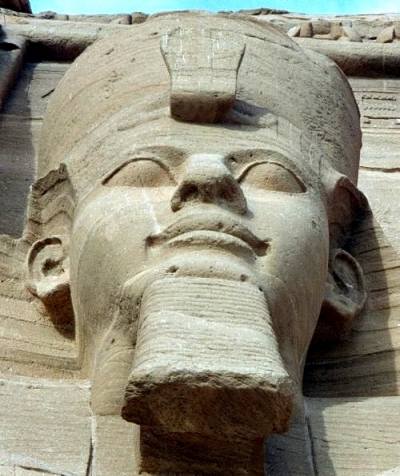
This reality is well exemplified in the Old Testament account of Moses challenging Ramesses the Great to a winner-take-all magic(k)al showdown for the Hebrews' freedom.
But even in more modern times when computer-generated wizards challenge outlander magicians to cyber-duels to determine whose supernatural Kung-fu reigns supreme, the ultimate underlying question remains the same: “What makes one practitioner’s magic(k) more powerful than another?”
Where Does the Power Ultimately Iie?
Is it all a matter of skill–the individual magician’s knowledge and experience?
Is it the variables of the ritual setting–the planetary alignments, the physical location, the atmospheric conditions?
Is it focused in the power of the magician’s tools?
Is one cultural methodology inherently more powerful than another–Celtic more powerful than Native American; Egyptian more potent than both?
Or is power simply determined by how strictly the magician adheres to the letter of the ritual recipe?
These are the questions pondered since the first wise woman raised her arms to the heavens and caused lightening to crack the sky.
One With the Forces of Nature
For those who acquire their magic(k)al skills thorough self-discovery rather than apprenticeship, the names Gardner, Carmichael, Crowley, Regardie, Frazer, Fortune, and Leek are like old familiar mantras. In Wiccan and Pagan circles, each name represents a formable figure from magic(k)al royalty who devoted much of their lives to uncovering–deciphering, in many cases–the esoteric secrets of the universe.
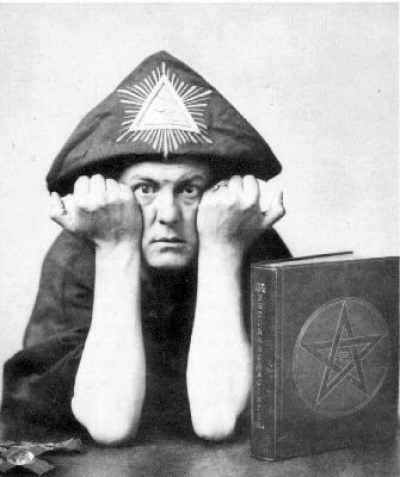
And like Aquinas, Flamel, Agrippa, Budge, and Levi before them, their first revelation was that it isn’t enough to simply know the ceremony of magic(k)–the formula, as it were–to summon and wield the power of nature. Indeed, one must ultimately become one with these boundless forces. And as any practitioner who comes to master this relationship can attest, this is a process requiring untold patience, persistence, and for many, a lifetime of spiritual devotion.
The Laws of Magic(k)
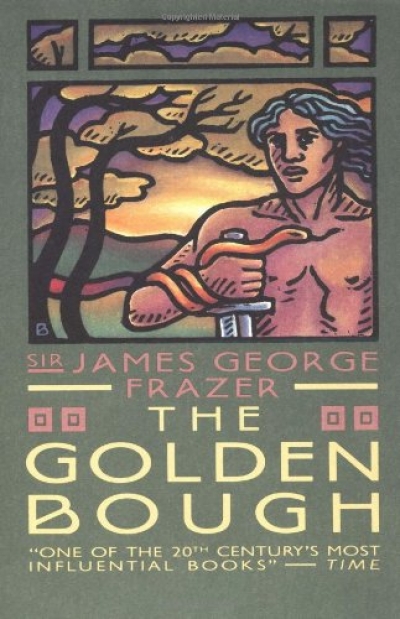
In his highly acclaimed primer, The Golden Bough: A Study of Magic and Religion, anthropologist Sir James Fraser writes, “If we analyze the principles of thought on which magic is based, they will probably be found to resolve themselves into two: that like produces like, or that the effect resembles its cause; and, second, that things which have once been in contact with each other continue to act on each other at a distance after the physical contact has been severed.” In essence, the method by which a magician produces an effect is by imitating it, and that whatever a magician does to a material object will equally affect the person with whom it was once in contact.
As any ritualist will attest, the ability to produce these fundamental effects is anything but effortless, and to produce them consistently and on cue is perhaps the greatest test of any magician’s will. And that ability first begins with an unwavering belief that the human mind has the inherent ability to affect the physical world. And in virtually every known cultural setting throughout recorded time, this causation is accomplished by the use of specialized tools, formalized ritual procedure, and magic(k)al language. But, knowing the "what" of magic(k) is merely the beginning. Finding the "how" requires the key to an entirely different door.
References:
Magick in Theory and Practice, Aleister Crowley
Religion, Magic, and Witchcraft, Stein and Stein
The Witches Bible Compleat, Farrar and Farrar
The Golden Bough: A Study of Magic and Religion, Sir James Fraser
images via wikipedia.org
Related Articles:
> Sikhism
Visit JAMES R. COFFEY WRITING SERVICES & RESOURCE CENTER for more information