Salicylic Acid for Ringworm
EducationSalicylic Acid for Ringworm

Salicylic acid is something to be associated to acetylsalicylic acid (ASA) also known as aspirin since it is a component of this medication. While a small amount of salicylic acid can be employed as a food preservative, it is commonly used as a topical medication for skin disorders like psoriasis, warts and seborrheic dermatitis. Topical agents that contain salicylic acid have also been cited as an effective remedy for pimples and blemishes associated with acne outbreaks.
Ringworm also referred to as dermatophyte infection is a skin disorder caused by fungus. Ringworm is often treated by topical or oral antifungal drugs such as Nizoral, Tinactin, Trosyd etc. However, topical salicylic acid has also been revealed as an alternative for antifungal drugs. But, can salicylic acid be as effective for ringworm?
How salicylic acid works
In seborrheic dermatitis (dandruff) and psoriasis, salicylic acid exerts its effect as a keratolytic – an agent that tend to shed off skin. Salicylic acid helps reduce the skin formation that piles up into dandruff. Salicylic acid works as an antiseptic in preventing pimples by killing the acne-causing bacteria.
As salicylic acid is a form of acid, it softens the calluses and warts making these easy to scrape off. Finally, salicylic acid is also classified as an antifungal. This means, salicylic acid can also treat fungal infections like ringworm.
Salicylic acid for ringworm
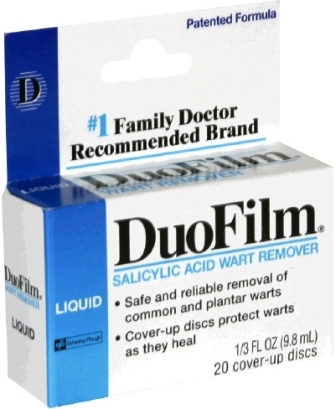
Topical salicylic acid can be in lotion, ointment or in liquid form. It can be in single form or in combination (e.g. Rhea Ap-Ap solution, DouFilm and United Home Whitfield’s ointment). Topical salicylic acid is usually applied three times a day. Although, salicylic acid falls under category C regarding pregnancy safety, it has no controlled studies on pregnant women therefore it is not advised for use.
Salicylic acid is not to be used on large surface areas of the body and should not be used in high concentrations for a long period of time. It should not be applied on a broken skin and should be avoided in contact with the eyes, mouth and genital regions.
The common side effects of a topical salicylic acid are drying and irritation.
So, can salicylic acid be effective for ringworm?
Salicylic acid maybe classified as an antifungal but it is really a weak type. It can be an option as a remedy if other antifungal topical medications are not available. However, topical salicylic acid is generally indexed as an acne treatment preparation and as a keratolytic for warts, calluses and other scaling conditions. In addition, salicylic acid can sting the skin. With itch as one consequence of ringworm infection, an open wound is possible because of scratching. Hence, treatment with salicylic acid can be very painful.
© Phoenix Montoya @ April 21, 2012
References:
- http://www.dhs.wisconsin.gov/communicable/factsheets/Ringworm.htm
- http://mims.com/Philippines/drug/info/salicylic%20acid/?q=Hyperkeratotic%20and%20scaling%20skin%20conditions
Related article: