Nutrition: Facts About the Dragon Fruit
EducationNutrition: Facts About the Dragon Fruit

You may have not have known that you have eaten or tasted the dragon fruit as your desert, in its raw form, or juice and experienced its crunchy and uniquely delicious taste. But do you know that the dragon fruit plant is not produced from the conventional woody tree or plant where many fruits are derived? The dragon fruit is obtained from several cactus species!
The dragon fruit stem has a succulent stem just like any other cactus plant you have seen. The succulent stem is the plant’s adaptation to an arid climate where the plant has characteristically fleshy tissues that conserve moisture.
Red-skinned Climbing Cactus - Hylocereus undatus
One of the species of the dragon fruit, Hylocereus undatus, is triangular in cross-section with spikes on the angular side distributed along the ridge every few inches (Figure 1). The stem tends to lie close to the ground but many dragon fruit growers tie it up on some sturdy post where its fibrous roots would attach and keep it upright.
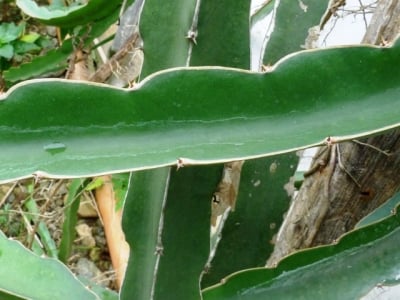
Fig. 1. Spikes of the triangular stem of the dragon fruit plant.
The dragon fruit plant’s flower reminds one of the fiery mythical dragon’s breath of fire (Figure 2). Probably, the plant derived its name from the budding flower akin to a dragon’s appearance. The flower usually blooms at night, from 7 pm to 12, thus it is called the “Queen of the Night” or “Moonflower”. It withers early in the morning or late in the day. The flowers will last for a brief period of about 12 to 16 hours.

Fig. 2. Flower of Hylocereus undatus (Image Source)
The Dragon Fruit
What about the fruit? The fruit of Hylocereus undatus is a nice-looking, grenade-like leathery pack of pink outer shell with fleshy leaf-like posterior projections bounded by greenish margins (Figure 3).
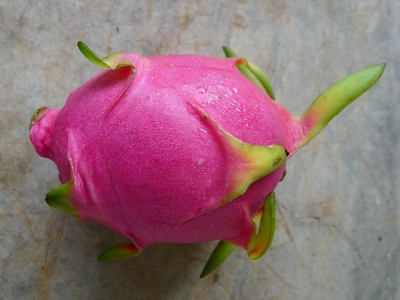
Fig. 3. The grenade-like dragon fruit.
It looks odd to be palatable but cutting longitudinally across the fruit reveals a juicy white meat riddled with hundreds of small black seeds (Figure 4).
.jpg)
Fig. 4. The dragon fruit in half.
If you have no spoon to spade up the meat, just cut longitudinally again so that you will be able to peel off the leathery skin. You can’t wait to taste the unique, delicious taste with each crunchy bite you make (Figure 5).
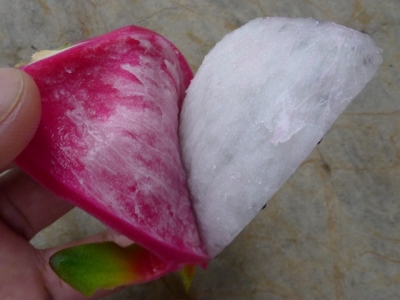
Fig. 5. Ready to eat juicy dragon fruit.
Nutritional Benefits of the Dragon Fruit
The dragon fruit contains a lot of beneficial vitamins and minerals. Dragon fruits are rich in antioxidants, Vitamins B1, B2, B3, C, polyunsaturated fatty acids, carotene, protein, calcium, iron and phosphorus.
These beneficial contents found in dragon fruits can help the body carry on its normal functioning such as:
- excrete heavy metal toxins from the body
- lower cholesterol and high blood pressure
- relieve asthma and cough
- improve eyesight
- avoid constipation
- reduce fat
The dragon fruit is also known as pitaya, pitahaya, hu? lóng gu? (???/???), strawberry pear, nanettika fruit, or thanh long.
© 2011 August 20 Nutrition: Facts About the Dragon Fruit and Its Nutritional Benefits
References