The Definitive NFT Value Estimator Guide: How to Gauge If an NFT Is Worth Your Investment
NFTsThe Definitive NFT Value Estimator Guide: How to Gauge If an NFT Is Worth Your Investment
Sam Greenspan
The interest in NFTs (non-fungible tokens) soared in 2021. Highly-sought tokens are now going for what most of us would consider ridiculous amounts — at the time of writing, the less expensive Bored Apes are going for over $200,000 (50 ETH). Clone X launched at an eye-popping mint price of 3 ETH and still sold out fast. The more highly-sought pieces are going for millions. With values like this, it isn’t surprising that some NFTs have outperformed major cryptocurrencies like Bitcoin and Ethereum over the course of the year.
While these gains are eye-catching, they are an outlier when it comes to the NFT market as a whole. Most NFTs don’t cost thousands of dollars, nor do they experience millions in daily trading volume. In fact, it’s quite the opposite. The vast majority of NFTs have relatively low prices. Some, very low.
Plus, most of these NFTs aren’t actively traded, making them difficult to sell. So while there are many opportunities to make money investing in NFTs, you have to know what to look for. If you try to randomly buy and flip NFTs, you will likely lose your money.
Whether you want to turn a quick profit or are looking for a long-term investment, you will want to properly research your purchases in advance. In this article, we will examine what to look for when assessing the value of an NFT. We’ll also walk through some examples of current NFT projects that have the qualities to look for in an NFT.
How to Assess NFT Value
With so many types of NFTs, and projects popping up left and right, determining the value of a token can be tricky. To get a sense of an NFT’s worth and whether it is a good investment, you want to evaluate the asset’s underlying fundamentals. The key factors to analyze are its scarcity, utility, creator, and liquidity.
Scarcity
The defining characteristic of a valuable NFT is scarcity. People are willing to spend small fortunes to acquire something that is truly rare. We have seen it for centuries with art and other collectibles and now we are experiencing it in the digital world.
NFT projects create scarcity by minting a fixed supply of tokens. These could be the popular 10,000 profile pic (PFP) collections or a single-edition digital art piece. Individual NFTs in a collection often have their own level of rarity based on the uniqueness of their properties. (For instance, if only 10 of the 5,000 digital frogs in an NFT project are wearing sunglasses, those sunglass frogs should have higher value due to their rarity.)
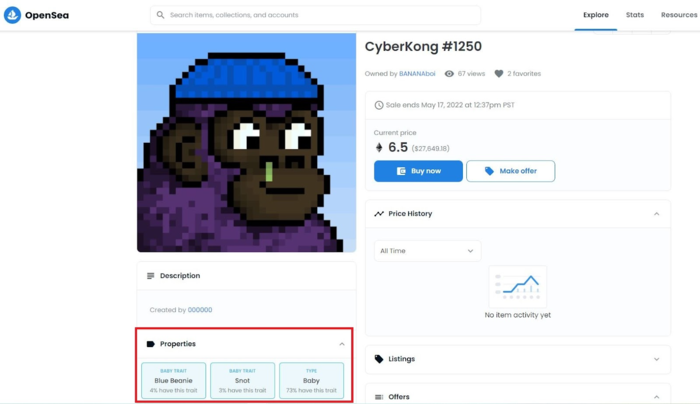
Marketplaces like OpenSea show the distribution of properties for different collections so that you can see if you have a rarer piece in the collection.
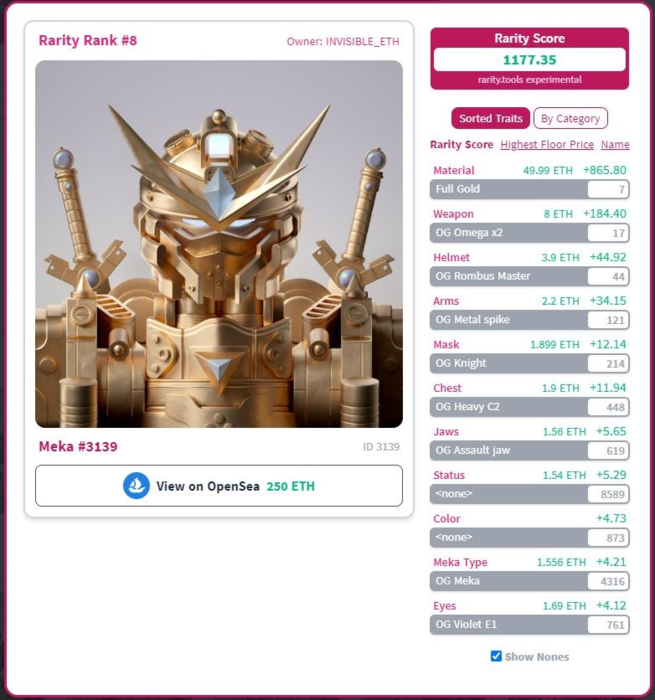
You can get more detailed insights into the value of an item’s traits by using rarity.tools and their proprietary Rarity Score. When you pull up an NFT, you can see a Rarity Score for each trait. These are added together to make an overall Rarity Score for the NFT.
Utility
Utility has become a big focus for new NFT projects as creators look for ways to provide more value to holders. NFTs with strong utility naturally tend to have higher prices as holders can benefit from their investment without the price of the asset even going up. Plus, as questions continue to swirl around the true value of NFTs (is digital art really worth this much?), NFTs with practicality outside of “this art is cool” could assuage some investment concerns.
For an example of utility, an NFT collection could give holders entry to an exclusive event or access to a private club. Gaming NFTs have inherent utility as they exist to serve some purpose in the game; you can buy weapons and items, virtual land to build on, or even characters to play as.
Creator and ownership history
The creator behind an NFT is an important consideration when evaluating it as an investment. Like investing in a company, the people behind the asset will ultimately determine how well it performs.
As such, NFTs created by well-known individuals or strong brands tend to go for higher prices as people feel comfortable investing in them. You will want to look for projects where the creator has a solid background and knowledge on how to build a community. By doing this, you’ll position yourself to find NFTs that continue to grow in value.
A token’s ownership history also contributes to its value. NFTs with a strong transaction history or those held by notable people are more attractive and can demand high prices.
Liquidity premium
Liquidity premium is the ease with which NFTs can be traded. NFTs with a high liquidity premium enjoy a high value. An asset is considered to have high liquidity if it can be converted to cash quickly at a fair market price.
In general, holders prefer more liquidity as it reduces the risk of holding the asset. Highly liquid NFTs can maintain their value even if they lack utility because they can still be traded speculatively.
Today, most projects choose to build on Ethereum as the ERC standard tokens can be easily traded across markets. These NFTs should have a higher value than off-chain tokens, something to keep in mind when you’re assessing your NFT investments.
5 Examples of NFTs That Meet the Qualifications of Good Investments
Now that we know what to look for in an NFT investment, let’s take a look at some of the notable NFTs being bought and sold today.
Obviously, this isn't financial advice but based on our factors above, here are five examples of NFTs that have the qualities of a good investment based on our four factors defined above (scarcity, utility, creator/owner history, liquidity premium).
MekaVerse
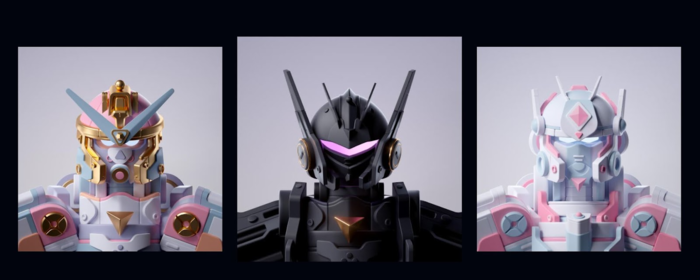
MekaVerse is a collection of 8,888 NFT art pieces inspired by Japanese anime classics. The project was created by Mattey and Matt B, two talented 3D artists who have worked with major companies including Apple, Nike, and Adobe. The two are connected with a lot of artists in the NFT space and know what it takes to build a strong community.
Each Meka is an original artwork with its own set of traits. There are hundreds of elements across the collection which help create a unique variation for each Meka. In addition to the artwork, MekaVerse holders unlock several utility benefits including access to exclusive events on Discord and Twitter.
The project is set to give holders even more utility going forward with plans for physical items, collaborations with famous artists, more drops, and further expansion of the community.
MekaVerse enjoyed one of the most successful NFT collection launches to date with hundreds of thousands of people signing up for the pre-mint raffle.
The Sandbox
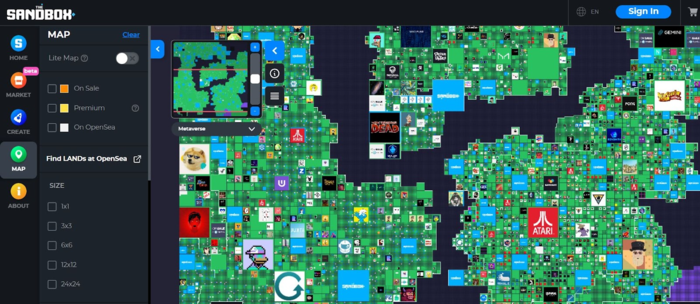
The Sandbox is a gaming platform where you can use NFTs to build and play in the virtual world. There are several types of tokens you can buy, all providing some form of utility. This includes virtual land, entities, and equipment, among others.
The virtual land NFTs are rapidly gaining interest since Facebook renamed itself Meta and announced its intention to focus on the metaverse (of which NFTs will be a massive part). These pieces of digital real estate are the foundation on which the Sandbox Metaverse is built. When you own land, you can fill it with games and assets that you and others can then enjoy through a virtual experience.
The value of both the Sandbox token SAND and the platform’s NFTs have exploded recently with more attention on the metaverse. The project has raised close to $100 million in funding and has announced partnerships with several celebrities including Snoop Dogg. Lots of people are realizing you can now make money playing video games — and The Sandbox is one of the fastest-growing (and most lucrative) of the pack.
Slotie
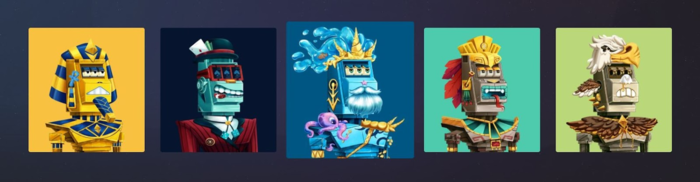
Sloties are a collection of 10,000 unique NFTs on the Ethereum blockchain. Beyond getting a verifiably rare piece of art, the main value of this NFT project comes from the utility it provides in the emerging defi gambling industry.
The creator, Elia Software, is a company that partners with over 150 digital casinos to provide iGaming, sports betting platforms, and casino engines. As part of their partnership, the company receives 12% of the revenue generated through slot machine software.
80% of these funds are distributed to Slotie holders, allowing you to earn a passive income on your NFT. A Slotie’s rarity determines its revenue share from the Casino’s profits. A higher rarity equals a higher share.
Holders can earn more income by staking their NFTs as liquidity for slot games that are integrated within the partner casino sites. You can even “breed” your Slotie to generate another set of NFTs called Junior Sloties.
On initial release, Sloties sold out in under five minutes.
Autograph
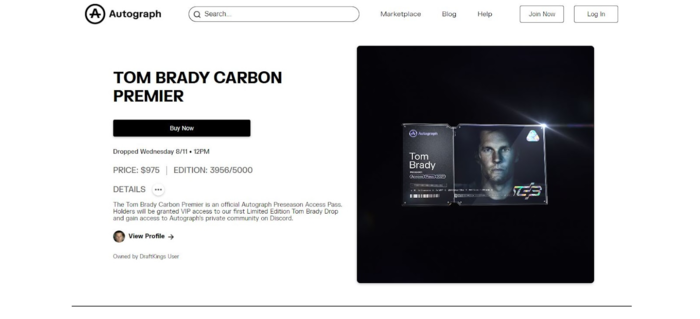
Autograph.io is an NFT platform co-founded by future hall of fame quarterback Tom Brady (should he ever retire, which is no guarantee). The Autograph NFT marketplace includes digital collectibles created by icons in the sports and entertainment industries. You can currently find NFTs officially signed by big-name athletes including Simone Biles, Tiger Woods, and Wayne Gretzky.
The collections have different levels of rarity, ranging from single-edition sets to collections with thousands of tokens. Creators can add additional utility to the NFTs by giving holders access to VIP events, future drops, and Discord and other community channels.
Unlike most NFTs these are priced and paid for in fiat currency (USD) instead of cryptocurrency. Other than initial releases on the main site, the NFTs are traded through the DraftKings Marketplace.
VeeFriends
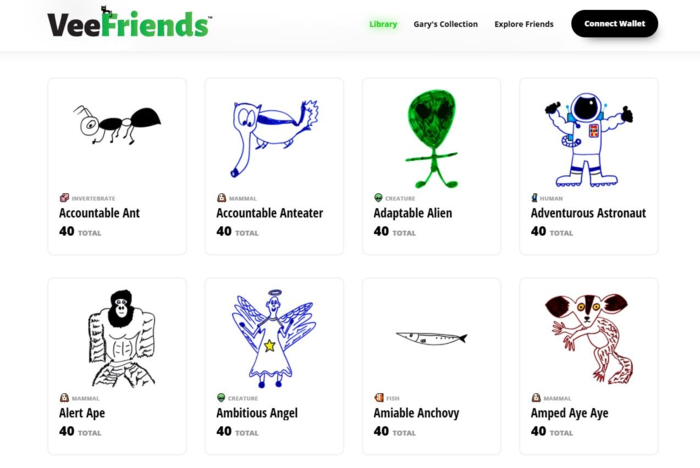
VeeFriends is a community-focused NFT collection created by popular serial entrepreneur Gary Vaynerchuk. The collection comprises 10,255 NFT tokens in three categories: Access, Gift, and Admission. Each token adheres to the ERC-721 standard and includes a unique digital artwork originally designed by Gary himself. They also grant the holder access to VeeCon, a multi-day event where community members gather to share ideas about creativity, business, and other fun topics.
With Access Tokens, holders unlock virtual and in-person experiences with Gary. There are 300 of these tokens, 210 that give virtual access and 90 that give in-person access. 108 of the Access Token provide one-on-one access to Gary whether it’s joining him courtside at a game or chatting over FaceTime.
With exclusive access to one of the most prominent figures in business, it’s easy to see why many would value these NFTs and choose to hold them long-term.
Tips for investing in NFTs
1. Plan your exit strategy
One of the biggest challenges of investing in NFTs is cashing out your investment. It isn’t like buying a stock or a crypto coin where you can go onto an exchange and instantly sell your asset (assuming there’s enough liquidity).
With an NFT, you can’t sell your asset until another person chooses to buy that specific NFT from you. Because of this, you will want to plan how to best sell your NFT when the time comes. Listing it at a low price may help it sell faster, but will lead to a lower return.
Higher prices may have the opposite effect and your NFT may remain on the market. If the project is experiencing price volatility, the value of your NFT could tank while you’re waiting to sell it.
2. Know the floor price
The floor price is the lowest asking price for an NFT within a specific collection. It is one of the primary metrics investors use to determine the strength of a project. Naturally, projects with a higher floor price are viewed as stronger, leading to a higher overall value for the project.
This doesn’t necessarily mean you should only chase NFT projects with high floor prices. Low floors are more accessible to new investors. Plus, projects that have already seen major growth may not give the best opportunity for future return. Because of this, it is often more effective to monitor new projects that you can enter at lower prices
If you have more money to invest or a whole lot of Ethereum burning a hole in your pocket, you can consider buying the ceiling NFTs in a collection. These are the rarer items that demand higher prices. While not accessible to everyone, these have the potential to reach crazy values if the project were to catch fire.
3. Check the NFT’s blockchain
You should always check the NFTs blockchain. Beyond providing the technical framework on which the asset is built, the blockchain will impact which markets the token can be traded on as well as the wallets you can use to store it.
You want to find coins that can be traded easily on secondary marketplaces. This among other reasons is why ETH-minted tokens tend to have considerably higher prices than those on other blockchains. This will change over time as more blockchains develop their NFT ecosystem. But, for now, it is something you’ll want to consider, especially if high liquidity is important to you.
The only caveat to Ethereum based tokens is the potential for high gas fees. These are more of an issue if you are buying lower-priced tokens as you may find gas fees as high as the price for the NFT.
4. Focus on a specific type of NFT
If you want to make money with NFTs, it is helpful to have experience and insight into the type of NFT in which you are investing. This will allow you to better assess the value of the token as you will know the market and what to look for in a winning project.
For instance, gamers could have great insights into the worth of NFTs for a game they regularly play. Or sports fans that can identify superstars before they blow up.
This applies more to digital artwork than the other types of NFTs. Most people don’t have the ability to distinguish between an average piece of art or a masterpiece. Because of this, they won’t be able to catch undervalued projects before they become popular.
5. Do your own research
Above all else, it is essential that you do your own research when evaluating NFT investments. It can be tempting to simply buy something because you see someone else do it or because an influencer tells you to. You may catch a few winners like this, but it is unreliable and will eventually lead to big losses.
When you find an NFT that looks like a good investment, it’s time to roll up your sleeves and learn everything you can about the token, its creator, and its place in the market.
NFT Value Estimation: Conclusion and Takeaways
NFTs are still in their infancy and their interest isn’t going away any time soon. More mainstream investors and big name brands are coming to the space which is leading to even more people minting NFTs in hopes of capitalizing on the demand.
As the market becomes noisier, the key to successfully investing in NFTs is to differentiate the quality assets from the fads. It’s hard to pick which projects will pump because of a trend as individual projects can gain and lose popularity rapidly.
But investing based on underlying fundamentals is an investment strategy that has proven effective across asset classes. By evaluating your NFT investments using these criteria, you will be in a better position to make money.
