Ice Cream Bean: Nutritious, Low Fat, Tropical, Vanilla Ice Cream Flavor Snack.
EducationIce Cream Bean: Nutritious, Low Fat, Tropical, Vanilla Ice Cream Flavor Snack.

For those that love vanilla ice cream but want to avoid the saturated fat and cholesterol, there is a completely natural, nutritious, low calorie, low fat alternative. I’m referring to the ice cream bean, botanical name Inga edulis mart, a variety of tropical fruit in the Mimosa family of plants. The fruits are cultivated and sold at markets in the tropics of South American and are a favorite snack of children who love to eat this fruit's sweet white pulp, which many describe as similar in flavor to vanilla ice cream. Inga edulis trees are native to the Amazonian regions of Brazil, Colombia, Ecuador, Peru and Bolivia, but have also been introduced to the tropical forests of Central America, including Panama, Costa Rica and other tropical countries such as Tanzania. Unfortunately the ice cream bean does not travel well, turning bad after just 2-3 days of harvesting, so it's unlikely we will ever see them in western supermarkets.
From October through June Inga edulis bears edible fruit. The long, (55-75cm) twisted fruit pods, similar in appearance to tamarind, contain several large black seeds surrounded by a tasty white pulp. The white pulp has the texture of cotton candy, but moist. The fruit of Inga edulis is known as inga, guaba in Colombia, shimbillo in Brazil, and bri bri in Central America. It's thought the name 'inga' originated from the Tupi indigenous people of Brazil. Inga edulis species are medium sized, bushy, attractive evergreen trees with yellow or white flowers and long pointed leaves that form the perfect forest canopy. This tree species improves, and helps maintain, soil quality because of it's nitrogen fixing properties. As such it have been utilized by coffee and cacao farmers since the early 19th century to provide shade for crops.
Medicinal and Other Uses of Inga Edulis: inga Edulis has a long tradition in the folk medicine of Indian tribes. Some tribes prepare decoctions from the seeds, bark and or root which is given to children to treat dysentery. The same extraction is used to relieve rheumatism, as an anti-inflammatory. The Kuna Indians of Colombia use the trees white pulp and leaves to soothe the nerves and relieve headaches, while some indigenous tribes use the pulp as toothpaste and for cleaning the eyes. Amazonian indigenous people make charcoal from this trees timber, which is a very useful wood for fuel. The sap from this tree species is also used to fix dyes in fabric and other materials and some indigenous people use the fruit to produce an alcoholic beverage, known as cachiri.
Nutritional Value of Ice Cream Bean: the white pulp in the seed pod is mostly eaten raw as a sweet snack, however the pulp is less nutritious than the black seeds which are cooked and eaten as a vegetable. Cooking the seeds destroys toxic compounds known as trypsin inhibitors and also chymotrypsin inhibitors. Trypsin inhibitors, also found in soybeans, prevent the production of the enzyme trypsin which is made in the pancreas. Both trypsin and chymotrypsin are crucial for digestion as they convert proteins into amino acids, thereby extracting the nutritional benefit of food so it can move throughout the blood stream. However, trypsin inhibitors are not all bad. Some are currently being researched for use as cancer preventative medications.
A 100g serving of ice cream bean seeds contain 10.7g of protein and 1.6g fiber. As with the majority of tropical fruits the seeds have a higher calorific content. 100g of seeds has 118 calories, compared with the same amount of fruit pulp which has just 60 calories, about the same as pineapple. The pulp is a source of vitamin's A (0.04mg), B1 (0.14mg), B2 (0.09mg) and vitamin C (19.6mg).
Antioxidants in Ice Cream Bean: the fruit of inga edulis is an excellent source of phenolic phytochemicals. Many of the compounds present such, gallic acid, epicatechin (also found in dark chocolate and red wine) and the flavonol quercetin, (found in black tea, grapefruit, onions) have antioxidant properties, which means they help neutralize free radicals that cause chronic diseases. They are also anti-inflammatory and anti-cancer. The leaves of inga edulis species, which are also edible, have the highest concentration of polyphenolic compounds.
Primary image: flickr.com.
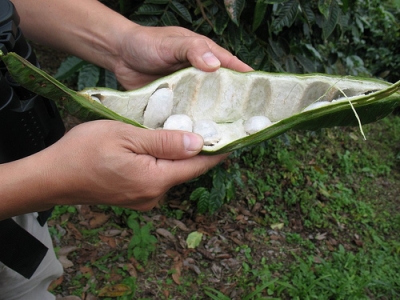
Image credit: flickr.com.