How to Avoid Being Scammed when Selling a Pet Online
EducationHow to Avoid Being Scammed when Selling a Pet Online

There are many scams on the Internet, some of the most common involve the buying or selling of pets. These scams are perpetuated by both buyers and sellers, so you need to be careful if you are considering selling pets, or livestock, over the Internet.
Risks of Selling Pets over the Internet
There are many scams, or acts of fraud, that target people who are trying to sell pets, livestock, or really anything, over the Internet. One of the scams involves paying by check but paying too much and asking the seller to pay the difference in cash, or even by check.
Often they will pay by check, money order, or even certified check – but these are all fake.
Other scams are more complex, the seller offers to send you a check, you deposit it, and may even wait a few days for it to clear, at which time you send the animal to the buyer, or release it to them. At that point the seller cancels their check – which forces some banks to withdraw the money from your account. The scam buyer now not only has your money, but the pet as well.
Some scams are not to get the animal itself, but rather to get your banking information. The buyer will ask for your bank information and will claim they will make a deposit to your account.
How to Avoid Being Scammed when Selling Pets or Livestock
The best way to avoid being scammed is to insist on cash only. Make it clear up front that you only accept cash, not checks. Of course if you are selling an expensive horse you will be able to spot a scam buyer by other means and may accept a certified check from them in a situation were you are confident the buyer is legitimate.
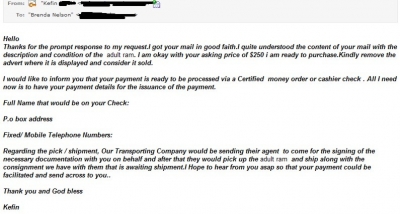
Above this is an e-mail I received when selling a ram - you will note the buyer seems to use a standard letter just filling in the type of animal each time, in this case an "adult ram". - If you cannot read it the bottom goes something like this "Our Transporting Company would be sending their agent to come for the signing of the necessary documentation without on behalf and after that they would pick up the adult ram and ship along with the consignment we have with them that is awaiting shipment...."
You need to be adept at spotting a scam buyer:
- Scam buyers usually only contact you by e-mail, rarely by phone, and nearly never in person.
- The scam buyer will usually not ask many questions about the animal (eg. They rarely will ask for you to send pictures).
- The scam buyer will often say “I have a friend who can pick the animal up, just give me your bank account information and I will deposit money to it.”.
- The scam buyer will sometimes ask you to pay the shipper and claim they will pay you back.
- The scam buyer may offer to pay you more money, most other buyers will offer you a lower price.
- The scam buyer might seem too eager.
- The scam buyer will not pay by cash, they will insist on check, money order, or even certified check – none of which will be real.
- The scam buyer will often seem very interested, even telling you not to sell to somebody else, thus maybe causing you to lose a legit sale and be more desperate to sell to the scammer.
- The scam buyer will happen to live far away.
How to Deal with a Suspicious Buyer
If your animal is listed on a classified ad website that site might have a way for you to report the scam buyer to them.
You can tell them you will only sell to buyers you have met in person, and approved, and only if they pay cash.
Come right out and tell them that you do not trust the arrangement, and move on.
Unethical Buyers
Please note there are also many unethical buyers. You might be offering your pets "free to a good home", but unless you actually do a home check how do you know the home really is good. Many people who are looking for bait animals know how to look like they are looking for a pet. This is something different than a scam buyer, but if you really want to ensure the pet you are selling gets a good home you must do a home check.