Fertility Monitors: Everything You Need to Know Plus the Five Best Brands
Fertility MonitorsFertility Monitors: Everything You Need to Know Plus the Five Best Brands
Averil Gleason
Pregnancy is a beautiful thing. Bringing life into this world, caring for a child as it grows, knowing that you have created something so unique, so you, is so rewarding. But often times it’s not easy, especially if you’re trying to conceive. That’s where fertility monitors come in.
There are plenty of helpful tools that can aid you in your pregnancy journey, and in this article, we’re going to cover all your fertility monitor-related questions, comments, and concerns. Before we answer all your burning questions, we have to say: While we've researched this subject as deep as possible, we're not doctors. So make sure to talk to your obstetrician before making any serious medical decisions.
Now, let’s dive in, shall we?
The Complete Guide to Fertility Monitors and Ovulation Tests
What are fertility monitors?
Fertility monitors are electronic devices that help identify when you’re fertile. Easy enough to understand. But there’s actually so much more that goes into it. There’s a 48-hour period before ovulation occurs where a woman is at her most fertile. Fertility monitors are small and typically battery operated, but don’t let that sway you from their accuracy. Technology has come a long way, and you should utilize it for your potential pregnancy and growing family. Long over are the days of guessing, waiting, hoping, and praying that this is the month the rest of your life begins.
Do fertility monitors work?
Overall: Yes, fertility monitors work very, very well, although there's no system that's 100% accurate (as we'll cover in the next question). Different fertility monitors work in different ways. Some monitor your body temperature, like the Daysy Tracker, others check your saliva or urine, like Mira or tried and true Clearblue. And there are even some fertility monitors you put on before bed every night. Whichever fertility monitor you decide to use (don’t worry, we’ve compiled a list of the best at the end of this article), you can rest easy knowing that you don’t have to rely solely on a fertility specialist to track your potential pregnancy.
After using your fertility monitor of choice to track your ovulation, the egg is viable for 12 to 36 hours [1]. Fertility experts recommend having sex in the two days or so before ovulation or right at the time of ovulation, for the best chance at getting pregnant. Ovulation is triggered by a rise in hormone levels, which is what the fertility monitors are tracking.
How accurate are fertility monitors?
Not all fertility monitors are created equal. Which is to say, its accuracy is dependent upon the type of fertility monitor you want. When taken consistently, ovulation tests and fertility monitors are approximately 99% accurate [2] in detecting the luteinizing hormones surge that precedes ovulation. However, these tests can’t confirm whether ovulation actually occurs a day or two later. Some women may have a surge in the luteinizing hormone without releasing an egg. If you haven’t ovulated during your testing days, you will not have detected the surge in luteinizing hormones. That means it’s probable that ovulation has not yet occurred. At times, women may experience an anovulatory cycle during which an egg is not released. In this very specific instance, the best thing to do is to continue testing. Wait until you start to see a build-up in cervical mucus to begin testing (that way you don’t have to buy as many ovulation tests).
How do fertility monitors work?
Fertility monitors were created in 1990, and in the 30+ years they’ve been on the market, they’ve practically been perfected [3]. Fertility monitoring involves biochemical identification of the fertile period. During a menstrual cycle, the ovum is released once per cycle and is typically fertilizable for 12–24 hours, whereas sperm are typically viable for three to five days. Rising urine levels of estrone-3-glucuronide were found to correlate with rising serum estradiol levels and potential fertility, whereas surges in urine levels of luteinizing hormone accurately predicted impending ovulation.
So what do all of those words I hadn't seen since 9th grade biology really mean? Ovulation tests and fertility monitors track your estrone-3-glucuronide and luteinizing hormone levels and predict when you’re most fertile. Whether you’re urinating on an ovulation test or swabbing for saliva, these tests will assess when you’re ready to conceive.
Are fertility monitors worth it?
Fertility tracking devices are a personal preference. Some fertility monitors have apps that use the counting method (where you manually input the number of days in your cycle and then it uses an algorithm to estimate when you are ovulating) [4]. Some use thermometers and other biometric measurements to detect a hormonal surge that precedes an ovulation. And some newer apps/devices actually measure the hormones in your saliva or urine to detect the hormonal changes that naturally occur during a cycle. Whether it’s a wand, a digital tracker, a thermometer, or a wearable monitor, experts agree that fertility monitors are great at-home options for women who are trying to conceive. So when you’re buying pregnancy and ovulation tests, it really all comes down to a matter of money and preference.
Does my health insurance cover fertility monitors?
Pregnancy comes at a cost, even before you get pregnant. Fertility monitors and ovulation tests can get pretty pricey. Most people who use fertility services must pay out of pocket, with costs often reaching thousands of dollars [5]. Unfortunately, very few states require private insurance plans to cover infertility services. This widens the gap for low-income people, even when they have health coverage. Like so many aspects of the U.S. healthcare system (especially when it comes to healthcare for women), this really needs to be changed.
Can fertility monitors detect pregnancy?
Ovulation tests can detect pregnancy, but their accuracy is not nearly as solid as an at-home pregnancy test [6]. The reason that ovulation tests can act as a pregnancy test is that the luteinizing hormone levels are molecularly similar to hCG (the pregnancy hormone that pregnancy tests detect).
Can I use fertility monitors for birth control?
Fertility monitors track when you’re ovulating. And if you have a regular 28-day cycle, these monitors and ovulation kits could be useful in tracking when you could get pregnant. But what if you don’t want to get pregnant? And don’t want to use a female form of birth control? Should you rely on fertility monitors and ovulation kits as a form of birth control? The short answer is no. While these monitors and tests are 99% accurate, you’ve got to take into account that other 1%. Ultimately it’s not super wise to rely on fertility monitors as a form of birth control because after unprotected sex, sperm can survive inside a woman’s body for up to five days [7].
Are there male fertility monitors?
Male fertility should be at the forefront of your pregnancy journey. It takes two to tango — horizontal tango, naturally — and you should be aware not just of your own body, but also your partner’s. Male fertility kits, on average, are cheaper than female fertility kits, and they’re a helpful first step in your pregnancy journey. Men have the opportunity to test their sperm and track their semen volume from the comfort of their own home. Tests like Trak Fertility provide information on semen levels. The higher the levels, the greater the chances of conception.
The Five Best Brands for Fertility Monitors and Ovulation Tests
Mira: Best fertility monitor overall 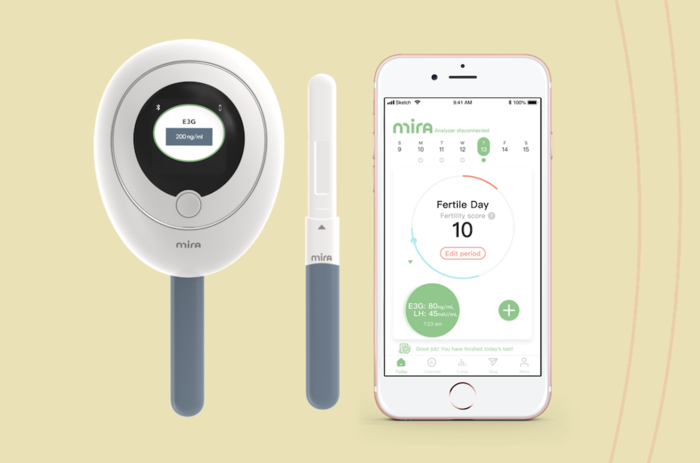
When it comes to tracking your ovulation cycle, Mira Fertility is one great way to go. Mira tracks your estrogen and luteinizing hormone levels through urine samples. The results are imported to an app on your phone. The consistent at-home testing analyzes changing patterns in your body and alerts you of your six most fertile days of the month. The fertility kit comes with a fertility analyzer, a charging cable, carrying pouch, 10 single-use test wands, 10 urine containers, and a starter guide; plus the app will help guide you through your fertility process once you download it to your phone. The initial kit costs $199.
Ava: Best wearable fertility monitor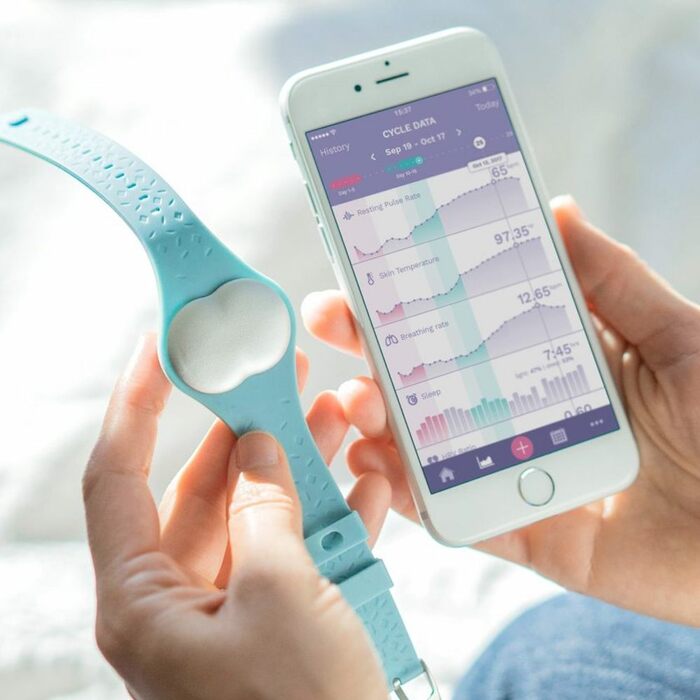
The Ava Fertility Tracker is a wearable fertility monitor that uses sensory technology to detect fertility in real time. It has a discreet and sleek look so it's a fashionable way to monitor your skin temperature, resting pulse rate, heart rate, and sleep schedule. Your temperature is at its lowest during a long rest (like sleeping), and experts have found that you’re at your most fertile the two to three days before your basal body temperature rises. Ava found that tracking your temperature over time can help predict when you’ll ovulate. This watch-like fertility monitor costs $259.
Trak Fertility: Best fertility monitor for male fertility testing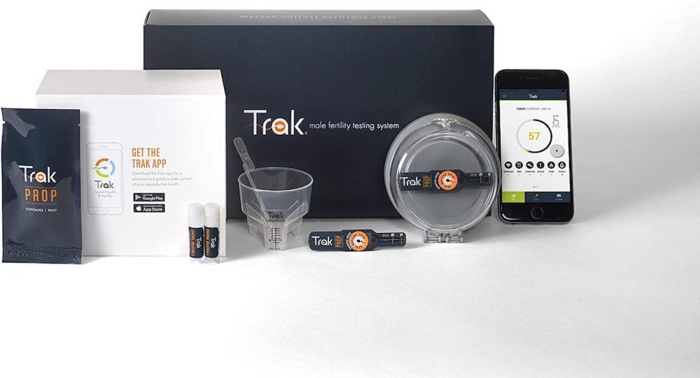
Get the same hormone fertility tests used in clinics with Trak. These at-home tests allow men to optimize sperm count, fertility, and chances of pregnancy — all within six minutes of testing. Trak is the only FDA-approved home sperm test kit as it measures your sperm concentration and semen levels. And when you download the Trak app, you can keep up with your sperm count every time you test it. The app includes personalized recommendations to improve sperm count and help your partner get pregnant faster. Trak prices start at $89.
Daysy: Best fertility monitor for temperature checking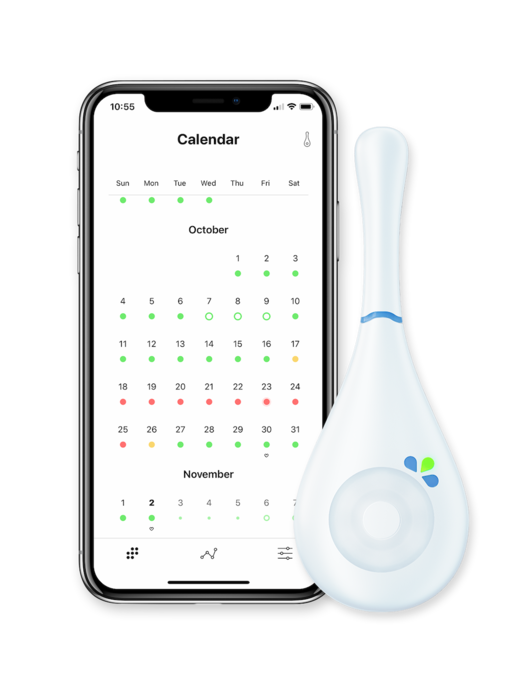
Daysy Fertility is the top temperature-checking fertility tracker. Daysy takes your basal body temperature and menstruation data and calculates when you are fertile and when you are not. This fertility thermometer will light red when you’re fertile and green when you’re not. All you have to do is place the thermometer underneath your tongue for a few moments immediately upon waking up (even before you get out of bed). Make sure to enter your menstrual cycles as well so that Daysy has all the information it needs to calculate your fertility. The Daysy tracker comes in at $299.
Clearblue: Best OG fertility tracker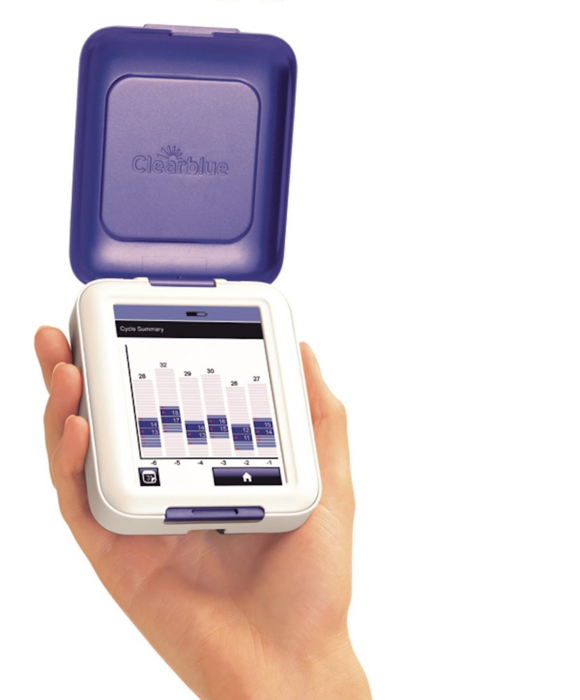
Clearblue was at the forefront of fertility tracking. And since the ’90s, Clearblue’s technology has only improved, which is why we’re highlighting this fertility monitor. The touch screen monitor provides you with your daily fertility status through urine tracking technology (the hormone levels in your urine alert the monitor when you’re set to be most fertile). The monitor has a touch screen calendar that tells you which days to do a urine test (with results ready within five minutes) and encourages you to record your menstrual cycle and when you’re sexually active. This fertility monitor is $115 and you can get it here.
External references
