Is Cubic Zirconia As Good As a Genuine Diamond?
EducationIs Cubic Zirconia As Good As a Genuine Diamond?

If you receive or gift a “diamond” ring it might not be a genuine diamond but a synthetic diamond. There are a number of cheaper alternatives that are used in place of real diamonds, which are considerably more expensive. Some of them so closely resemble diamonds that most jewelers are fooled by them. Only a gemologist with a microscope can tell the difference.Those who produce synthetic diamonds are not intending to commit fraud. They are trying to make diamonds more available and affordable to the majority. If you are the owner of one of these so called “diamond” rings, you can take comfort in the fact that it is a real gemstone. Synthetic gems have the same chemical structure and composition as real gemstones. It’s just that they are made in a laboratory by technicians instead of Mother Nature. Here are some of the common alternatives to diamonds on the market.
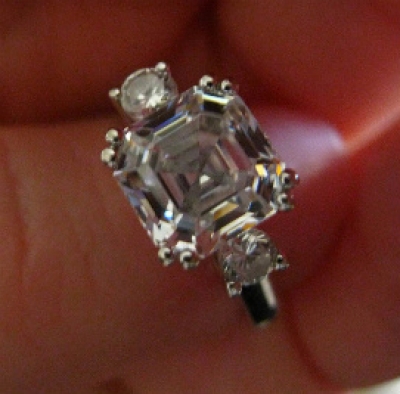
Cubic Zirconia: cubic zirconia makes up the largest group of synthetic diamonds. It is the cubic type of zirconium oxide which is heated to extremely high temperatures. Its technology was developed by two German mineralogists and by Soviet laboratories in the 1970’s. For all intensive purposes it looks and feels like a diamond, although it is slightly heavier and not as strong. Soap and detergents can dull its appearance over time. Also chemicals can be added to CZ to create colors and imitate other gemstones.
Other gemstones: gemstones that have colorless less expensive varieties make convincing substitutes. For example: quartz, zircon, corundum, spinel, topaz and synthetic forms of other gemstones such as sapphire.

cubic zirconia.
Moissanite: discovered in 1893 by Dr Henry Moissan. Moissanite is made from a synthetic version of the chemical compound silicon carbide. Henry Moissan found silicon carbide whilst examining a meteor in Arizona and mistakably believed he had found diamonds. Because silicon carbide (also known as corborundum) is rare it is artificially reproduced. Moissanite or Moissanite diamonds actually shine more brilliantly than genuine diamonds and they resemble diamonds more than any other synthetic stone. Only a gemologist can spot this imposter. They are not as heavy, neither are they as strong and durable as diamonds.

Moissanite.
Yttrium aluminum garnet (YAG): before CZ there was YAG. This synthetic cystaline stone is so called because it has a similar chemical composition as the gemstone garnet. And to the gemologist and jeweler it looks feels and cuts like garnet. Those days it is most often used in the production of solid state lasers. At jewelry stores YAG can be found under numerous ambiguous trade names such as diamogem, diamite, gemonair, diamonique, somerset and diamone.

Richard Burton gave his wife Elizabeth Taylor a 69 carat YAG ring.
YAG: diamonique ring.