What Is a Library, and Why Does It Matter?
EducationWhat Is a Library, and Why Does It Matter?
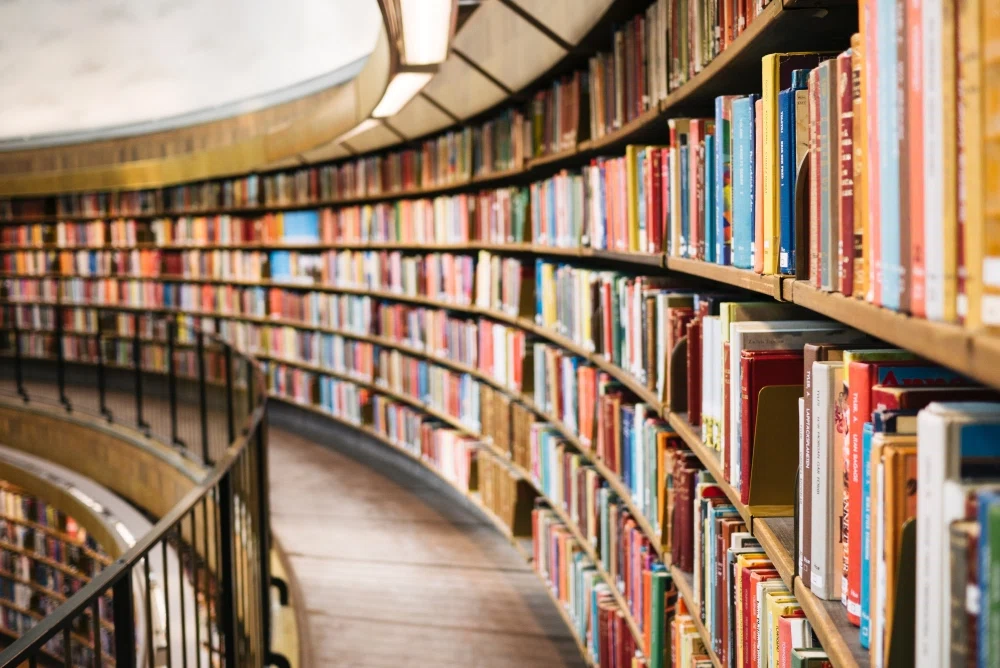
Several years ago an article appeared in a professional journal about a new library at a university in New York City. Unlike suburban or small-town universities, urban universities occupy high-rise buildings. If they outgrow it, they acquire the use of another nearby building. This university wanted to add computers to its library for student use, a fairly new thing at the time, but had no room for them. The article described how the university found space in another building to establish a branch library.
This new library had plenty of computers, but except for various instruction manuals, no books or anything else in print. How, then, could it be called a library? Simply because most of the staff were librarians, stationed there to help users find the information they needed for their papers. The librarians knew how to use information from the computers as well as the holdings of the "book and journal" library to help patrons take the fullest advantage of all the library's resources.
It has been a long time since libraries could be regarded primarily as a collection of books and magazines. Besides various printed materials, library collections have long included microforms, sound recordings, video recordings, and electronic media, all in a variety of formats.
Microforms, for example include opaque microcards, microfilms on a reel, and sheets of microfiche. These require at least two different kinds of machines to read them. Similarly, sound recordings include wire recordings, tape recordings (reel-to-reel, cassette, and even eight-track), and discs (besides compact discs, analog recordings played back at 78, 45, or 33 1/3 rpm). Videos come on cassettes (beta and VHS are not the only formats), DVDs, and laser discs that look more like 12-inch LPs. Electronic information has been stored on cards, paper tapes, then floppy discs of various sizes, CD-ROMs, DVD-ROMs, and more recently Playaways and eBook readers—Kindles being only one of several formats.
No one can read, listen to, or watch any of these things without the proper machine. Machines needed for older technologies, no longer manufactured or sold, can scarcely be found anywhere except in libraries that own and circulate the materials that require them. Modern libraries also own copiers, printers, scanners, and a wide assortment of sophisticated and expensive software and public computers to run them on.
That’s a lot of stuff. Surely no library has some of everything mentioned so far. As in the case of the New York computer library, however wide or narrow its collection of materials and machines, an organization must have librarians in order to be a library. A professional librarian has a master’s degree in librarianship. Therefore, not everyone who works in a library is a librarian. No matter. The non-librarians are trained and supervised by librarians and fully qualified to offer the same services.
Some librarians and staff work directly with the public answering questions and giving guidance. When someone needs help finding information for some kind of research project (even something as simple as a high-school term paper), a reference librarian helps him or her refine what information they need and identify useful resources, whether in print, in some audio, video, or electronic resource, or online. Readers advisory librarians help people find just the kind of novel, poetry, or other literature they would most enjoy reading.
Reference and readers advisory librarians often consult the library catalog. There they find descriptions of each title the library owns. That means some other librarian or staff member, working behind the scenes, has written that description and assigned subject headings and the classification numbers that identify where to find the item.
In recent decades, some people have started to question why we still need libraries. After all, they say, the Internet has made so much information available for free, and people can use search engines to find it themselves. These people forget how much information can be found only in very expensive proprietary databases that members of the general public cannot afford. They also forget that many people struggle to find what they need with search engines. It becomes much easier to use them after a librarian has explained the tricks.
So what is a library? A library is a collection of materials for information, creativity, or entertainment, organized and maintained by librarians, who help people find and use it. The appearance and feel of libraries has changed dramatically over the past several years and will continue to do so. The work of librarians, at its essential core, has remained unchanged. It is highly unlikely that society will cease to need the services of librarians for the foreseeable future.