Architecture and the Concept of Time
EducationArchitecture and the Concept of Time

The concept of “time” is an important and vital issue in architecture and urban planning. Time means simply “the perception of change in one place”. However, to talk about the future means to understand time” and it is important to understand that “time is not such a simple or obvious phenomenon, but that one has to exercise considerable ingenuity to fit it into a coherent picture of the universe”. In bringing their ideas on time to the study of any architectural project, architects and town planners should be careful to re-examine the everyday notions of direction and division of time, in order to confirm that they are appropriate to the study. Therefore, when town planners, for example, discuss the development of a city, they should try to see it according to its own scale of time.
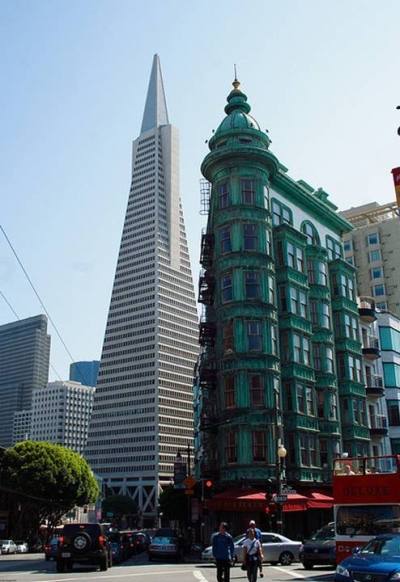
Image credit: Time factor in the city: old and new architecture
But the time-scale by which a town’s life is measured should be based on the stages of its development, just as an insect’s life is measured by its successive metamorphoses. The advantage of such a time-scale is that it will enable different cities to be realistically compared. In his seminal book, Space, Time and Architecture (1941), the late Sigfried Giedion, provided an outstanding journey of architecture and city planning through different scales of time. Likewise, Mies van der Rohe believed that architecture is a great discipline "only when it is an expression of its time. Mies’ Crown Hall (1956), Illinois Institute of Technology, Chicago, represents a timeless and progressive architecture. The building’s girders, the suspended roof, and the wide space represent a trend, which matured over time to formulate the principles of the International Style.
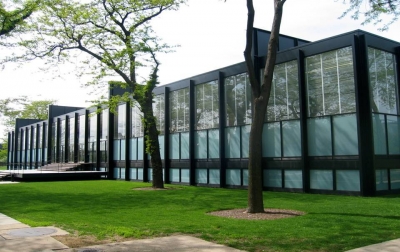
Image credit: Crown Hall (1956), Illinois Institute of Technology, Chicago, Mies van der Rohe

Throughout history, architecture proved that it is a timeless action. For architecture and town planning, the time-factor is an essential design standard, where buildings and projects can adapt as well as respond to possible change. In 20th century, many architects were responding to the change of their time such as, Archigram and the Metabolists architects, who wanted to meet the challenges made by their time. Metabolists’ concept was to create architecture that can adapt itself to the ongoing change made by the time-factor. However, architects have always been faced by the challenge of the unpredictable change.

Image credit: An Imaginative Project: WALKING CITY, Ron Herron, 1964
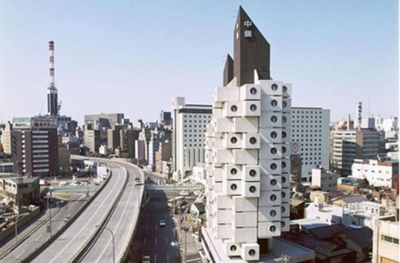
Image credit: Nakagin Capsule Tower Building (1972), Tokyo, by Kurokawa's Kisho
Architecture has always been created to withstand the forces of time, which embrace a change in building technology and peoples’ culture. Outstanding examples that express adaptation to time change can be found in the work of many architects including, Louis Sullivan and Frank Lloyd Wright. Their work was an expression to the ongoing change in history and culture. ‘Falling Water House’ (1936) Wright’s masterpiece in Pennsylvania, and ‘Villa Savoy’ (1928), Le Corbusire’s masterwork in France, can be architecturally interpreted in space, form and time, where they communicate many different changes in the history of architecture.
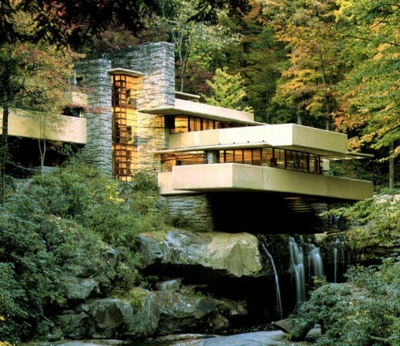
Image credit: Fallingwater House (1936), Pennsylvania, by Frank Lloyd Wright.
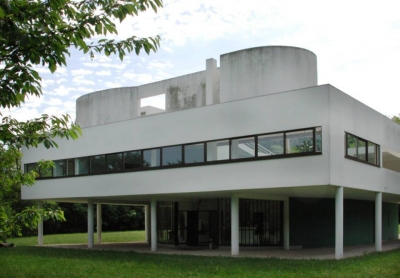
Image credit: Villa Savoye in Poissy, France, (1928-1931) by Le Corbusier
Reference: